
Skowhegan, Maine
Want to see how Skowhegan compares to other top cities in Maine? Explore all city regulations in Maine. →
Skowhegan, ME
Generally Investor Friendly
STR Regulations for Skowhegan, Maine
Overview: Are STRs allowed? Short-term rentals (for stays under 30 days, or less than a full seasonal rental period) are allowed in Skowhegan under state law. There is no city-specific short-term rental ordinance published by the Town of Skowhegan; therefore, STRs are generally permitted provided the property and the operator comply with:
- State lodging and housing safety requirements;
- Maine landlord-tenant laws (if occupancy crosses into tenancy-at-will);
- All applicable state codes (building, plumbing, fire/safety, radon, lead, and energy disclosure rules);
- State and local tax obligations;
- Any deed restrictions or homeowners’ association rules that may apply to the property.
Local authorities will expect compliance with those state standards; they do not list a separate STR license or permit on their public pages. Always confirm with Code Enforcement before opening, as local requirements can change.
How to start a short-term rental business in Skowhegan, ME
- Establish your business entity and tax registrations
- Entity formation: Create an LLC or appropriate business structure (strongly recommended for liability protection).
- Maine Revenue Services registration: Obtain any required tax registrations for room/tenant payments (lodging sales/use tax, meals and lodging tax, and local lodging tax, as applicable). If the property is located in the Town of Skowhegan, confirm the local lodging tax applicability and your registration obligations with Maine Revenue Services.
- Bank and bookkeeping: Set up business banking and a compliant accounting system to track nightly rates, cleaning fees, deposits, and applicable taxes.
- Choose your property and confirm legal status
- Verify the use of your property is lawful for transient lodging under:
- State and federal housing codes for safety;
- Any deed restrictions, HOA rules, or subdivision covenants that may limit lodging activities;
- Shoreland Zoning Ordinance if the property is within regulated shoreland areas (the Code Enforcement Office administers the Shoreland Zoning Ordinance).
- Confirm there are no active deed restrictions that forbid transient rentals.
- Confirm zoning and permitted use
- While there is no published STR-specific ordinance, properties in most residential districts in Maine can be used for lodging if safety and habitability requirements are met. Commercial districts may offer more flexibility. If your STR will operate in a manner that involves significant traffic, signage, or commercial activity, check with the Code Enforcement & Planning Office to confirm permitted use and whether any special approval is required.
- Prepare the property for safe lodging
- Building and Safety: Ensure the property meets the State of Maine Building Code. Obtain and close any necessary Building Permits before operation (e.g., egress window, renovation permits).
- Plumbing and Electrical: If you will provide full cooking facilities, ensure you are not triggering additional plumbing/electrical license requirements beyond owner-occupancy rules; consult the State licensing boards or Code Enforcement.
- Smoke and carbon monoxide detectors: Provide working smoke and CO detectors at the time the unit is rented; tenants must keep batteries charged and detectors functional; you must repair/replace if tenant provides written notice of failure.
- Radon: Test air for radon and report results to the Department of Health and Human Services (DHHS) within 30 days. Disclose results to tenants; tenants have the right to test. If levels exceed 4.0 pCi/L, the lease may be terminated within 30 days per current law; security deposits cannot be retained solely due to radon termination.
- Lead: If your STR unit was built before 1978, comply with lead-based paint disclosure requirements (provide the EPA pamphlet “Protect Your Family from Lead in Your Home” and any known hazard documentation). If lead hazards in poor condition are identified by Maine CDC, you must address them within 30 days using licensed lead abatement contractors; do not evict tenants due to lead hazards—relocate and cover moving and excess rent costs during remediation.
- Energy efficiency disclosure: Provide the standardized energy efficiency disclosure to tenants who will pay energy costs; obtain their signature and retain for three years.
- Smoking policy: Provide written notice before the tenant signs or pays a deposit, stating whether smoking is prohibited, allowed on the premises, or allowed only in specified areas.
- Bed bugs: Understand prevention and control obligations; follow Maine public health guidance and Pine Tree Legal Assistance resources for responsibilities.
- Build the operating plan
- Nightly rate and policy matrix: Establish base nightly rate, cleaning fee, minimum stay, cancellation policy, and occupancy limits aligned with the size and safety of the unit.
- Booking and contracts: Use a platform or direct agreement; ensure your terms clearly align with Maine law regarding deposits and guest rights. Keep written records of all guest communications and agreements.
- Guest screening: Maintain a written screening policy; ensure non-discriminatory criteria; verify legal occupancy.
- Safety and emergency procedures: Provide fire extinguishers, first aid supplies, posted emergency instructions, and local emergency numbers.
- Insurance
- Secure a policy appropriate for transient lodging; notify your carrier that the property is used for STR and maintain adequate liability coverage.
- Local contact and compliance
- Provide local contact details to guests and neighbors; promptly address complaints; maintain compliance with all applicable codes and ordinances.
Required documents, permits, licenses, and guidelines
- Building permits: If any construction, renovation, or safety-related work is performed (e.g., egress windows, stairs, structural changes), you must obtain and close Building Permits through Code Enforcement.
- Plumbing and electrical permits: If your STR will include full cooking facilities or if work beyond owner-occupancy allowances is planned, confirm whether state plumbing/electrical licensing requirements apply. Verify with the Code Enforcement Office and relevant State Examining Boards.
- Lead disclosures (if pre-1978): Provide the EPA pamphlet and known hazard reports before occupancy.
- Radon testing and DHHS reporting: Test and disclose results; retain documentation; follow termination rules if elevated levels occur.
- Energy efficiency disclosure: Provide and obtain tenant signature; keep on file for three years.
- Smoking policy notice: Provide written notice to guests prior to lease or deposit.
- Maine Lodging and related tax registrations: Register for applicable sales/use taxes and local lodging taxes with Maine Revenue Services; remit periodically.
- Maine Hospitality tax registration: If serving breakfast or meals, confirm registration obligations under the Meals and Lodging Tax regime.
- Lodging license: Some municipalities require a lodging or innkeeper license for certain short-stay operations. The Town’s pages do not list a Skowhegan-specific lodging license; confirm with Code Enforcement whether any such license or registration applies to your STR.
- Platform listing compliance: Ensure your listing accurately reflects the property, capacity, and any local rules.
Regulations for short-term rentals: city, county, and state
- City of Skowhegan: No published STR-specific ordinance. The Code Enforcement & Planning Office enforces:
- State of Maine Plumbing Code
- Subsurface Waste Water Disposal Rules
- Shoreland Zoning Ordinance
- Subdivision Standards
- Floodplain Management Ordinance
- Building Codes and Building Safety Ordinance
- Site Plan Review Ordinance
- Unsafe buildings and construction laws
- State Automobile Junkyard/Graveyard law
- County (Somerset County): No county-level short-term rental regulations identified in the provided materials.
- State of Maine: The Maine Rental Housing Guide and related statutes impose:
- Non-discrimination: Prohibits discrimination in rental based on protected classes, with limited exceptions.
- Landlord-tenant protections: Applies when a stay crosses into tenancy-at-will; prohibits lockouts, self-help evictions; provides security deposit receipt rules; requires written notices and proper eviction procedures.
- Safety devices: Smoke and carbon monoxide detector requirements.
- Lead-based paint: Disclosures for pre-1978 properties; mandatory remediation within 30 days when hazards in poor condition are identified; relocation and cost coverage obligations.
- Radon: Testing and disclosure requirements; tenant right to test; termination rights if radon exceeds 4.0 pCi/L.
- Energy efficiency disclosure: For tenants paying energy costs.
- Smoking policy notice: Mandatory written notice before occupancy.
- Bed bugs: Guidance and responsibilities per Maine public health resources.
- Taxes: Maine Lodging/rooms tax, meals and lodging tax, and local lodging tax may apply; register and remit through Maine Revenue Services.
- Building, plumbing, electrical, and fire codes: Must be observed; consult the Code Enforcement Office for permits and inspections.
Important: STRs are not the same as subsidized housing programs (e.g., Section 8 vouchers). Short-term rentals are commercial lodging; tenant subsidy programs typically require longer-term leases and inspections specific to those programs and do not apply to transient STR guests.
Links to source pages and documents
- Town of Skowhegan – Code Enforcement & Planning Office (permits, ordinances, contacts, and the Town’s permit portal): www.skowhegan.org/124/Code-Enforcement-Planning-Office
- MaineHousing – Maine Rental Housing Guide (safety, lead, radon, landlord/tenant laws, tenant screening restrictions, energy disclosures, smoking policies, and subsidized housing context): www.mainehousing.org/docs/default-source/rental/rental-housing-guide.pdf?sfvrsn=20
- Maine Department of Agriculture, Conservation and Forestry – Skowhegan Comprehensive Plan 2025 (land use context, growth areas, and ordinances referenced by the Town): www.maine.gov/dacf/municipalplanning/comp_plans/Skowhegan_2025.pdf
- Optional community discussion (Facebook group; informational only and not an official source): www.facebook.com/groups/824744434775106/posts/830262980889918/
This guide reflects only the information provided in the referenced pages and is not a substitute for legal or professional advice. Before operating an STR, contact the Code Enforcement Office to confirm the latest requirements and obtain any necessary permits or licenses.
What do Airbnb hosts actually earn in Skowhegan?
Skowhegan hosts earn a median $19,937/year with $165 ADR and 54% occupancy.
Top performers pull in $28,147+ per year.
See the full Skowhegan market breakdownNext step
Found a property in Skowhegan?
Paste any address and get estimated revenue, cash-on-cash return, and comparable STR performance in under 5 minutes. 3 free analyses per day.
Free brief
Get the free Skowhegan STR Investment Brief
Revenue data, top neighborhoods, seasonal trends, and the key regulations for Skowhegan, Maine in one email.
Skowhegan
Market Saturation Score
Photos of Skowhegan


Overview of Skowhegan
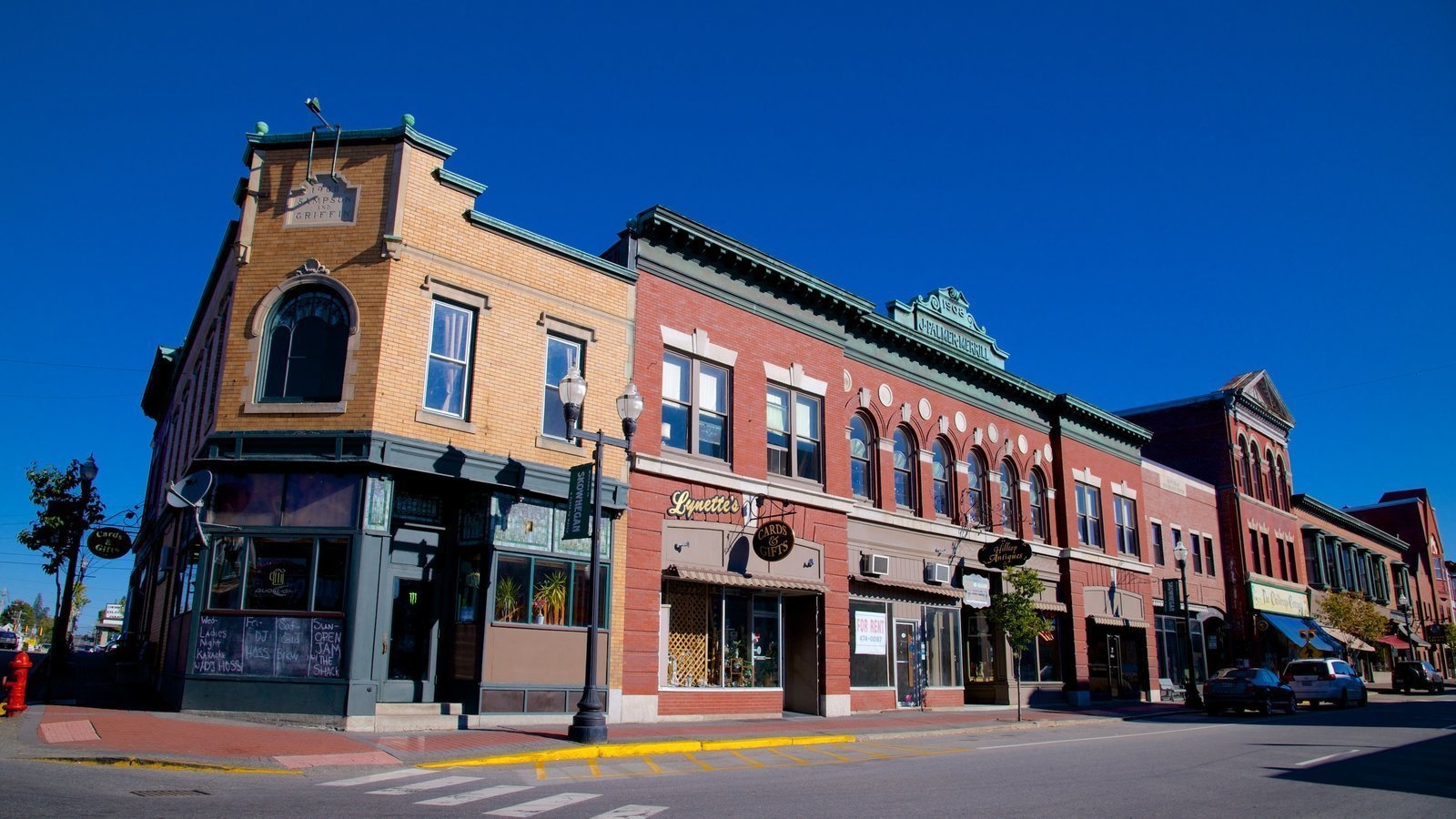
Skowhegan is a small town of roughly eight thousand residents situated on the Kennebec River in Somerset County, central Maine. It serves as the county seat and carries the laid-back character of a traditional New England mill town, with a walkable historic downtown, brick storefronts, and a strong sense of local identity tied to the river that runs through it. The town is best known as a gateway to Maine's western highlands and North Woods, drawing travelers heading north toward the Moosehead Lake region or west toward the ski country of the Carrabassett Valley. By car, Skowhegan lies about two hours north of Portland, Maine, roughly fifty minutes northwest of Augusta, and approximately one hour north of Bangor, placing it within easy reach of several of New England's most popular outdoor destinations.
One of the town's signature events and attractions is the Skowhegan State Fair, held annually each August and recognized as one of the longest-running agricultural fairs in the country. The fair brings livestock exhibitions, harness racing, midway rides, and demolition derbies to the community and draws visitors from across New England. A short drive south of town, Moxie Falls tumbles roughly ninety feet through a forested gorge and is one of the most photographed natural landmarks in the region, with a short walking trail leading to viewpoints at the base of the cascade.
Just minutes from the center of Skowhegan, Lake George Regional Park offers swimming, picnicking, camping, and a small lake beach that becomes a busy gathering spot for families during the warmer months. The park sits along the Kennebec corridor and provides a convenient outdoor escape without leaving the immediate area. To the west, roughly an hour and a half by car, Sugarloaf Mountain rises as one of New England's largest ski resorts, with year-round activities including hiking, mountain biking, and a golf course in the warmer seasons. To the north, the Moosehead Lake region offers additional opportunities for boating, fishing, and exploring the backcountry of Maine's largest lake.
Skowhegan's appeal for short-term rentals rests on a combination of small-town character and access to some of Maine's most varied outdoor recreation. Visitors who base themselves here can enjoy a quiet, historic river town, attend a beloved regional fair, chase waterfalls, and reach both a major ski mountain and one of the state's great wilderness lakes within an afternoon's drive. This mix of authentic local culture and proximity to wide-ranging seasonal attractions gives the town broad year-round potential for travelers.
Want to know if a property in Skowhegan is a good investment?
Enter an address to get instant revenue potential and comps.