
Blue Hill, Maine
Want to see how Blue Hill compares to other top cities in Maine? Explore all city regulations in Maine. →
Blue Hill, ME
Generally Investor Friendly
STR Regulations for Blue Hill, Maine
Overview and explicit answer
- Are short-term rentals allowed in Blue Hill, ME?
- Yes—short-term rentals operate in Blue Hill. The town’s comprehensive plan notes short-term rental activity over time and identifies the presence of lodging providers, including inns, hotels, and bed-and-breakfasts. However, Blue Hill does not have city-specific short‑term rental licensing or operational regulations. In the absence of local STR rules, state‑level Maine requirements for lodging operators likely apply, and any property must comply with shoreland zoning and any other applicable local or state standards.
How to start a short-term rental business in this market
- Confirm zoning and shoreland compliance
- Blue Hill does not have a zoning ordinance; shoreland zoning is the primary land use control. Ensure your property location meets shoreland dimensional and setback standards (e.g., typical minimum setbacks from water bodies and height limits). Identify whether your parcel lies within a shoreland zone and confirm that short‑term rental use is permitted in that shoreline classification. Check lot coverage, vegetation management, and any coastal or wetland buffers. Source: Blue Hill Comprehensive Plan (Shoreland Zoning Map and text).
- Evaluate site suitability and infrastructure
- Confirm access, parking, driveway, and on‑site circulation needs for guests, especially in the village center or village waterfront growth area. Verify well and septic conditions. Private wells are common in Blue Hill; ensure drinking water quality and any necessary testing. Confirm that wastewater disposal is adequate and compliant. Confirm road and bridge condition/access plans to support guest safety and operations. Sources: Blue Hill Comprehensive Plan (Water Resources; Transportation).
- Determine whether your operation requires a Maine lodging operator license
- Lodging businesses in Maine are typically subject to state licensing by the Maine Department of Health and Human Services (DHHS). Many B&Bs, hotels, inns, and similar lodging providers obtain a Maine lodging operator license. While the Blue Hill plan does not list the specific license, Maine lodging operations generally must comply with DHHS safety and sanitation standards, among other requirements. Contact Maine DHHS to verify applicability and obtain guidance for your specific business model (e.g., rooms only vs. entire-unit rentals). Note: Because this is based on statewide practice rather than town‑specific documents, verify licensing status directly with the state before opening.
- Complete any necessary planning and site reviews
- Even in the absence of city‑specific STR rules, certain land use or site development activities may trigger review:
- Commercial Site Plan Review Ordinance: If an STR involves changes that meet the thresholds in the ordinance (e.g., increased parking, signage, hours of operation, or significant site alteration), the project may require site plan review by the Planning Board. The plan references Blue Hill’s Commercial Site Plan Review Ordinance (2021 amendment).
- Building/fire/life safety: Confirm whether any construction, change of use, or expansion requires a building permit or fire code review. Engage the local Code Enforcement Officer.
- Wastewater: If any new or modified systems are proposed (e.g., upgraded septic, increased capacity), consult the Town’s wastewater treatment and disposal standards.
- Operational setup
- Insurance: Obtain property and liability coverage appropriate for lodging and short‑term rental activity.
- Business registration: Register your business name/assumed name as applicable; review local tax and business license requirements with the Town Office.
- Guest amenities and safety: Establish safety procedures, including ingress/egress, emergency information, and note any local emergency response resources (fire, ambulance).
- Marketing: Align listing language and check‑in policies with any site plan commitments and town policies (e.g., signage, parking, and quiet hours, where applicable).
Required documents, permits, licenses, and guidelines (best‑practice checklist) Because Blue Hill lacks city‑specific STR rules, use this statewide/local compliance checklist:
- Zoning confirmation: shoreland zoning compliance letter or certificate.
- Site plan documentation (if applicable): commercial site plan review submittal, including parking, signage, access, and stormwater details per the Commercial Site Plan Review Ordinance.
- Building and life safety: building permits and inspections; fire safety measures and egress standards.
- Wastewater: septic permit or approval for any upgrades; confirmation that capacity is adequate.
- Water quality: private well water test results if applicable.
- Lodging operator license: Maine DHHS lodging operator license (likely applicable for B&Bs, hotels, inns; contact the state for whole‑unit STR applicability).
- Business registration and taxes: business name filing; sales/use tax registration if applicable.
- Insurance: property and liability coverage for lodging operations.
- Guest policies: house rules, emergency procedures, check‑in/out instructions.
- Contact: Code Enforcement Officer (building permits) and Planning Board (site plan review) prior to development.
Specific regulations: city, county, and state
- City (Town of Blue Hill)
- No zoning ordinance; shoreland zoning applies per state mandate. The Commercial Site Plan Review Ordinance (2021 amendment) contains standards that may apply when an STR introduces commercial‑type impacts (e.g., signage, parking, expanded access).
- The comprehensive plan identifies a growth area (village and areas with public water/sewer) and notes infrastructure and transportation priorities. New lodging should align with local goals for parking, pedestrian safety, and historic character, especially in the village center.
- County (Hancock County)
- The Hancock County Planning Commission assisted with Blue Hill’s comprehensive planning and can provide regional planning and grant/program guidance. Contact their office for additional context and permitting guidance.
- State (Maine)
- Shoreland Zoning: State minimum standards apply; local shoreland maps and dimensional standards govern setbacks, height, and lot coverage near water bodies.
- Lodging Licensing (Maine DHHS): Lodging businesses typically require a Maine lodging operator license and must meet health, safety, and sanitation standards. Verify applicability for your model.
- Use tax and sales tax: Maine imposes a lodging sales tax on paid lodging; operators often must register and collect state sales and use taxes.
- Fire, building, and life safety codes may apply depending on the nature of the lodging and any construction.
Contact information (phone, email, website)
- Town of Blue Hill (General)
- Phone: (207) 374-2281
- Address: Blue Hill Town Office (mailing address not provided in plan)
- Website: bluehillme.gov (via select board site)
- Code Enforcement Officer (Building Permits)
- Phone: (207) 374-2281
- Email/contact: Use Blue Hill Town Office
- Planning Board
- Phone: (207) 374-2281
- Email/contact: Use Blue Hill Town Office
- Maine Department of Health and Human Services (Maine CDC) – Lodging Operator Licensing
- Website: maine.gov/dhhs (lodging program listing may vary; use main portal to locate “lodging operator license”)
- Hancock County Planning Commission
- Phone: Not listed in provided content
- Address: 119 Bucksport Road, Ellsworth, ME, 04605 (from plan acknowledgments)
- Website: Not provided in content
Links to source pages (if available)
- Blue Hill Comprehensive Plan 2024 (State Approved): bluehillme.gov/wp-content/uploads/2024/10/Blue_Hill_Comp_Plan_Final_State_Approved.pdf
Practical market and compliance context for investors
- The plan shows seasonal population swings and a stable base of lodging operations, including inns, hotels, and B&Bs; the number of short‑term rentals (as tracked by industry sources) has fluctuated in recent years around roughly 80–100 units, indicating an active but measured STR market.
- Blue Hill has identified infrastructure priorities—pedestrian safety, parking, road and bridge condition, wastewater plant protection from sea level rise—that may influence guest access and operations planning.
- The town emphasizes downtown revitalization while protecting its historic, village-scale character. This suggests that over time, the town may favor small‑scale lodging and STRs that complement the built environment and do not overburden parking or pedestrian areas.
- Broadband connectivity has been substantially improved on the peninsula, which supports remote work and longer stays; however, lodging facilities should verify on‑site service and guest Wi‑Fi expectations.
Next steps
- Verify shoreland zoning compliance for your parcel and that the intended lodging use fits the shoreline classification.
- If you propose changes to site access, parking, signage, or operating conditions, consult the Code Enforcement Officer and the Planning Board for site plan review applicability under the Commercial Site Plan Review Ordinance.
- Contact Maine DHHS to determine if a lodging operator license is required for your business model and to obtain the health and safety compliance checklist.
- Confirm wastewater and water quality arrangements; undertake any required permitting for on‑site systems.
- Register your business, secure insurance, and set up tax collection procedures consistent with Maine requirements.
Notes
- This guide reflects the information in Blue Hill’s comprehensive plan and related town references provided by the user. Where town‑specific rules for short‑term rentals are not present, the guide highlights statewide lodging and shoreland requirements and strongly recommends verifying all licensing and permitting details with state and local authorities before operation.
What do Airbnb hosts actually earn in Blue Hill?
Blue Hill hosts earn a median $26,997/year with $218 ADR and 63% occupancy.
Top performers pull in $40,975+ per year.
See the full Blue Hill market breakdownNext step
Found a property in Blue Hill?
Paste any address and get estimated revenue, cash-on-cash return, and comparable STR performance in under 5 minutes. 3 free analyses per day.
Free brief
Get the free Blue Hill STR Investment Brief
Revenue data, top neighborhoods, seasonal trends, and the key regulations for Blue Hill, Maine in one email.
Blue Hill
Market Saturation Score
Photos of Blue Hill


Overview of Blue Hill
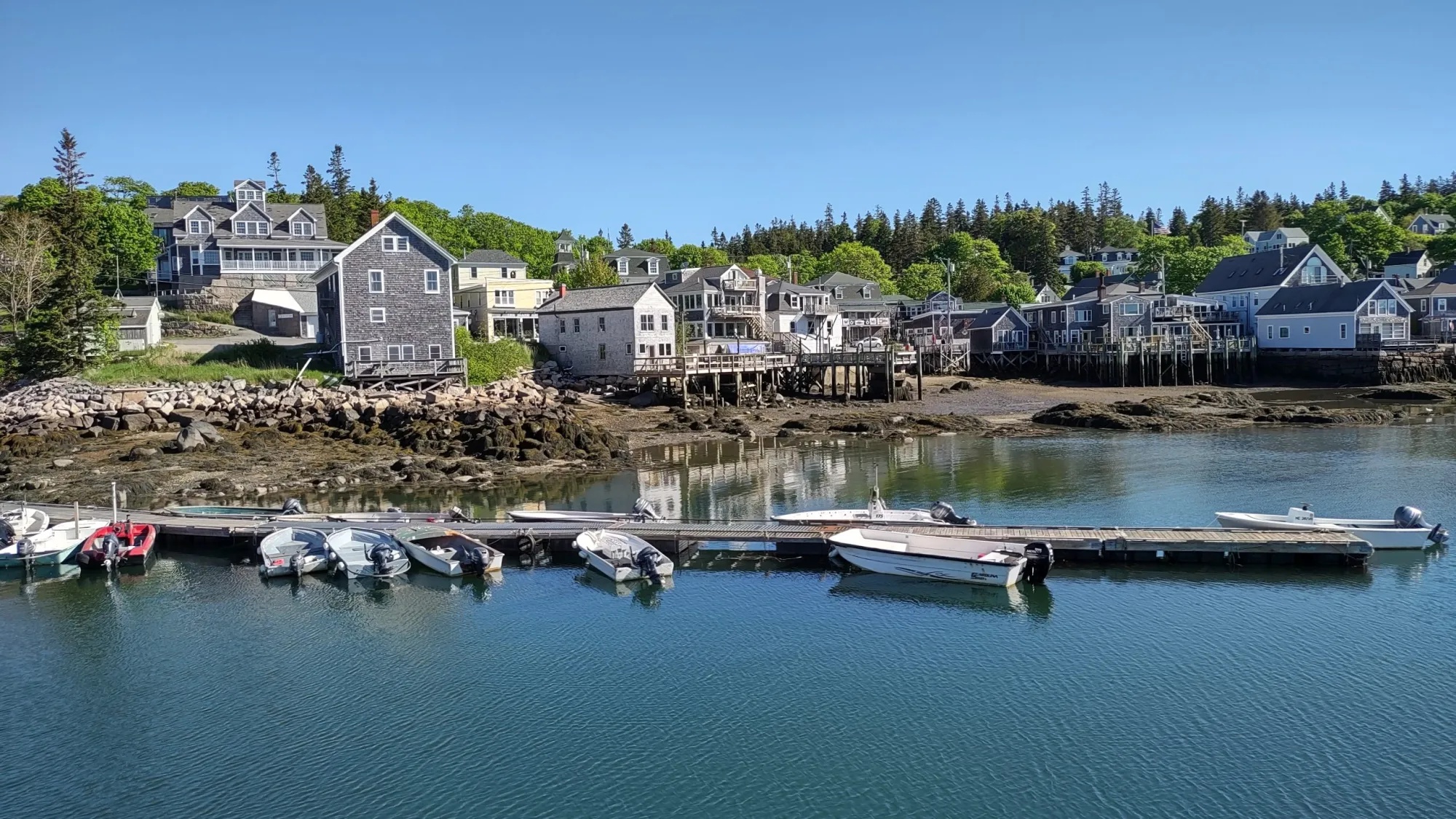
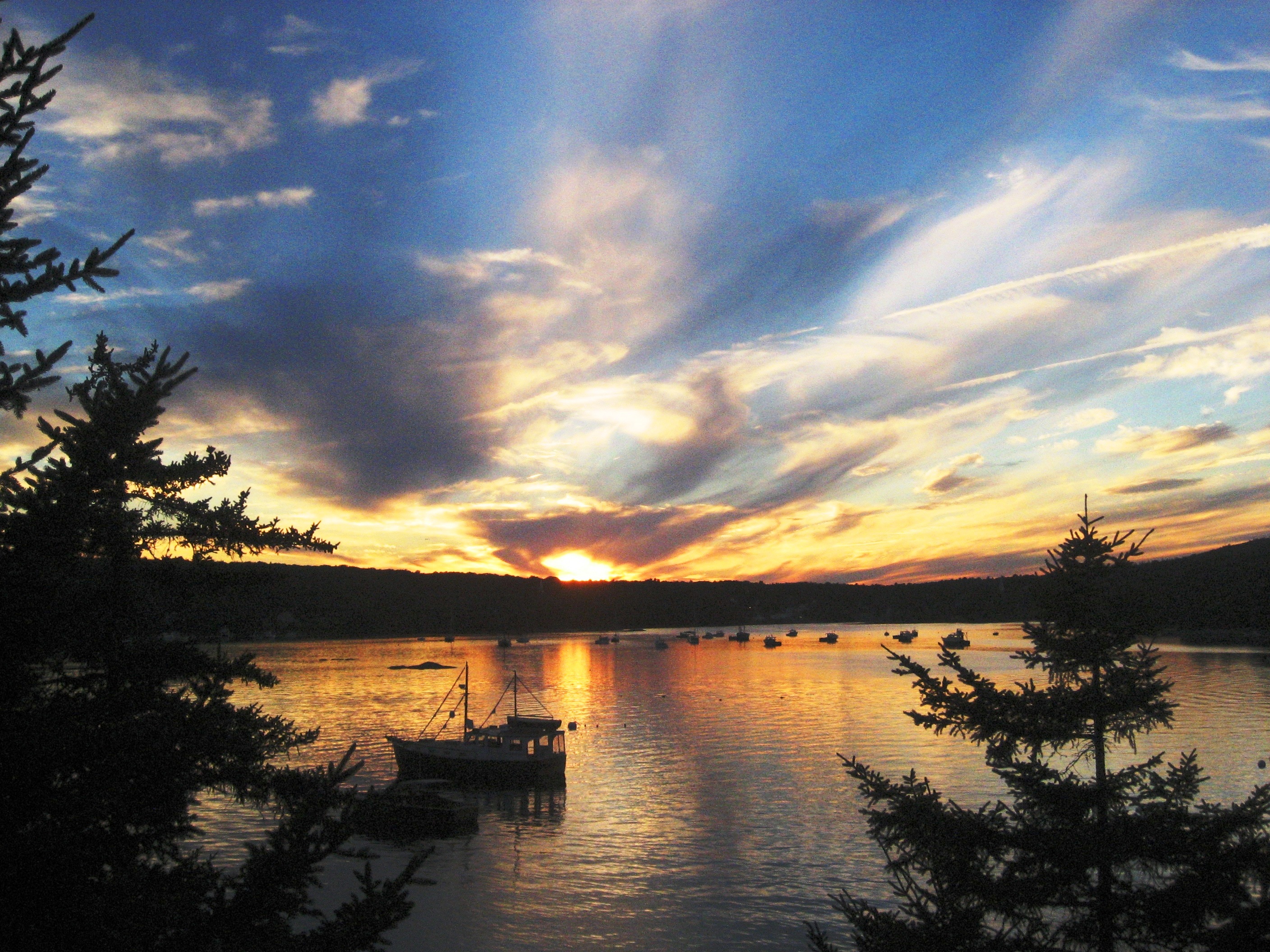
Blue Hill is a small coastal town in Hancock County, Maine, with a population of approximately 2,500 residents. It sits on the eastern shore of the Blue Hill Peninsula, looking out across Blue Hill Bay toward Mount Desert Island, and carries the easygoing, artsy character of a classic Down East harbor community. The town has long been associated with summer colonies, working boatyards, and a low-key cultural scene, and it serves as a quieter alternative base for travelers heading toward Acadia National Park, which lies roughly an hour to the east. The nearest large city is Bangor, about 40 miles to the north along Route 15, while the regional commercial hub of Ellsworth is only about 15 minutes north on Route 172.
Acadia National Park is the marquee draw of the region and the primary reason many visitors base themselves on the Blue Hill Peninsula. The park offers more than 40 miles of carriage roads, granite peaks like Cadillac Mountain, and a rugged coastline of cliffs and cobble beaches. From Blue Hill, the drive to the park's visitor center near Hulls Cove typically takes about an hour, depending on the season and traffic through the Trenton gateway. Even a partial day in Acadia, returning to a quieter rental in Blue Hill, is a popular arrangement for travelers who want park access without Bar Harbor's peak-season crowds.
Just east of Acadia, Bar Harbor functions as the closest full-service town to the park, with a working waterfront, the Abbe Museum, whale-watching tours, and a walkable downtown of shops and restaurants. It is also about an hour from Blue Hill and makes an easy day trip or an evening excursion for dinner and sunset over Frenchman Bay.
To the south of Blue Hill, a short scenic drive leads to the villages of Deer Isle and Stonington, connected to the mainland by a causeway and bridge. This area is known for its working fishing fleet, quiet coves, and Haystack Mountain School of Crafts, a well-regarded arts program that occasionally hosts public talks and open studios. The drive from Blue Hill to Stonington is roughly 30 to 40 minutes, making it a comfortable half-day outing for guests interested in Maine's maritime and craft traditions.
Closer to town, the Holbrook Island Sanctuary State Park offers a more low-key alternative to Acadia's crowds, with about 1,200 acres of coastal forest, marshes, and rocky shoreline just a short drive south of the village. Together with Blue Hill Falls, local trails maintained by the Blue Hill Heritage Trust, and the harbor itself, it gives visitors plenty of ways to enjoy the peninsula without ever leaving it.
Want to know if a property in Blue Hill is a good investment?
Enter an address to get instant revenue potential and comps.