
Port Deposit, Maryland
Want to see how Port Deposit compares to other top cities in Maryland? Explore all city regulations in Maryland. →
Port Deposit, MD
Generally Investor Friendly
STR Regulations for Port Deposit, Maryland
Overview: Are Short‑Term Rentals Allowed in Port Deposit?
Port Deposit explicitly does not require a separate short‑term rental license or permit under municipal or county rules in the materials provided. In addition, the municipality does not require a general rental housing license for long‑term tenancies. That said, STR operators remain subject to zoning and land use, building and fire safety, property maintenance, taxation (sales/use and transient occupancy), health and utility requirements, and any HOA/condo rules. Investors should treat the “no license required” status as a starting point for compliance, not an exemption from all other rules.
- Municipal status (short‑term rental license): No
- Municipal status (long‑term rental license): No
- Cecil County licensing requirement: No
- Primary permitting/oversight: Town of Port Deposit (code enforcement and administration)
- Practical implication: Allowed by default where zoning permits residential use; confirm that STRs are a permitted use at the subject property and that any applicable state/federal rules (safety, taxes, HOA) are met.
Sources: County Laws pertaining to Rental Licenses (county‑level snapshot listing Port Deposit with “No” for long‑term and short‑term licenses); Port Deposit Sustainable Communities Renewal Application (official Town contact details).
What do Airbnb hosts actually earn in Port Deposit?
Port Deposit hosts earn a median $26,674/year with $149 ADR and 64% occupancy.
Top performers pull in $37,661+ per year.
See the full Port Deposit market breakdownHow to Start a Short‑Term Rental Business in Port Deposit
Given the absence of a municipal STR permit, your setup path focuses on property and business fundamentals rather than a local license process. Proceed as follows:
- Validate zoning and land use
- Confirm the parcel’s zoning allows transient occupancy or STR use without a special exception or conditional use. Even if “permitted by default,” verify that the use is not prohibited in the zoning district or restricted by overlays (e.g., historic, floodplain, critical area). The Town is actively updating its Zoning Ordinance; check the current version for any STR‑specific allowances or restrictions.
- Comply with safety and habitability
- Meet Maryland fire and building safety standards for transient lodging. As a practical standard, investors in Maryland generally align with internationally recognized life‑safety codes for STRs (e.g., smoke/CO alarms, safe egress, fire extinguishers, basic first‑aid supplies, posted emergency info). Confirm any local code amendments or fire marshal guidance.
- Register for applicable taxes
- Sales and use tax: Register with the Maryland Comptroller for a trader’s license (sales and use tax account) and collect/remit the state sales tax on bookings that meet nexus and taxable‑sale criteria.
- Transient occupancy (“hotel tax”): Maryland allows jurisdictions to levy a local transient occupancy tax (TOT) via ordinance. In the materials provided, Cecil County is not listed as a county with an STR or rental license requirement; however, there is no clear citation of a Cecil County TOT ordinance or rate in these materials. If a TOT applies, you must register and collect it. Confirm directly with Cecil County government or the Town whether a TOT is in effect and at what rate.
- Access and utilities
- Ensure lawful access (parking, driveway, shared common elements). Verify water, sewer, and trash services; confirm dump‑site restrictions for short‑term tenants.
- In flood‑prone areas of Port Deposit, consider flood exposure and related insurance, risk disclosure, and guest safety protocols.
- Professional management
- If outsourcing, vet licensed and insured property managers. If self‑managing, establish booking, cleaning, guest communications, and incident response standards consistent with local noise, parking, and nuisance rules.
- Good‑neighbor compliance
- Publish house rules covering occupancy limits, quiet hours, parking, trash/recycling, and smoking. Maintain records for inspections or complaint resolution. In mixed‑use or HOA/condo settings, obtain written approvals where required.
Documents, Permits, Licenses, and Guidelines
Given Port Deposit’s “no license” status for rentals, the practical checklist emphasizes business registrations and proof of compliance rather than a municipal STR permit:
- Business registration and taxation
- Maryland sales and use tax trader’s license (Comptroller registration) — collect/remit sales tax as applicable.
- Transient occupancy tax registration (if a TOT is enacted locally) — collect/remit local TOT as applicable.
- Zoning/use authorization
- Written zoning determination or confirmation that transient lodging is a permitted use at the property address (or conditional use approval where required).
- Safety and habitability
- Evidence of smoke and carbon monoxide detector installation, fire extinguisher placement, posted emergency exits/contacts, and basic safety protocols. Adhere to any local or state fire and building codes governing lodging.
- Insurance
- General liability and property insurance appropriate for a short‑term lodging operation; consider business interruption and landlord/host coverage.
- Operational policies
- Guest rules (quiet hours, occupancy, parking), trash/recycling schedule, check‑in/out procedures, and emergency contacts posted inside the unit.
- Communications and complaint management
- Maintain a local contact number and response plan for neighbors and the Town.
- Floodplain/wetland disclosures (where applicable)
- Port Deposit is flood‑vulnerable. Provide guests with flood risk information and property‑specific safety instructions.
Specific Regulations for Short‑Term Rentals
Municipality (Town of Port Deposit)
- Licenses/permits: None required for short‑term or long‑term rentals in the provided materials.
- Zoning: Confirm that transient lodging is allowed at the subject property and that there are no STR‑specific overlays or use restrictions. The Town is revising its Zoning Ordinance to align with the 2023 Comprehensive Plan; verify the latest enacted language.
- Floodplain/critical area: Port Deposit faces recurrent flooding and storm impacts. Any development or substantial improvement must meet floodplain and critical area requirements. Ensure that STR operations (e.g., furniture, utilities) do not increase flood risk or violate substantial improvement rules.
- Safety/noise/parking: Operate consistent with local public safety, nuisance, noise, and parking ordinances. Post clear rules and manage guest conduct to minimize complaints.
- Property maintenance: The Town has a full‑time Code Enforcement and Public Works Administrator and is completing a codification project to strengthen maintenance and nuisance standards. Maintain properties to avoid code violations.
Cecil County (State Level for Unincorporated Areas)
- County rental licensing: The provided county‑wide snapshot indicates no Cecil County rental license requirement for long‑term or short‑term rentals.
- Taxes: Sales and use tax obligations apply via the Maryland Comptroller. Local transient occupancy taxes may apply if adopted by the county or municipal ordinance; confirm with county/municipal finance officials.
- Health and safety: Residential lodging must meet applicable health and safety standards.
State of Maryland (STR Context)
- State registration/permitting: No statewide STR registration is indicated in the provided materials. Investors should comply with state tax, consumer protection, safety, and insurance requirements.
- Consumer protection/ADA: Consider fair marketing and reasonable accommodation under the Americans with Disabilities Act where applicable.
- Building/fire standards: Maryland’s adopted codes and local fire marshal rules govern safety equipment, egress, and occupancy limits for transient lodging.
Contact Information (Local Authority in Charge)
Primary contact for questions on zoning, code enforcement, and municipal administration:
- Organization: Town of Port Deposit (Town Administrator’s Office)
- Address: 64 South Main Street, Port Deposit, MD 21904
- Phone: 410‑378‑2121
- Fax: 410‑378‑9104
- Town Administrator: Vicky Rinkerman
- Email: Not provided in the materials; request via phone.
- Website: Not listed in the provided materials; request the official URL during your intake call.
Use the Town Administrator and Code Enforcement channels to confirm zoning determinations, safety requirements, floodplain/critical area compliance, and any pending STR policies.
Links to Source Pages
- County Laws Pertaining to Rental Licenses (municipal and county license requirements across Maryland)
- Sustainable Communities Renewal Application — Port Deposit (official Town profile, contact details, planning context)
Notes and caveats:
- The absence of a municipal STR license in Port Deposit does not imply that STRs are unrestricted. Investors must confirm zoning use, safety, floodplain/critical area, HOA/condo, taxation, and any evolving municipal policies.
- The Town is actively updating codes and planning documents; verify the current Zoning Ordinance and any post‑2023 amendments before operation.
- Transient occupancy tax rules can change; confirm whether a TOT applies locally and register accordingly.
Next step
Found a property in Port Deposit?
Paste any address and get estimated revenue, cash-on-cash return, and comparable STR performance in under 5 minutes. 3 free analyses per day.
Free brief
Get the free Port Deposit STR Investment Brief
Revenue data, top neighborhoods, seasonal trends, and the key regulations for Port Deposit, Maryland in one email.
Port Deposit
Market Saturation Score
Photos of Port Deposit


Overview of Port Deposit
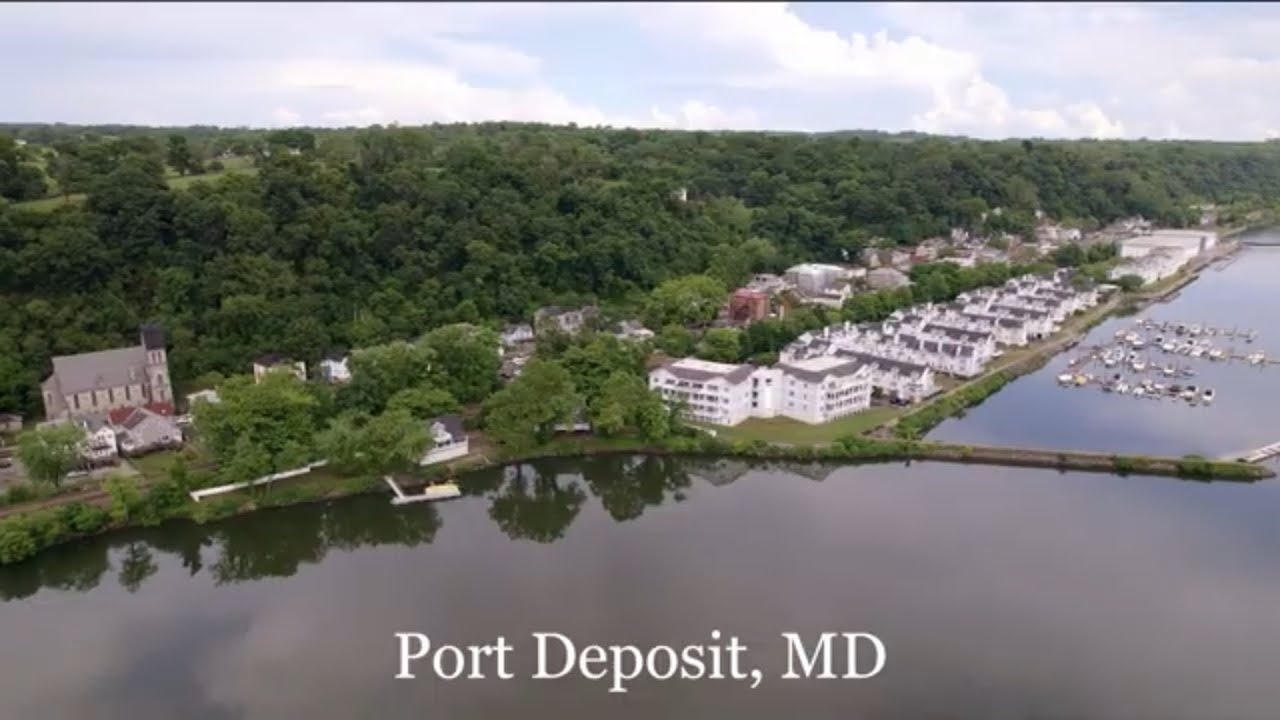
Port Deposit is a small historic town in Cecil County, Maryland, perched on the eastern bank of the Susquehanna River just below the Pennsylvania border. With a population of roughly 650 residents, it carries a quiet, time-worn character shaped by its nineteenth-century granite-quarrying and river-trade heritage. The town functions as an unassuming gateway to the upper Chesapeake Bay region and lies approximately forty miles northeast of Baltimore, with Philadelphia and Washington, D.C. also within a two-hour drive along the nearby Interstate 95 corridor.
Just across the river to the south and east of Port Deposit lies Susquehanna State Park, a Maryland state park covering more than 2,600 acres of hardwood forest and river shoreline. Visitors come for the network of hiking and equestrian trails, the remains of the Rock Run Historic Area's nineteenth-century iron furnace, and access points along the Susquehanna itself. From Port Deposit, the main park entrances are roughly a ten- to fifteen-minute drive south.
A similar distance to the south brings travelers to the historic waterfront town of Havre de Grace, often called the "Decoy Capital of the World." The town's compact downtown features antique shops, restaurants, and the Havre de Grace Maritime Museum, while the iconic Concord Point Lighthouse overlooks the spot where the Susquehanna empties into the Chesapeake Bay. The promenade and city park along the waterfront make it a popular stop for guests exploring the region from Port Deposit.
About twenty-five minutes southeast of Port Deposit, Elk Neck State Park occupies a wooded peninsula jutting into the head of the Chesapeake Bay. The park is home to the white-painted Turkey Point Lighthouse, a sandy bay beach, and miles of trails through forest and marshland. It draws families, day hikers, and anyone interested in water access to the bay without venturing into the more crowded lower Chesapeake areas.
Port Deposit's appeal for short-term rental visitors lies in the combination of a genuinely quiet, historic small-town setting and a remarkably convenient location. Guests can spend evenings on the Susquehanna, take short day trips to multiple state parks and historic river towns, and still reach Baltimore, Philadelphia, or the greater Washington area in well under two hours. The compact footprint, authentic character, and proximity to both natural areas and major East Coast cities make it a versatile base for travelers looking to experience the Chesapeake's upper reaches without the busier feel of more developed destinations.
Want to know if a property in Port Deposit is a good investment?
Enter an address to get instant revenue potential and comps.