
Hollywood, Maryland
Want to see how Hollywood compares to other top cities in Maryland? Explore all city regulations in Maryland. →
Hollywood, MD
Challenging To Investors
STR Regulations for Hollywood, Maryland
Are Short-Term Rentals Allowed in Hollywood, MD? (Direct Answer)
- Hollywood is an unincorporated community in St. Mary’s County; the St. Mary’s County Comprehensive Zoning Ordinance governs land use in Hollywood and all unincorporated areas.
- The zoning code does not define or expressly list “short-term rentals” as a standalone use category. However, lodging-related uses may be permissible:
- As principal uses in commercial and mixed-use zoning districts, subject to use-by-right or conditional use approvals (depending on the district and the specific lodging use).
- As accessory uses in residential zones under limited circumstances, typically only for the operator’s primary residence and subject to caps on the number of rooms and the size of the structure (e.g., “bed and breakfast” or “inn” as an accessory use).
- Under state and county rules, most lodging operations also require:
- A county zoning permit (Zoning Permit) and later a Certificate of Use and Occupancy from the Department of Land Use and Growth Management (LUGM).
- A business license (trade license) from the St. Mary’s County Treasurer.
- Health Department approvals where food service or lodging units involve septic/well; Metropolitan Commission (MetCom) approvals if connecting to public water/sewer.
- Because the zoning code does not explicitly define “short-term rentals,” any STR should be evaluated under the closest applicable lodging use. The safest path is to confirm zoning and use status (principal vs accessory) and obtain required approvals before operating.
What do Airbnb hosts actually earn in Hollywood?
Hollywood hosts earn a median $33,168/year with $279 ADR and 59% occupancy.
Top performers pull in $63,974+ per year.
See the full Hollywood market breakdownHow to Start a Short-Term Rental Business in This Market
- Confirm zoning and permitted use on your property
- Obtain the property’s zoning district from the official St. Mary’s County zoning map (contact LUGM or view at 23150 Leonard Hall Drive, Leonardtown, MD 20650).
- Check Article 5 (Use Regulations) and Chapter 51 (Use Regulations and Standards) of the county zoning ordinance to confirm if lodging uses are allowed as principal or accessory uses, and whether a conditional use permit is required.
- Decide whether to operate as a principal lodging use or an accessory use
- Principal lodging use (e.g., inn/hotel/motel/boarding house): typically requires zoning approval and a building permit if any construction or significant changes are proposed.
- Accessory lodging use (e.g., bed-and-breakfast/inn as accessory to a residence): must meet accessory use standards (often limited to the operator’s dwelling, room limits, and size constraints).
- Submit an application for development approvals (as applicable)
- Zoning Permit application and any required site plan review per Chapter 60 (Site Plan Review).
- Conditional Use application to the Board of Appeals for uses not permitted by right (see Chapter 25).
- Administrative Variance to the Planning Director if you need relief from dimensional or Critical Area/Forest Conservation standards (Chapter 22.5).
- Obtain required agency clearances before building or operating
- Health Department: certificate indicating the site meets water supply and sewage disposal requirements (septic/well) where applicable.
- Metropolitan Commission (MetCom): review and approval for connection to public water and/or sewer and any needed EDU allocation.
- Soil Conservation District: erosion and sediment control approval (as applicable).
- State Highway Administration: entrance permit if a driveway is on a state road.
- Apply for all necessary county/state licenses and tax accounts
- County business license (trade license) with the Treasurer’s office.
- State sales and use tax account with the Comptroller (lodging is subject to the 6% state sales and use tax).
- State and local income tax registrations (as applicable).
- Receive final approvals
- Certificate of Use and Occupancy (issued by LUGM after all approvals and inspections are complete).
- Maintain ongoing compliance, including renewals, inspections, and reporting.
Required Documents, Permits, Licenses, and Guidelines
- County approvals and documents
- Zoning Permit and, if needed, Conditional Use (Board of Appeals) approval.
- Site plan (Chapter 60) for most lodging uses; minor site plan for smaller developments; major site plan for larger or more complex proposals.
- Certificate of Use and Occupancy (post-construction, after inspections).
- Variances (Board of Appeals) or Administrative Variances (Planning Director) as needed.
- Application fee schedule and refund policy (set by Board of County Commissioners resolution).
- Agency clearances
- Health Department: certificate for water and sewage disposal (or connection approvals for public systems).
- Metropolitan Commission: approval slip for public water/sewer connection and EDU allocation.
- Soil Conservation District: erosion and sediment control approval.
- State Highway Administration: entrance permit (if required).
- Business licenses and tax registrations
- St. Mary’s County business license (trade license).
- Maryland Comptroller sales and use tax account (6% on lodging).
- State income tax registration and local (county) income tax account (if applicable).
- Environmental and special area considerations
- Critical Area compliance (Chapters 41 and 71–74): administrative variance may be needed for impervious cover, buffer encroachment, or steep slope impacts.
- Floodplain compliance (Chapter 76): floodplain variances are restricted; “wet floodproofing” methods may be required for functionally dependent water-adjacent uses.
- Forest Conservation compliance (Chapter 75): administrative variance standards apply.
Specific Regulations: Hollywood (St. Mary’s County), County-Level, and State-Level
-
Hollywood/Unincorporated St. Mary’s County
- The Comprehensive Zoning Ordinance applies to all unincorporated areas, including Hollywood. It contains rules for district establishment (Article 3), use regulations (Article 5), development standards (Article 6), site development and resource protection (Article 7), and enforcement (Article 8).
- Uses, densities, setbacks, and standards vary by zoning district; lodging as a principal use is generally limited to commercial/mixed-use districts; accessory lodging may be permitted in residential zones under specified limits.
- Major/minor site plan review (Chapter 60) applies; conditional uses require Board of Appeals approval (Chapter 25) after Technical Evaluation Committee (TEC) review.
- Critical Area overlay (Chapter 41) and Resource Protection Standards (Chapters 71–74) impose limits on impervious surfaces, buffer encroachments, and habitat impacts.
- Floodplain regulations (Chapter 76) restrict fill and new buildings in floodways and coastal high hazard areas; variances are limited and require mitigation.
- Forest Conservation (Chapter 75) includes administrative variance standards and notification requirements to the Department of Natural Resources.
- Definitions are in Article 9; zoning interpretations and boundary rules are in Article 1.
-
County-level permitting and administration
- Authority: Board of County Commissioners; Planning Commission; Board of Appeals; Planning Director (Department of Land Use and Growth Management).
- Public hearings and notice: required for conditional uses, zoning/text/map amendments, and certain variance categories (Section 21.2–21.3).
- Certificate of Use and Occupancy: required before operating a lodging use (Section 22.7).
- Time limits: zoning permits (and most approvals) lapse if work/use does not commence within 12 months; extensions may be granted (Sections 22.4, 25.9).
-
State-level references (Maryland)
- Zoning enabling authority: Article 66B of the Annotated Code of Maryland (general framework for county zoning).
- Lodging taxes: Maryland sales and use tax applies to lodging; local bed-and-breakfast or hotel taxes may be imposed by the county or state (check current county/state tax sources for any local accommodations tax).
- Health and environmental approvals: approvals required for septic/well or public water/sewer connections; forested and resource protections are coordinated with state agencies as applicable.
Contact Information
-
Department of Land Use and Growth Management (Planning Director)
- Address: 23150 Leonard Hall Drive, Leonardtown, MD 20650
- Phone: Not provided in the zoning ordinance; contact the department directly for current phone/email.
- Role: Issues zoning permits, certificates of use and occupancy, administrative variances; administers development reviews and site plan approvals.
-
Board of Appeals
- Role: Hears conditional uses, standard variances, and appeals; issues written decisions and findings.
-
St. Mary’s County Health Department
- Role: Issues certificates for water and sewage disposal; approves septic/well; coordinates percolation tests.
-
St. Mary’s Metropolitan Commission (MetCom)
- Role: Reviews and approves connections to public water/sewer; allocates EDUs where applicable.
-
Soil Conservation District
- Role: Issues erosion and sediment control approvals where applicable.
-
State Highway Administration (SHA)
- Role: Issues entrance/driveway permits on state roads.
-
St. Mary’s County Treasurer’s Office
- Role: Issues county business licenses (trade licenses); contact the office for current contact details.
-
Chesapeake Bay Critical Area Commission
- Role: Reviews administrative variances and certain actions within the Critical Area; receives notice of county decisions.
Links to Source Pages
- St. Mary’s County Comprehensive Zoning Ordinance (PDF): www.stmaryscountymd.gov/docs/currentzo.pdf
Notes:
- The county zoning ordinance provided here is current through July 7, 2014. Check the county website for any later amendments or adopted updates (e.g., separate county short-term rental ordinances, if any have been adopted after 2014).
- Maryland state-level tax and licensing links were not included in the provided content; confirm current state requirements and any local accommodations taxes directly with the Comptroller, the county Treasurer, and the Department of Health.
Next step
Found a property in Hollywood?
Paste any address and get estimated revenue, cash-on-cash return, and comparable STR performance in under 5 minutes. 3 free analyses per day.
Free brief
Get the free Hollywood STR Investment Brief
Revenue data, top neighborhoods, seasonal trends, and the key regulations for Hollywood, Maryland in one email.
Hollywood
Market Saturation Score
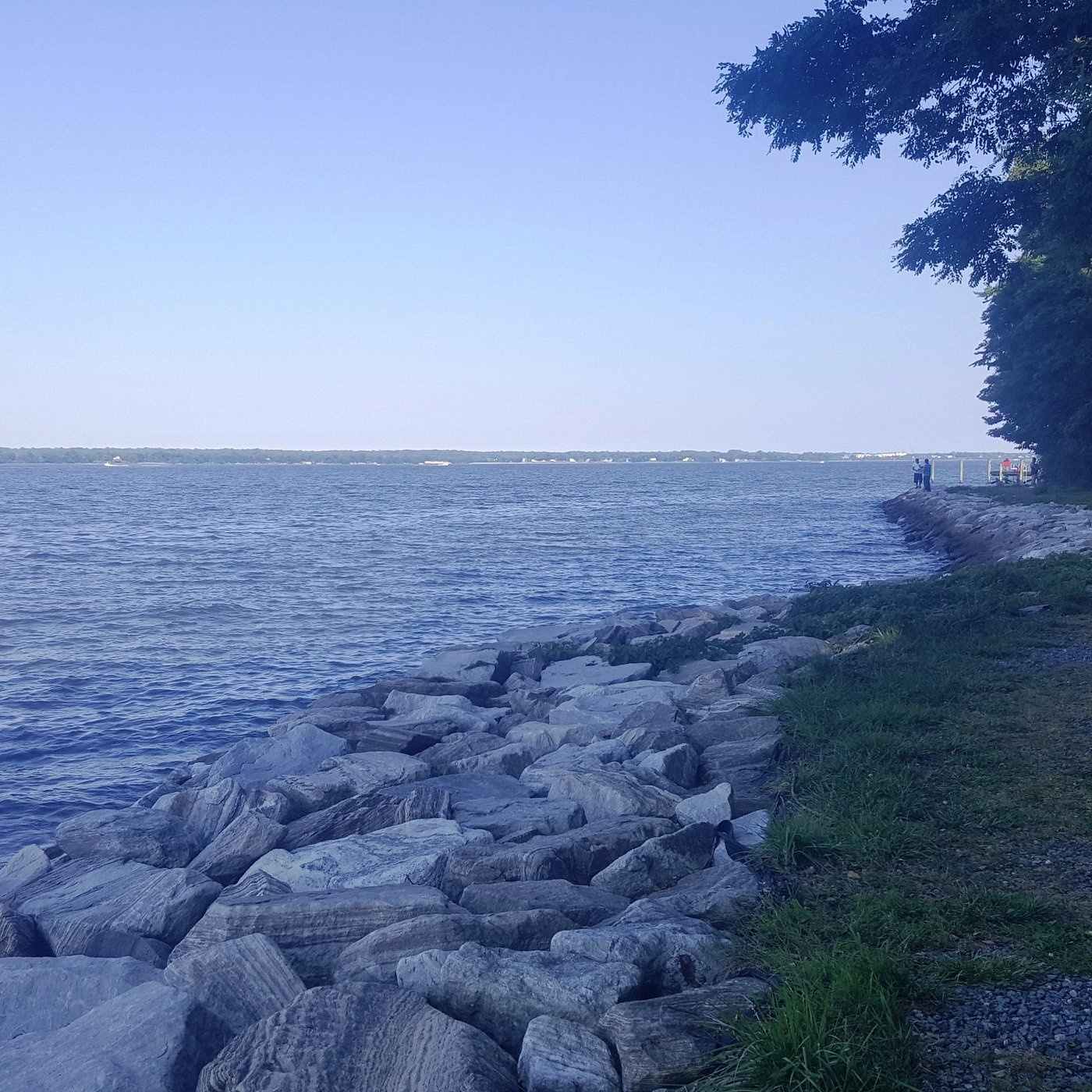
Photos of Hollywood
Overview of Hollywood
Hollywood is a small unincorporated community and census-designated place in St. Mary's County, on the western shore of southern Maryland. With a population of roughly 10,000, it has the feel of a quiet rural crossroads surrounded by farmland, woodlands, and tidal creeks that feed into the broader Chesapeake Bay watershed. The area is best known as a gateway to some of Maryland's most significant early colonial history and to the fishing villages and state parks of the southern peninsula. Hollywood sits about 65 miles southeast of Washington, D.C., and roughly 90 miles south of Baltimore, making it a feasible drive-in destination for visitors exploring the capital region while staying well off the beaten path.
Just a short drive south of Hollywood, Historic St. Mary's City offers an open-air reconstruction of Maryland's first colonial capital, founded in 1634. Visitors can wander past recreated 17th-century dwellings, a working tobacco plantation, a Native American village exhibit, and a square-rigged ship replica, all set on the banks of the St. Mary's River. The site, roughly 15 minutes from Hollywood, is consistently cited as one of the more rewarding historical day trips in the mid-Atlantic.
A bit farther down the peninsula, at the very tip of southern Maryland where the Potomac River meets the Chesapeake Bay, lies Point Lookout State Park. The park, about 45 minutes to an hour south of Hollywood, combines a Civil War-era lighthouse and the remains of a Union hospital with a long stretch of bayfront beach, a fishing pier, and wooded campgrounds. It is a popular spot for boating, birdwatching, and watching the dramatic confluence of the two great waterways.
Across the Patuxent River to the northeast, the waterfront community of Solomons Island provides a more contemporary counterpoint. The Calvert Marine Museum, located on Solomons' harbor, traces the maritime heritage of the Chesapeake region through working boat displays, an outdoor river otter exhibit, and the drum point lighthouse. The drive from Hollywood typically takes around 30 to 40 minutes via the Governor Thomas Johnson Bridge, linking St. Mary's and Calvert counties.
Hollywood makes a compelling base for short-term rentals precisely because it offers the quiet of southern Maryland's countryside while sitting within easy reach of layered historical sites, working waterways, and Chesapeake-front state parks. Travelers who want to step away from the congestion of the D.C. and Baltimore corridors find a slower, water-oriented rhythm here, and the mix of colonial history, maritime culture, and natural scenery gives the area year-round appeal.
Want to know if a property in Hollywood is a good investment?
Enter an address to get instant revenue potential and comps.