
New Bedford, Massachusetts
Want to see how New Bedford compares to other top cities in Massachusetts? Explore all city regulations in Massachusetts. →
New Bedford, MA
Generally Investor Friendly

STR Regulations for New Bedford, Massachusetts
Overview: Are Short-Term Rentals Allowed in New Bedford, MA?
Yes, short-term rentals are legally allowed in New Bedford, MA. However, they are subject to both state-level regulations and specific local restrictions. A significant local development is the city's new policy on Accessory Dwelling Units (ADUs), which explicitly prohibits using ADUs for short-term rentals, such as Airbnbs. This is a key consideration for investors, as it limits the types of properties that can be converted into STRs. Operators must also be aware of and comply with Massachusetts state laws governing short-term rentals.
What do Airbnb hosts actually earn in New Bedford?
New Bedford hosts earn a median $29,709/year with $247 ADR and 63% occupancy.
Top performers pull in $43,014+ per year.
See the full New Bedford market breakdownHow to Start a Short-Term Rental Business in New Bedford
Starting a compliant STR business in New Bedford involves several key steps, governed primarily by state law:
- Register with the Massachusetts Department of Revenue (DOR): You must obtain a Certificate of Registration for each property you offer for rent. This process is managed through the state's MassTaxConnect system.
- Obtain a Business Certificate: You may need to obtain a local business certificate from the City Clerk's office, though this is a general business requirement and not specific to STRs.
- Comply with Local Zoning and ADU Rules: Ensure your property is zoned appropriately for a short-term rental. As of 2024, New Bedford has updated its ADU ordinance. While ADUs are now allowed "by right" on single-family lots, they cannot be used as short-term rentals. This is a critical restriction that affects investment strategies.
- Collect and Remit Taxes: You are responsible for collecting and remitting the state and local room occupancy excise taxes on your rentals.
Required Documents, Permits, Licenses, and Guidelines
The requirements are a combination of state and local obligations:
-
State-Level (Massachusetts Department of Revenue - DOR):
- Certificate of Registration: Mandatory for each property. Must be posted visibly at the rental property.
- Business Registration: You need a MassTaxConnect account to file tax returns.
- Documentation: Proof of residency and adequate insurance may be required during registration.
- Tax Filings: You must file returns and pay the collected room occupancy excise taxes to the DOR on schedule.
-
Local-Level (City of New Bedford):
- Building Permit (if applicable): For any significant construction or renovation, especially when creating an ADU or converting a space.
- Compliance with Zoning Bylaws: The property must be located in a zoning district where STRs are a permitted use.
- Adherence to ADU Ordinance: If your investment strategy involves an ADU, you must follow the new regulations regarding size, parking, and the explicit prohibition on using it for short-term rentals.
Specific Regulations for Short-Term Rentals
Regulations apply at the state, city, and county levels.
State Regulations (Massachusetts)
- Definition: A short-term rental is a non-hotel establishment (like an apartment, house, or condo) where an operator rents out at least one room or unit through advance reservations.
- Registration Requirement: Operators (the property owner or manager) must register with the DOR and obtain a Certificate of Registration for each property.
- Taxation: A 5.7% state room occupancy excise tax applies to short-term rentals.
- Additional Local Taxes: Cities and towns can levy an additional tax of up to 6% and a community impact fee of up to 3%. For properties on Cape Cod and the Islands, an additional 2.75% tax is applied for water protection projects. The total potential tax burden can reach approximately 17.45%.
- 14-Day Exemption: There is a 14-day rental exemption rule, but it is complex and requires annual claiming or renewal with the DOR by January 15th.
City & County Regulations (New Bedford)
- Prohibition in ADUs: The most significant local regulation is the explicit ban on using Accessory Dwelling Units (ADUs) for short-term rentals. This is a direct measure by the city to encourage long-term housing availability and prevent the conversion of these new units into tourist accommodations.
- Transit-Oriented Development (Zoning): New Bedford is updating its zoning to encourage dense, mixed-use development around new MBTA stations. While this doesn't directly regulate STRs, it creates zones where multi-family housing, which could include STRs, is more viable.
- Shortening the Permitting Process: The city is streamlining the process for smaller development projects, which could indirectly make it easier to create legal housing units that could later be used for STRs (except ADUs).
Contact Information for Local Authority
For state-level registration and tax questions, contact the Massachusetts Department of Revenue.
-
Website: Mass.gov - Department of Revenue
-
For local zoning, building permits, and ADU inquiries, contact the New Bedford Department of City Planning.
-
New Bedford Department of City Planning
- Address: 133 William Street, Room 303, New Bedford, MA 02740
- Phone: (508) 979-1488
- Website: (Visit the City of New Bedford's official website and navigate to the "City Hall" and "Departments" sections)
Important Links to Source Pages
- Massachusetts STR Information: Mass.gov - Short-Term Rentals Season Is Here
- State Room Occupancy Excise Tax (Detailed Rules): Mass.gov - Room Occupancy Excise Tax
- New Bedford Housing and Zoning Reforms: New Bedford Light - Laws to Trigger New Housing Headed for Council
- New Bedford ADU Ordinance Amendment (Planning Board Document): New Bedford Planning Board Recommendation - ADU Ordinance Amendment
- Legal Overview of Massachusetts STR Laws: Goldman & Pease - Airbnb Legislative Update: Massachusetts’ New Rules
Next step
Found a property in New Bedford?
Paste any address and get estimated revenue, cash-on-cash return, and comparable STR performance in under 5 minutes. 3 free analyses per day.
Free brief
Get the free New Bedford STR Investment Brief
Revenue data, top neighborhoods, seasonal trends, and the key regulations for New Bedford, Massachusetts in one email.
New Bedford
Market Saturation Score
Photos of New Bedford


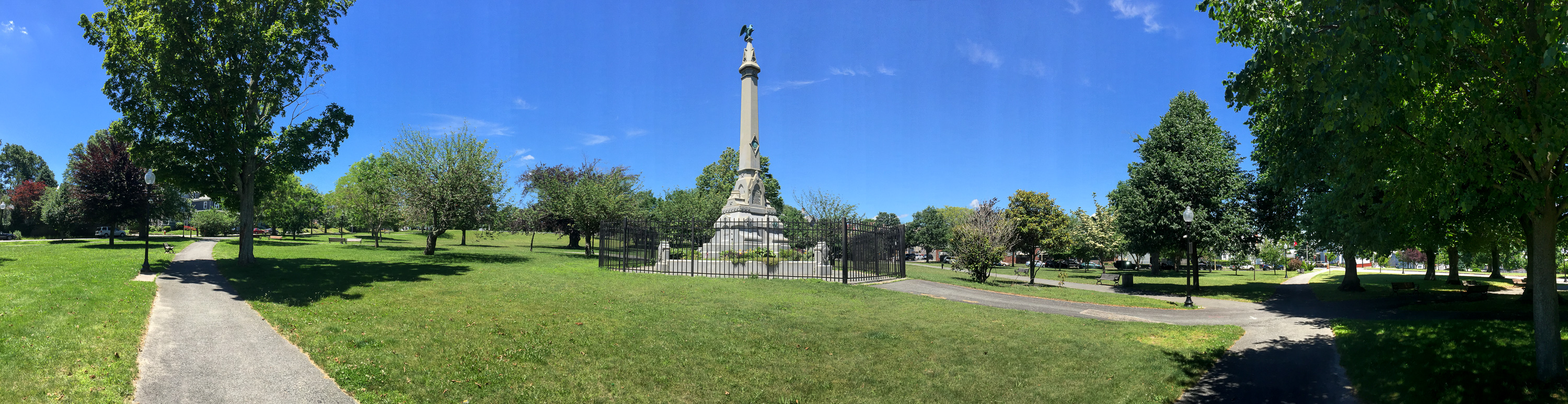
Overview of New Bedford
New Bedford sits on the south coast of Massachusetts in Bristol County, with a population of roughly 95,000 residents. It carries the easy rhythm of a former seafaring powerhouse, where red-brick warehouses line cobblestone streets and the working harbor still hosts fishing boats alongside visiting tall ships. Best known as the whaling capital that once made America rich, New Bedford is also a gateway to the South Coast, Buzzards Bay, and the ferry terminals that connect travelers to Martha's Vineyard. It lies about 60 miles south of Boston and roughly 30 miles southeast of Providence, Rhode Island, making it a natural stopover for travelers exploring southeastern New England.
The New Bedford Whaling Museum anchors the city's cultural identity along the historic waterfront. Housed in a former candle factory, the museum holds one of the world's most significant collections of whaling artifacts, including a half-scale model of the whaling bark Lagoda and the skeleton of a blue whale. It sits within walking distance of downtown, just a short stroll from the cobblestoned streets that once hummed with sailors and merchants.
Right next door, the New Bedford Whaling National Historical Park preserves the cobblestone district's nineteenth-century architecture, with restored counting houses, the Seamen's Bethel chapel, and a seasonal park visitor center. The park interprets the city's role in the global whaling trade and its connections to Herman Melville, and the entire historic district is reachable on foot from almost anywhere downtown.
The waterfront itself remains a working harbor, with fishing vessels unloading at the piers each morning and visitors welcome to browse the seafood markets, take a whale-watching excursion, or simply watch the boats come and go. From State Pier, the Steamship Authority operates seasonal ferry service to Martha's Vineyard, turning a day trip to the island into a popular option for guests who prefer to stay on the mainland.
About fifteen minutes east, the neighboring town of Fairhaven offers additional coastal appeal with its Victorian architecture, the lighthouse at Fort Phoenix, and quiet beaches looking out over Buzzards Bay. The surrounding South Coast also includes Westport's protected estuaries, the campus and coastal trails of the University of Massachusetts Dartmouth a few miles north, and the beaches of Dartmouth, all within a short drive of the city center.
New Bedford's combination of maritime heritage, walkable downtown, and proximity to both island ferries and quiet South Coast beaches gives it a distinctive appeal for short-term rental investors. Visitors come for the whaling history and Portuguese-influenced food scene, then return for the harbor views, the easy day trips, and the chance to experience a working New England seaport that still feels refreshingly undiscovered.
Want to know if a property in New Bedford is a good investment?
Enter an address to get instant revenue potential and comps.