
Emporia, Kansas
Want to see how Emporia compares to other top cities in Kansas? Explore all city regulations in Kansas. →
Emporia, KS
Generally Investor Friendly

STR Regulations for Emporia, Kansas
Overview: Are short‑term rentals allowed in Emporia, KS?
Yes. Short‑term rentals are explicitly allowed in the City of Emporia under Section 7.6 of the zoning regulations (Short‑Term Rentals). Emporia uses a two‑tier system that distinguishes owner‑occupied and non‑owner‑occupied operations and imposes registration, insurance, and licensing requirements for all STRs. Owners must also comply with standard zoning standards (height, setbacks, parking, signage) and any applicable building, fire, and health codes. State‑level obligations for Kansas apply (sales tax, transient guest tax, and health licensing for lodging establishments).
Source: City of Emporia zoning regulations, Section 7.6 (Short‑Term Rentals) [www.emporiaks.gov/DocumentCenter/View/7254]
What do Airbnb hosts actually earn in Emporia?
Emporia hosts earn a median $18,083/year with $123 ADR and 50% occupancy.
Top performers pull in $24,521+ per year.
See the full Emporia market breakdownHow to start an STR in Emporia, KS
Step 1 — Confirm zoning and permitted parcel types
- Section 7.6.1 states: “Short‑term rental (STR) as defined in Section 12 shall be permitted in all Parcel Types where residential is the primary use.”
- Ensure the parcel type of your property is residential (see the zoning map and use matrix in Article 2).
Step 2 — Decide your operating model
-
Owner‑Occupied STR:
- Operate an STR in your primary residence.
- Annual license and fee required (to cover processing).
- Maintain liability insurance: $1,000,000 per incident; $3,000,000 aggregate.
- Register with the City (see Step 4).
-
Non‑Owner‑Occupied STR:
- Must obtain a Conditional Use Permit (CUP).
- Must comply with traditional bed and breakfast standards.
- Annual license and fee required.
- Maintain liability insurance: $1,000,000 per incident; $3,000,000 aggregate.
- Designate a local contact person.
- Register with the City (see Step 4).
Step 3 — Secure zoning approvals
- Owner‑occupied STRs do not require a CUP (license and registration apply).
- Non‑owner‑occupied STRs require a CUP and must follow bed and breakfast standards (see “Compliance with bed and breakfast standards” below).
Step 4 — Register with the City
- All STR operators must register with the City on a form provided by the Zoning Administrator.
- Submit registration with license fees and proof of liability insurance.
Step 5 — Compliance with general zoning and life‑safety codes
- STRs must comply with height, yard, parking, and sign regulations (Article 2 and Article 7), and applicable building, fire, and health codes.
- Use‑specific standards (e.g., Section 7.13 parking) apply as for other lodging uses.
Step 6 — Insurance and local contact
- Maintain insurance as required in 7.6.1a/b.
- Non‑owner‑occupied STRs must designate a local contact person.
Step 7 — Obtain licenses and permits
- Apply for the annual STR license with the Zoning Administrator (owner‑occupied and non‑owner‑occupied).
- Apply for a Conditional Use Permit for non‑owner‑occupied STRs.
- Obtain any building, fire, or health permits as applicable.
Step 8 — Ongoing compliance
- Renew license annually.
- Ensure continuous compliance with zoning, insurance, registration, and any CUP conditions.
- Keep records for taxes and audits.
Required documents, permits, licenses, and guidelines
City‑level requirements
- Annual STR license application (owner‑occupied and non‑owner‑occupied).
- Registration form (provided by the Zoning Administrator).
- Proof of liability insurance:
- $1,000,000 per incident; $3,000,000 aggregate (7.6.1a/b).
- Conditional Use Permit (non‑owner‑occupied STRs).
- Compliance with bed and breakfast standards (for non‑owner‑occupied).
- Compliance with Article 7 supplemental zoning standards (e.g., parking in 7.13, signs in 7.16).
- Health and life‑safety permits (as applicable under Kansas state statutes for lodging establishments).
- Sales tax and transient guest tax registration and compliance (Kansas state level; see “State‑level compliance” below).
County‑level applicability
- Section 20‑10 governs Home Occupations. STRs are specifically addressed in Section 7.6 and generally fall within zoning regulations rather than home occupation rules; however, if operating outside city limits within Lyon County’s jurisdiction, consult the County Zoning Administrator for any county‑specific licensing or health requirements.
Registration form reference
- Section 7.6.1c: “All STR operators shall register with the City on a form provided by the Zoning Administrator.” Obtain the form directly from the Zoning Administrator.
Source: Emporia zoning regulations, Section 7.6 (Short‑Term Rentals) [www.emporiaks.gov/DocumentCenter/View/7254]
Specific regulations for STRs in Emporia (city) and, if relevant, county/state
City of Emporia zoning provisions
- Allowed in all residential primary use Parcel Types (7.6.1).
- Two‑tier operating system:
- Owner‑Occupied: License; registration; insurance; no CUP required.
- Non‑Owner‑Occupied: License; registration; insurance; CUP; bed and breakfast compliance; local contact person required.
- Insurance requirements: $1M per incident; $3M aggregate (7.6.1a/b).
- Registration required (7.6.1c).
- Parking standards: See Section 7.13 for lodging uses. For example:
- Hotel: 2 spaces per 1,000 gross square feet.
- Adjustments may apply in historic or designated areas (see 7.13.3).
- Sign standards: See Section 7.16 (sign permits, temporary sign rules, restrictions). EMC (Electronic Message Centers) prohibited on residential sole‑use parcels; certain temporary sign allowances may apply.
- Height and yard regulations: General standards in Section 7.2 apply (projections and accessory structure setbacks).
- Home Occupations: Section 7.5 rules do not supersede STR provisions; STRs are specifically governed by 7.6.
County‑level notes (Lyon County)
- Section 20‑10 (Home Occupations) provides definitions and standards for accessory occupational uses. STRs are not treated as home occupations in the City regulations; if an STR operates in unincorporated Lyon County, confirm any County zoning or licensing requirements with the County Zoning Administrator.
Kansas state‑level compliance
- Sales tax (Kansas Department of Revenue): STRs are subject to sales tax. Register, collect, and remit sales tax.
- Transient Guest Tax (TGT): Counties may impose TGT; operators must register and remit if applicable.
- Health licensing: Lodging establishments (including bed and breakfasts and hotels) are regulated by the Kansas Department of Health and Environment (KDHE). Consult KDHE for licensing and inspection requirements for lodging operations.
Sources:
- City of Emporia zoning regulations, Section 7.6 (Short‑Term Rentals) [www.emporiaks.gov/DocumentCenter/View/7254]
- City of Emporia zoning regulations, Article 7 (Supplemental Regulations) [www.emporiaks.gov/DocumentCenter/View/7254]
- Section 2–3 (Definitions) [www.emporiaks.gov/DocumentCenter/View/1061/Section-20-10-Home-Occupations-PDF?bidId=]
- Article 2 (Rules, Interpretations, Definitions) [www.emporiaks.gov/DocumentCenter/View/1061/Section-20-10-Home-Occupations-PDF?bidId=]
- City of Emporia, Zoning Administrator contact (see contact section)
- KDHE lodging licensing and Kansas Department of Revenue tax registration (state-level compliance; verify current requirements on state websites)
Compliance with “traditional bed and breakfast” standards (for non‑owner‑occupied STRs)
Because non‑owner‑occupied STRs must “comply with the regulations set forth for a traditional bed and breakfast,” the following standards apply by reference. Note: Operators must verify the latest codified requirements, as the full text of the bed and breakfast standards is not included in the provided excerpts.
Typical standards for bed and breakfast inns (indicative, verify for your permit)
- Definition: A residential structure (other than a hotel or lodging house) providing sleeping rooms and meals for compensation by pre‑arrangement for definite short‑term periods (Section 2‑3).
- Use as lodging house: If meals are not provided, the operation may be treated as a lodging house under zoning definitions.
- Licensing and inspections: Health and life‑safety licensing per KDHE; ensure fire, building, and occupancy compliance.
- Parking: Follow Section 7.13 lodging standards (e.g., hotel parking ratios).
- Signs: Comply with Section 7.16; confirm allowances for residential parcels.
- Occupancy and life safety: Verify occupancy limits, egress, smoke detectors, and fire suppression systems per applicable codes.
- CUP conditions: Bed and breakfast compliance is a condition for non‑owner‑occupied STR CUP approvals; the City may attach additional safeguards to assure compatibility.
Source: Emporia zoning regulations, Section 7.6.1b (non‑owner‑occupied STRs must comply with bed and breakfast standards) [www.emporiaks.gov/DocumentCenter/View/7254]
Parking and traffic impacts
- STRs must meet parking standards under Section 7.13, which specifies minimum spaces by use and allows alternate designs (e.g., reduced ratios in certain districts).
- For lodging uses such as hotels and bed and breakfasts, baseline ratios apply (e.g., “Hotel: 2 spaces per 1,000 gross square feet”).
- Plan for guest parking on approved surfaces and avoid obstructing sight triangles (Section 7.4) or fire lanes.
- If your operation is on a corner lot, ensure compliance with sight/vision triangle standards.
Source: Emporia zoning regulations, Section 7.13 (Loading, Unloading, and Parking Standards) [www.emporiaks.gov/DocumentCenter/View/7254]
Signage for STRs
- A sign permit is generally required for non‑temporary signs, and a licensed sign contractor must install them (Section 7.16).
- Temporary signs: Allowed subject to conditions (size limits, placement behind required build‑to‑line, time limits).
- Electronic Message Centers (EMCs): Prohibited on residential sole‑use parcels.
- Home occupation sign allowances do not apply to STRs; verify allowed signage under Section 7.16 and any CUP conditions.
Source: Emporia zoning regulations, Section 7.16 (Sign Regulations) [www.emporiaks.gov/DocumentCenter/View/7254]
Contact information (local authority in charge of STRs)
- City of Emporia — Zoning Administrator
- Phone: (620) 343‑4270
- Email: planning@emporiaks.gov
- Website: www.emporiaks.gov
- Office location: Use the City’s main contact line to confirm the current address and hours for the Planning & Zoning Department.
For operations outside city limits, contact Lyon County Zoning:
- Lyon County Zoning Administrator
- Phone: (620) 343‑4270 (verify county-specific number on county website)
- Website: www.lyoncountykansas.org
Note: The City’s zoning regulations indicate the Zoning Administrator administers STR licensing and registration; the City’s fee schedule will specify the annual license fee.
Links to source pages
- Emporia Zoning Regulations, Section 7.6 (Short‑Term Rentals): www.emporiaks.gov/DocumentCenter/View/7254
- Emporia Zoning Regulations, Article 7 (Supplemental Zoning Regulations): www.emporiaks.gov/DocumentCenter/View/7254
- City of Emporia Home Occupations (Section 2–3 Definitions; Section 20‑10) [Context for zoning interpretations]: www.emporiaks.gov/DocumentCenter/View/1061/Section-20-10-Home-Occupations-PDF?bidId=
Practical checklist for investors
- Confirm the parcel type is residential and STRs are permitted.
- Choose operating model: owner‑occupied vs. non‑owner‑occupied.
- Obtain and maintain insurance: $1M per incident; $3M aggregate.
- Register annually with the City (Zoning Administrator).
- Non‑owner‑occupied: apply for CUP and comply with bed and breakfast standards.
- Verify KDHE lodging licensing and local life‑safety requirements.
- Meet parking and signage standards; obtain permits as needed.
- Register for Kansas sales tax and any applicable transient guest tax.
- Keep records, renew annually, and maintain compliance with CUP conditions.
If you have further details about bed and breakfast standards, parking ratios for your specific parcel type, or the City’s current fee schedule, confirm with the Zoning Administrator before filing your application.
Next step
Found a property in Emporia?
Paste any address and get estimated revenue, cash-on-cash return, and comparable STR performance in under 5 minutes. 3 free analyses per day.
Free brief
Get the free Emporia STR Investment Brief
Revenue data, top neighborhoods, seasonal trends, and the key regulations for Emporia, Kansas in one email.
Emporia
Market Saturation Score
Photos of Emporia


Overview of Emporia
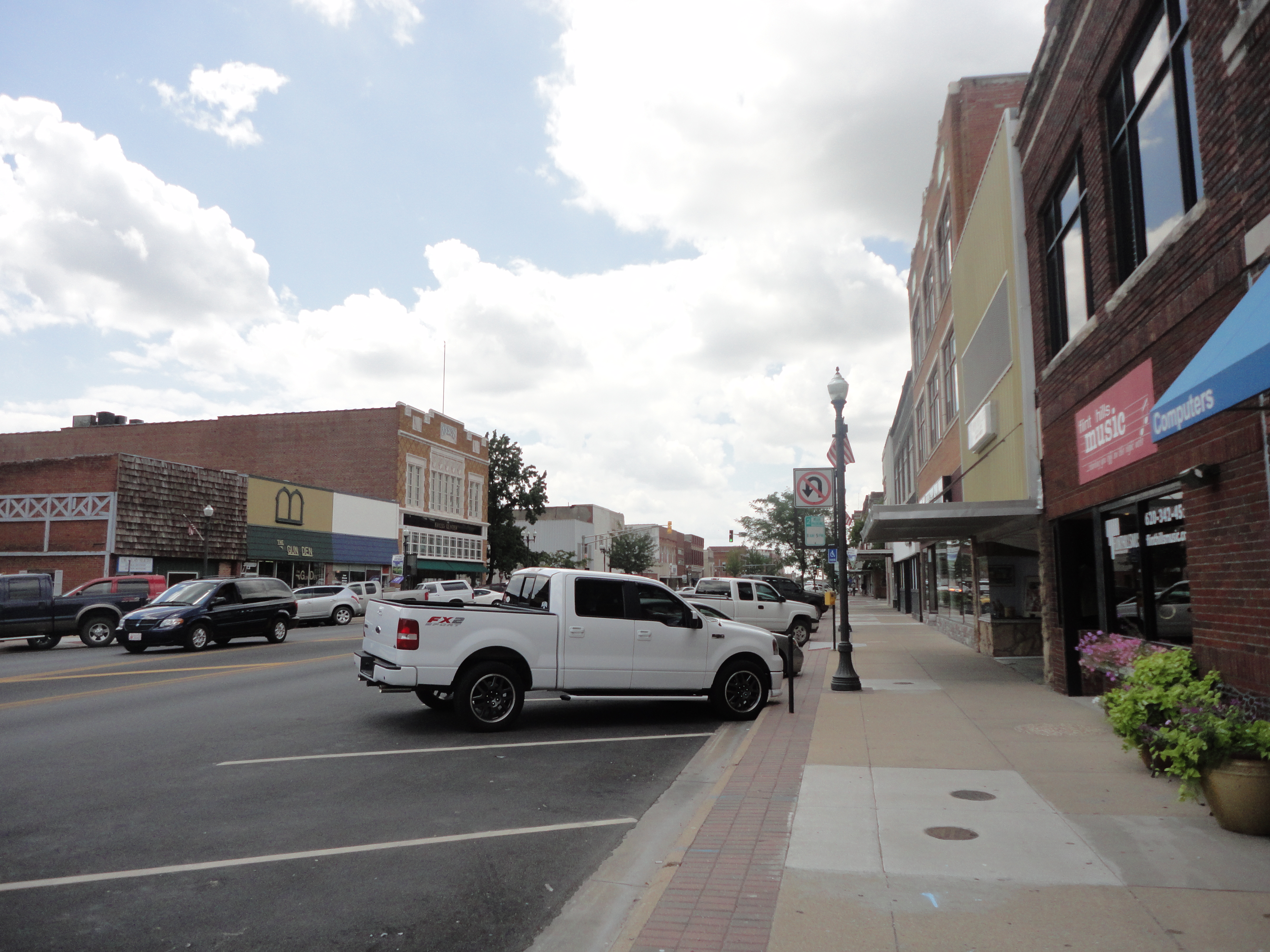
Emporia sits in the east-central part of Kansas as the county seat of Lyon County, with a population of roughly 24,000 residents. The city has a friendly, small-college-town character thanks in large part to Emporia State University, whose campus gives the downtown a youthful energy. Emporia is widely recognized as a gateway to the Flint Hills, the last major stretch of tallgrass prairie in North America, and it has built a reputation as a hub for cyclists and outdoor enthusiasts who travel through the surrounding region. The community lies along Interstate 35, positioned about 60 miles southwest of Topeka, roughly 90 miles southwest of Kansas City, and about 60 miles northeast of Wichita.
A standout destination within the city is the David Traylor Zoo, a compact, free-admission zoo operated by the city that focuses on education and conservation, particularly of species connected to the tallgrass prairie ecosystem. Visitors can see native animals such as bison, prairie dogs, and raptors alongside more exotic residents, and the zoo is a quick, family-friendly stop in town. A short drive south of Emporia, the Flint Hills National Wildlife Refuge offers more than 18,000 acres of wetlands, native grasslands, and woodlands that attract migratory waterfowl, shorebirds, and songbirds, with walking trails, observation decks, and a visitor center that interpret the region's unique landscape.
To the southwest, the Tallgrass Prairie National Preserve near Strong City protects a sweeping remnant of the once-vast tallgrass ecosystem and the historic Spring Hill/Z-Bar Ranch, with hiking trails, ranger-led tours, and seasonal bison herd viewing that draw visitors from across the country. Within Emporia itself, the Lyon County History Center and the restored historic Granada Theatre anchor a walkable downtown that mixes locally owned shops, cafes, and murals reflecting the city's prairie heritage, while the annual Unbound Gravel cycling event each June turns the town into a major gathering point for endurance riders from around the world.
Emporia makes a compelling base for short-term rentals because it offers the affordability and ease of a small Midwestern city paired with access to some of Kansas's most distinctive landscapes. Visitors can settle into a comfortable rental within walking distance of restaurants and the university, then make easy day trips to the tallgrass preserves, the wildlife refuge, and the broader Flint Hills scenic byway. The combination of college-town amenities, outdoor recreation, and recurring event-driven travel gives the market a steady mix of leisure and visiting-friends-and-family demand throughout much of the year.
Want to know if a property in Emporia is a good investment?
Enter an address to get instant revenue potential and comps.