
Rensselaer, Indiana
Want to see how Rensselaer compares to other top cities in Indiana? Explore all city regulations in Indiana. →
Rensselaer, IN
Challenging To Investors
STR Regulations for Rensselaer, Indiana
Overview: Are short‑term rentals allowed in Rensselaer, IN? Short‑term rentals (rentals for fewer than 30 days to transient guests) are lawful in Indiana and are not expressly banned by Rensselaer’s current Zoning Ordinance. The ordinance explicitly regulates Bed & Breakfasts (Section H.c) but contains no “short‑term rental” or “transient guest” definition, and it does not provide a standalone STR registration/permit scheme at the city level. That means that, in the absence of a city‑level STR registry, Indiana’s state rules and general zoning framework govern how you operate. As an investor, you should:
- Confirm your intended use against the zoning district at your property (see “Zoning and Use Classification” below).
- If you plan to operate a Bed & Breakfast (often a small, owner‑occupied operation offering lodging with breakfast), follow Section H.c standards and pursue any conditional use, permits, and licenses the city may require.
- For full‑home STRs (non‑B&B), validate zoning and observe safety, tax, and good‑neighbor obligations. If your property is in a residential district, be aware that some jurisdictions interpret short‑term rental of a single-family home as a “boarding” or “lodging” use that may require a conditional use or be deemed inconsistent with the district’s intent.
- State sales and state/local county occupancy taxes will generally apply; Indiana has a state sales tax and a state‑level innkeeper’s tax that can be collected by platforms and hosts. County occupancy taxes may also apply depending on the county.
How to start a short‑term rental business in Rensselaer
-
Confirm zoning and land‑use fit
- Obtain your parcel’s zoning designation from the Rensselaer Zoning Map and Chapter 28 (2008).
- Review whether your operation is a Bed & Breakfast (Section H.c) or a short‑term rental (non‑B&B).
- If you intend to operate a B&B, confirm permitted districts, any conditional use requirements, site development standards (parking, buffers, signage), and living‑arrangement requirements (owner‑occupancy or manager‑on‑site).
- For full‑home STRs in residential districts, seek a pre‑application meeting with the Building Commissioner/Planning Department. If the use is treated as “lodging/boarding,” a conditional use approval may be needed.
-
Structure your operating model
- Owner‑occupied vs. investor‑owned: owner‑occupancy may align with Bed & Breakfast allowances.
- Unit size, guest counts, and number of rooms/structures (e.g., ADUs) must comply with the district’s development standards and any B&B/STR approvals.
-
Permits, licensing, and safety
- Improvement Location Permit (ILP), Building Permit (if renovations), Sign Permit (if signage is needed), and Certificate of Occupancy (CO) prior to operation, if applicable.
- State fire and building safety approvals where applicable, and compliance with health/sanitation standards (consult the Jasper County Health Officer, per the ordinance’s health requirements).
-
Taxes and bookkeeping
- Indiana state sales tax (currently 7% statewide as of 2025) applies to STR transactions; lodging may also be subject to state innkeeper’s tax. If a county occupancy tax is in effect, it applies to STRs as “lodging.”
- Decide whether the booking platform will collect/remit lodging taxes (common practice on Airbnb/VRBO) or whether you will collect and remit directly. Many platforms will collect Indiana sales tax and state innkeeper’s tax for bookings in Indiana; confirm local county occupancy tax collection arrangements.
- Implement a record‑keeping process aligned to state/local requirements. Retain booking records, guest counts, room‑night data, and tax filings.
-
Insurance and liability
- Carry appropriate property and liability coverage for a short‑term rental operation. Some hosts obtain special‑form or commercial‑lines coverage; verify underwriting requirements with your carrier. If offering services akin to a B&B, assess whether host responsibilities and duty of care considerations require higher limits.
Required documents, permits, licenses, and guidelines (baseline)
-
Property and use documentation
- Property deed or proof of lawful possession.
- Site plan showing access, parking, landscaping, and any signage.
- If operating a B&B or lodging use, include floor plans and a lodging unit inventory.
-
Zoning and planning
- Zoning compliance review against Chapter 28 (2008) and the current zoning map.
- If applicable, a Conditional Use application to the Board of Zoning Appeals for lodging/boarding in residential districts.
- Compliance with supplemental standards in Sections G (District Standards) and Section I (Sign Regulations) and Section H.c (Bed & Breakfasts) where applicable.
-
Building and safety
- Improvement Location Permit (ILP) and Building Permit (for alterations).
- State Department of Fire Prevention and Building Safety approvals for commercial structures as required.
- Certificate of Occupancy (CO) after inspections confirm compliance.
- Health/sanitation compliance per Jasper County Health Officer (as referenced in the ordinance).
-
Taxes
- Indiana sales tax registration (if you are the merchant of record for direct bookings).
- State innkeeper’s tax registration if applicable.
- County occupancy tax registration where applicable.
- A platform‑remittance agreement or plan for sales and occupancy tax collection/remittance.
-
Insurance
- Property and liability insurance evidencing coverage for lodging operations (appropriate limits per lender/underwriter).
-
Operational
- House rules and safety protocol, posted emergency numbers, evacuation diagram (a common good‑practice control even if not codified locally).
- Guest check‑in/ID and record retention (for tax and compliance purposes).
Rensselaer zoning and STR/B&B standards
-
Zoning districts (selected, from Chapter 28)
- Residential: RS Suburban Residential; R‑1 Single‑Family Residential; R‑2 Two‑Family Residential; R‑3 Multi‑Family Residential.
- Commercial/Business: B‑1 Neighborhood Business; B‑2 Regional Business; B‑3 Central Business.
- Industrial: I‑1 Light Industrial; I‑2 Heavy Industrial.
- Agricultural/Transitional: A‑1 Prime Agricultural; A‑2 Agricultural Transition.
- Special: PUD Planned Unit Development.
-
Overlay districts (apply additional standards)
- AO Airport Overlay; CO Corridor Overlay; FO Flood Overlay (floodplain rules and variances are governed by the BZA and IDNR); HO Historic Overlay; IO Interchange Overlay.
-
Bed & Breakfasts are expressly addressed (Section H.c)
- The ordinance treats Bed & Breakfasts as a regulated lodging use, with standards for parking, buffers, signage, and siting. If your operation fits the B&B definition, follow Section H.c and secure any conditional use approval required in the district.
- Clarify whether a STR that is not owner‑occupied, or that rents an entire home, can be considered a “lodging” or “boarding” use requiring conditional use in a residential district. This is a local determination. The Building Commissioner and Board of Zoning Appeals have the authority to interpret use classifications and grant/deny conditional uses.
-
Development standards and administration
- Section G (District Standards) controls lot/yards, height, fencing, landscaping/buffering, vision clearance, parking/loading/stacking, and district standards tables.
- Section I governs sign permits and standards by district.
- The Technical Review Committee and Building Commissioner administer permits and coordinate fire, utilities, engineering, police, and public works.
- Enforcement: Violations are a common nuisance (Section B.g). Penalties may escalate up to $2,500 per ordinance violation. FO Flood Overlay violations may trigger insurance consequences.
Indiana state‑level STR frameworks (apply when no local STR registry exists)
-
Sales and occupancy taxes
- Indiana state sales tax applies to lodging. State innkeeper’s tax also applies. Many booking platforms collect these taxes at booking and remit to Indiana. Confirm platform remittance with the platform and with the Indiana Department of Revenue (DOR).
- County occupancy taxes vary by county; check whether Jasper County (where Rensselaer is located) has a local occupancy tax and whether it explicitly includes STRs. If it does, ensure proper registration and remittance.
-
State fire and building safety
- State fire and building safety requirements apply to commercial lodging, as noted in the ordinance (state plan approvals for applicable structures).
-
Local authority and enforcement
- The city’s Building Commissioner, BZA, and Plan Commission interpret zoning, review conditional uses, and issue ILPs, building permits, and certificates of occupancy. Enforcement actions are coordinated by the Building Commissioner.
Local authority contacts (Rensselaer, IN)
-
Building Commissioner/Code Enforcement
- Phone: Use the city’s general number or request via the city’s official channels; currently not listed in the provided materials.
- Office: City of Rensselaer, Building Department (exact address to verify on the city’s official website).
-
City Hall / Clerk‑Treasurer (for permits/fees)
- Phone: Not provided in the cited materials; verify on the city’s official website.
- Email: Not provided in the cited materials; verify on the city’s official website.
- Website: www.rensselaer.in.gov
-
Jasper County Health Department (health/sanitation standards)
- Phone/Email: Not provided in the cited materials; confirm via county website and the city ordinance reference to the Health Officer.
Key cautions and local actions before launch
- Zoning classification first: If you are in a residential district and intend to rent for fewer than 30 days, request a written zoning interpretation from the Building Commissioner and the BZA. If the use is deemed a “lodging” or “boarding” use, file for conditional use and meet Section G standards (parking, setbacks, buffers).
- Bed & Breakfast vs. full‑home STR: Section H.c governs Bed & Breakfasts. Confirm whether your model can be approved as a B&B; if not, explore whether a full‑home STR requires conditional use or is not permitted in your district.
- FO Flood Overlay: If your site is in the FO Flood Overlay, plan for flood‑related compliance, IDNR coordination, and potential variances.
- Taxes: Register with the Indiana DOR as needed; confirm that your platform remits Indiana sales tax and state innkeeper’s tax, and register for any applicable county occupancy tax.
Links to source pages
- www.rensselaer.in.gov/egov/documents/1283874660794.pdf (Rensselaer Zoning Ordinance, Chapter 28, 2008)
- www.rensselaer.in.gov (City of Rensselaer official website)
Notes on information gaps
- The ordinance includes Section H.c (Bed & Breakfasts) but does not define or regulate “short‑term rentals” as a distinct category; no city‑level STR registry is identified in the provided materials.
- Specific licensing/fee schedules for Bed & Breakfasts, conditional use procedures, and county occupancy tax details (Jasper County) are not included here and should be confirmed with the city and county.
What do Airbnb hosts actually earn in Rensselaer?
Rensselaer hosts earn a median $30,331/year with $147 ADR and 65% occupancy.
Top performers pull in $38,828+ per year.
See the full Rensselaer market breakdownNext step
Found a property in Rensselaer?
Paste any address and get estimated revenue, cash-on-cash return, and comparable STR performance in under 5 minutes. 3 free analyses per day.
Free brief
Get the free Rensselaer STR Investment Brief
Revenue data, top neighborhoods, seasonal trends, and the key regulations for Rensselaer, Indiana in one email.
Rensselaer
Market Saturation Score
Photos of Rensselaer

Overview of Rensselaer
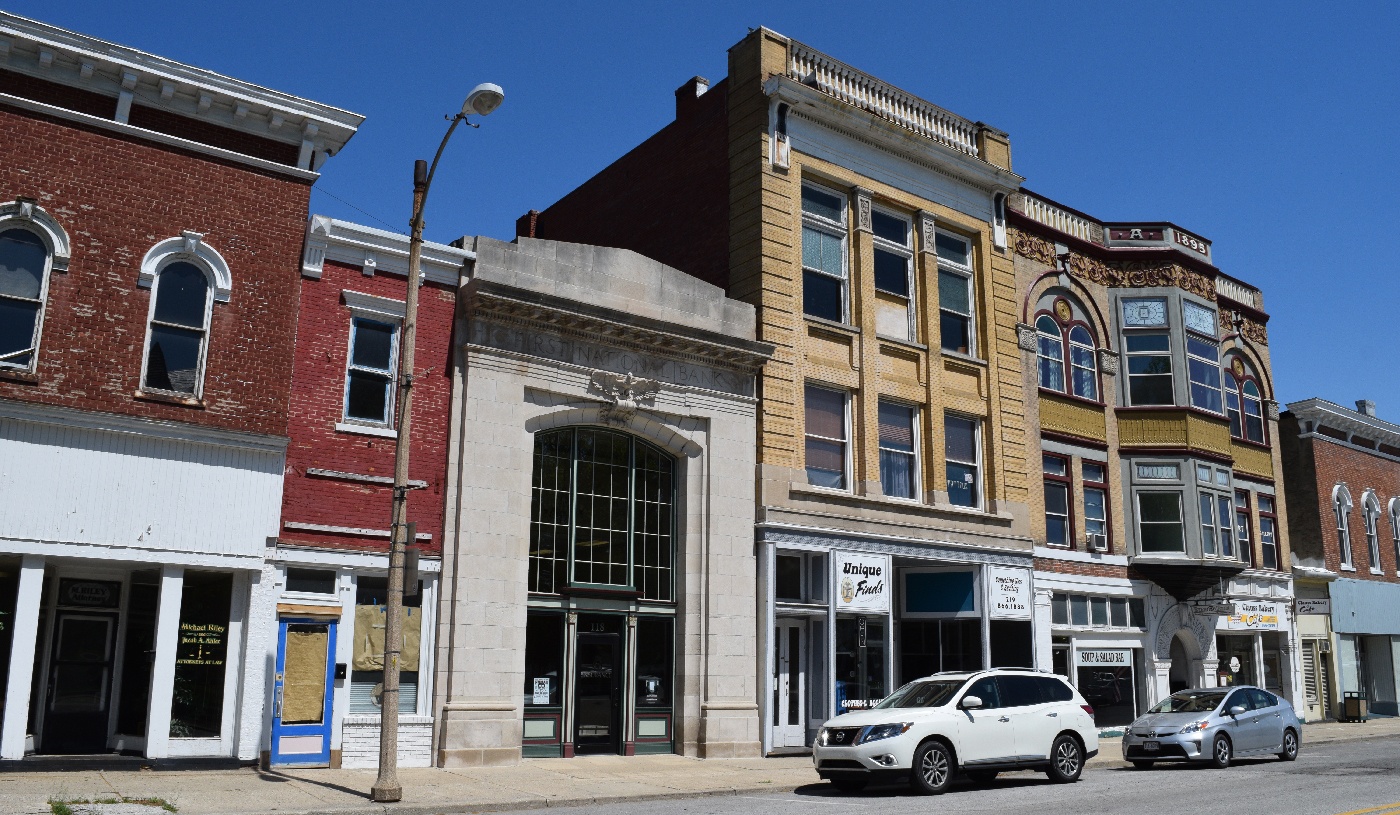
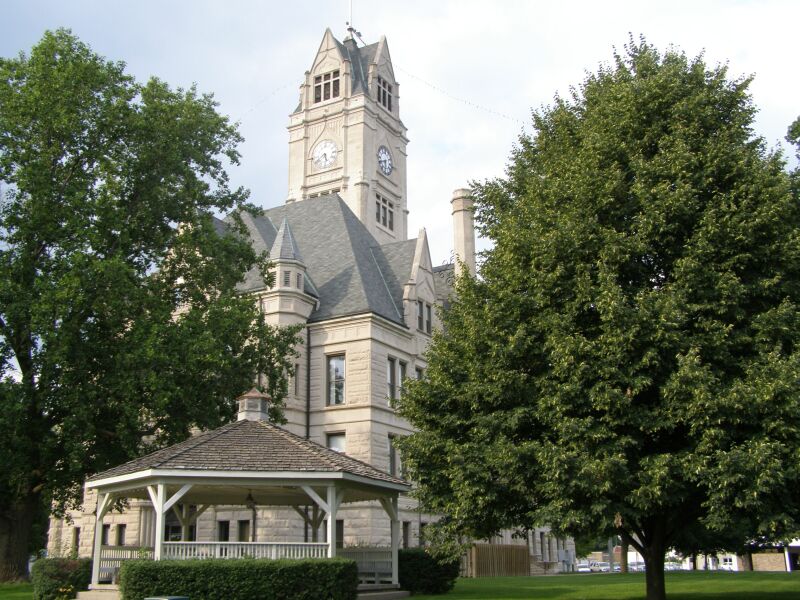
Rensselaer sits in northwestern Indiana as the county seat of Jasper County, a small city of roughly 5,000 to 6,000 residents. It carries the unhurried, friendly character typical of Midwestern county seats, with a traditional downtown square framed by the historic Jasper County Courthouse and surrounded by farmland and open countryside. The community is best known as a gateway to the Jasper-Pulaski Fish and Wildlife Area and to the Kankakee River, both of which draw hunters, birders, anglers, and paddlers from across the region. Rensselaer lies about ninety miles southeast of Chicago, roughly a ninety-minute to two-hour drive via Interstate 65.
The Jasper-Pulaski Fish and Wildlife Area is one of the signature outdoor destinations near Rensselaer, situated only a few minutes south of town. Managed by the Indiana Department of Natural Resources, the property encompasses more than eight thousand acres of marshes, prairie, and woodland and is a magnet for waterfowl hunting. It is most famous, however, for the staggering numbers of sandhill cranes that gather there during their fall and spring migrations, drawing birdwatchers to its observation areas in numbers that swell local traffic for several weeks each season.
The Kankakee River flows through the landscape just west and south of Rensselaer and forms a natural corridor that shapes much of the local recreation. Long appreciated for its smallmouth bass fishing and its gentle, meandering current, the river attracts canoeists, kayakers, and float-fishermen who use public access points within a short drive of the city limits. The associated state properties along its banks support hunting and wildlife viewing across much of the year, giving the area an unusually full calendar of outdoor activity for such a small town.
Downtown Rensselaer retains a walkable, small-town feel, with locally owned shops and restaurants gathered around the courthouse square. St. Joseph's College, a once-prominent Catholic liberal arts institution on the edge of town, closed in 2017 but its grounds and chapel remain recognizable landmarks that contribute to the city's identity. Together with the surrounding agricultural landscape and the steady flow of travelers along I-65, these features give Rensselaer a sense of place that is rooted in both community tradition and the natural rhythms of northwestern Indiana.
Rensselaer's appeal as a short-term rental base comes from this layered offering: a compact, welcoming county seat with a charming downtown, immediate access to a major state wildlife area, and proximity to the Kankakee River's outdoor recreation, all within roughly two hours of Chicago and Indianapolis. Guests seeking a quieter alternative to busy I-65 corridor lodging — whether for a crane-watching weekend, a fishing trip, or a slower-paced small-town stay — find a community that combines easy travel access with a strong sense of rural Midwestern character.
Want to know if a property in Rensselaer is a good investment?
Enter an address to get instant revenue potential and comps.