
Farmersburg, Indiana
Want to see how Farmersburg compares to other top cities in Indiana? Explore all city regulations in Indiana. →
Farmersburg, IN
Challenging To Investors
STR Regulations for Farmersburg, Indiana
Note: Farmersburg-specific short‑term rental (STR) ordinances, permits, or licensing provisions were not located in the provided materials. The only detailed municipal code included is from the Town of Shelburn, Indiana. This guide therefore provides (i) a Shelburn‑code‑based look at any provisions that could affect a lodging use in a Sullivan County town; and (ii) statewide Indiana requirements that will still apply in Farmersburg. You should independently verify whether Farmersburg or Clay County has adopted any additional STR‑specific rules or tax provisions.
Overview: Are STRs allowed in Farmersburg, IN?
- No city‑specific STR prohibition or permission ordinance was found in the provided code (Shelburn, 2020 Code of Ordinances). The code does not include a “short‑term rental” or “lodging” section. Therefore, STRs are not explicitly prohibited by that code.
- The Shelburn utility provisions treat “Farmersburg” as a wholesale water customer, indicating the two communities share infrastructure and services within Sullivan County. That does not create STR permissions or bans, but it can affect utility fees and processes for any lodging operation.
- Investors must still comply with Indiana state tax, safety, health, and general zoning/use requirements. State law authorizes municipalities to regulate lodging; if Farmersburg has adopted STR‑specific local rules, they are not in the provided documents.
What do Airbnb hosts actually earn in Farmersburg?
Farmersburg hosts earn a median $14,975/year with $76 ADR and 75% occupancy.
Top performers pull in $25,579+ per year.
See the full Farmersburg market breakdownHow to start a short‑term rental business in this market
- Due‑diligence and site selection
- Confirm the intended property’s zoning and whether lodging is an authorized use in the relevant district. Even absent an STR ordinance, a lodging use may be treated as a commercial use and require a zoning/compliance review by the town/county.
- Verify that the structure can safely meet residential occupancy and life‑safety standards applicable to transient lodging (e.g., smoke/CO detection, emergency egress, posted evacuation plan).
- Review deed restrictions, HOA rules, and neighborhood covenants if any exist.
- Utilities and service feasibility
- For any multi‑night lodging operation, ensure water, sewer, stormwater, and solid waste services are properly set up. The Shelburn code provides a useful example of Sullivan County‑area service operations; it treats Farmersburg as a wholesale water customer.
- Where metering and cross‑connection controls are required, follow the local utility’s rules (e.g., separate meters per residence, backflow prevention requirements, right‑of‑entry for inspections).
- Tax registration and collection
- Register for Indiana Sales Tax (Form ST‑101) and for the Statewide Innkeeper’s Tax (2.5%) via INBiz or DOR online portals. If hosting through platforms (Airbnb, VRBO, etc.), ensure the platform remits the innkeeper’s tax on your behalf, or you are set up to collect and remit it directly.
- If county-level innkeeper’s or food and beverage taxes apply, register with Clay County as required.
- Operational setup
- Select a reliable management model (owner‑hosted vs. professional management).
- Establish cleaning standards, property condition reporting, guest screening, and emergency procedures. Ensure local ordinances on noise, occupancy, parking, and nuisance are observed.
- Ongoing compliance and monitoring
- File sales and innkeeper’s tax returns as required (monthly/quarterly depending on volume).
- Maintain current business registrations (state sales tax account), utility accounts, and insurance.
- Monitor the Town of Shelburn and Sullivan County for any STR ordinance updates that could affect regional policy and standards.
Required documents, permits, licenses, and guidelines
Because no STR‑specific permitting was found for Farmersburg or in the Shelburn code, treat the following as a working compliance baseline:
-
State business and tax registrations
- Indiana Sales Tax Certificate (Form ST‑101) obtained via INBiz/DOR.
- Statewide Innkeeper’s Tax (2.5%) registration (via INBiz/DOR).
- Local innkeeper’s tax registration with Clay County if applicable.
-
Zoning/use confirmation
- Written confirmation from the town or county zoning administrator that transient lodging is an allowed use for the subject property.
-
Life safety/fire/health (apply and verify locally)
- Posting of emergency exit diagrams and local emergency contacts for guests.
- Functional smoke detectors in all sleeping areas and common spaces.
- Carbon monoxide detectors near fuel‑burning appliances.
- Adequate egress, lighting, and locking hardware consistent with Indiana Residential Code/Indiana Fire Code for lodging.
-
Utility setup
- Separate residential water meter per dwelling unit (as a utility operational baseline in the region; confirm with local utility).
- Backflow prevention assembly if required for hazardous users or cross‑connection risk, and consent to inspection per utility rules.
-
Insurance
- General liability and property coverage appropriate for lodging. Additional endorsements (e.g., short‑term rental host liability) may be advisable.
Specific regulations in this city, county, and state
-
City/Town (Shelburn example; no STR chapter identified in the provided code)
- No short‑term rental permitting or occupancy caps were located in the 2020 Shelburn ordinances.
- A 2.5% general penalty clause applies when no specific penalty is otherwise provided, which can attach to ordinance violations if a future STR or lodging ordinance is enacted and violated.
- Municipal code includes broad nuisance, parking, and life‑safety topics that any lodging operator must respect to avoid enforcement or neighbor complaints.
-
County
- Clay County may administer innkeeper’s and other local taxes. The provided documents do not include county STR ordinances or local tax rates.
-
State of Indiana (applies statewide)
- Innkeeper’s tax (2.5%) applies to gross retail rental of lodging for fewer than 30 days. Platforms and hosts must register and collect/ remit as applicable.
- Sales tax generally applies; register and file returns via DOR. Use the INBiz portal to establish state tax accounts.
- Local zoning and building/fire/health codes may govern lodging uses. Confirm with local authorities for any additional requirements.
Contact information and portals
-
Indiana Department of Revenue (DOR)
- Online portal: dor.in.gov
- For tax account setup, registrations, and filings (Sales Tax and Statewide Innkeeper’s Tax)
-
Indiana INBiz (Business Registration Portal)
- Portal: inbiz.in.gov
- Use to register/manage state tax accounts and permits
-
Clay County Government (for local taxes/ordinances)
- Website: claycounty.in.gov (general)
- Phone: 812‑443‑1303 (general information)
- Mailing Address: Clay County Government, 609 E National Ave, Brazil, IN 47834
- Note: Contact the County Treasurer/Assessor/Tax Collector for innkeeper’s tax registration and current local rates.
-
Town of Shelburn (proxy municipal contact if Farmersburg information is unavailable)
- Address: Town Hall, 12 N Main St, Shelburn, IN 47879
- Phone: 812‑397‑2035
- Email: clerk‑treasurer@townofshelburn.org (via published email on official materials)
- Website: shelburn.in.gov
- Note: Use as a regional reference only; STR policy for Farmersburg may differ.
-
Town of Farmersburg (contact for zoning/utility confirmation)
- Address: PO Box 215, Farmersburg, IN 47850
- Phone: 812‑696‑2365
- Note: Verify whether a municipal website/email exists and confirm zoning and any STR policies directly with town staff.
Links to source pages (provided and relevant)
- Shelburn, Indiana – 2020 Code of Ordinances (current through 2019)
Key sections of the code that most directly inform lodging operations in the region:
- General penalty for ordinance violations: §10.99 (up to $2,500)
- Nuisance (general): §91.01–§91.12
- Cross‑connection and backflow prevention: §51.20–§51.28
- Utility disconnection procedures and fees: §50.01 (sewer), §51.01 (water)
- Water rates and charges (Farmersburg listed as wholesale user): §51.02
Additional state‑level resources (not in the provided content)
- Indiana DOR – Statewide Innkeeper’s Tax
- Indiana INBiz Portal
- Indiana Statewide Sales Tax Rates
Practical takeaway
- Provided materials do not identify any explicit STR prohibition or permission for Farmersburg, and there is no STR‑specific licensing chapter in the included municipal code. This does not mean STRs are automatically permitted; it means you must confirm zoning and any local taxes or occupancy rules with the town and county.
- Operationally, a prudent investor should assume state innkeeper’s tax compliance is mandatory, obtain written zoning confirmation for lodging use, and adopt life‑safety standards consistent with Indiana codes. Always verify the latest municipal and county ordinances before listing.
Next step
Found a property in Farmersburg?
Paste any address and get estimated revenue, cash-on-cash return, and comparable STR performance in under 5 minutes. 3 free analyses per day.
Free brief
Get the free Farmersburg STR Investment Brief
Revenue data, top neighborhoods, seasonal trends, and the key regulations for Farmersburg, Indiana in one email.
Farmersburg
Market Saturation Score
Photos of Farmersburg

Overview of Farmersburg
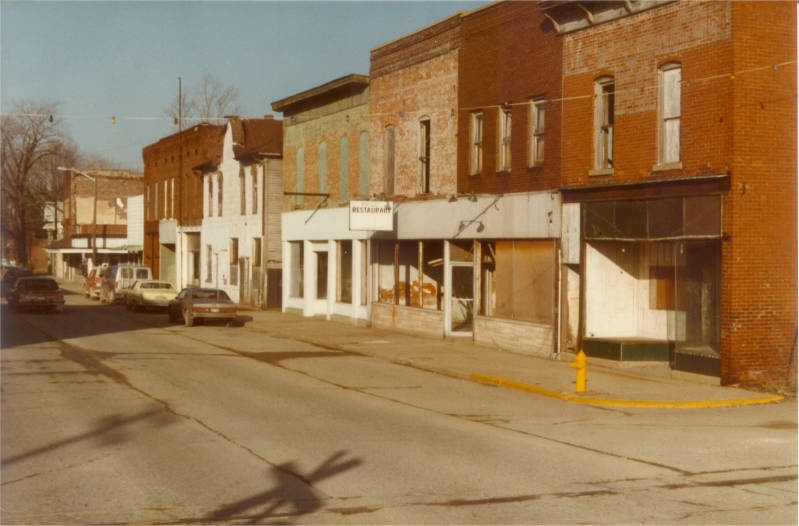
Farmersburg is a small town in Sullivan County in southwestern Indiana, with a population of approximately 1,100 residents. The community has a quiet, rural Midwestern character, surrounded by farmland and gently rolling terrain, and it functions as an unassuming stop along the corridors connecting larger regional hubs. It sits about 20 miles south of Terre Haute, the nearest sizable city, and roughly 100 miles southwest of Indianapolis, making it a convenient crossroads community for travelers exploring the Wabash Valley.
A short drive southeast of Farmersburg brings visitors to Shakamak State Park, one of Indiana's older state parks. The park surrounds three lakes and offers fishing, swimming, hiking trails, and family campgrounds, providing an easy day trip or overnight outdoor experience for guests who want a taste of Indiana's natural landscape without venturing far from their rental.
About 40 minutes to the south and east lies the historic town of Vincennes, home to the George Rogers Clark National Historical Park. The park's memorial rotunda commemorates the Revolutionary War victory by George Rogers Clark and his frontiersmen over British-held Fort Sackville in 1779. Visitors can tour the visitor center, walk the grounds, and explore one of the oldest continuously inhabited European settlements in the region, giving the trip a strong historical dimension.
Closer to home, Terre Haute offers a more urban complement to a Farmersburg stay. The city, located roughly 20 minutes to the north, is home to Indiana State University and a stretch of riverfront along the Wabash. Visitors can take in college-town amenities, browse local museums, and enjoy casual dining before returning to the slower pace of Farmersburg for the evening. Nearby interstates, including I-70, make the area easy to reach by car from Indianapolis, St. Louis, or other Midwestern destinations.
With its central position in the Wabash Valley, Farmersburg offers short-term rental owners a foothold in an underexplored corner of Indiana. Guests can pair a quiet small-town base with day trips to a state park, Revolutionary War history, and the broader cultural offerings of Terre Haute, creating a flexible itinerary that suits both outdoor enthusiasts and history-minded travelers.
Want to know if a property in Farmersburg is a good investment?
Enter an address to get instant revenue potential and comps.