
Dekalb, Illinois
Want to see how Dekalb compares to other top cities in Illinois? Explore all city regulations in Illinois. →
Dekalb, IL
Generally Investor Friendly
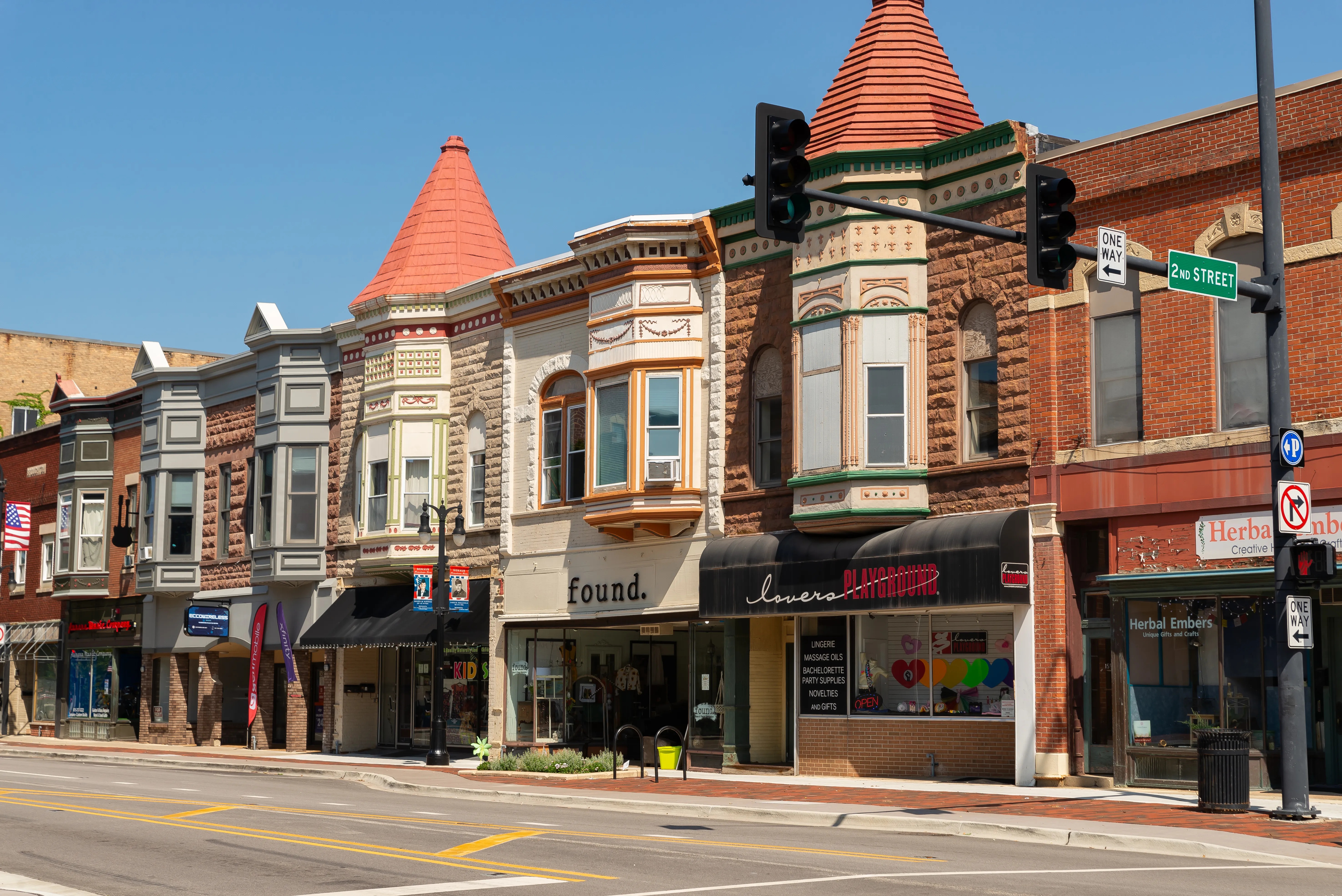
STR Regulations for Dekalb, Illinois
Overview: Are Short-Term Rentals Allowed in DeKalb County, IL?
Yes. Short-term rentals (STRs)—loosely defined as rentals of any room, lodging, or overnight accommodation for 30 days or fewer—are allowed in DeKalb County, Illinois, and are not subject to a dedicated, county- or municipality-specific registration, permit, or local excise tax regime identified in the provided sources. That means STR activity is generally permitted so long as you comply with underlying zoning, building, safety, and state-level tax obligations.
Two caveats for investors:
- Local ordinances can change quickly; verify with the county’s zoning and building departments before converting a residential asset to an STR.
- State-level lodging taxes apply; registration with the Illinois Department of Revenue (IDOR) for Hotel Operators’ Occupation Tax is required (see “Required Documents, Permits, Licenses, and Guidelines” below).
The information below is intended to be practical and action-oriented; where the provided content does not definitively address a requirement, we flag it for confirmation.
What do Airbnb hosts actually earn in Dekalb?
Dekalb hosts earn a median $25,693/year with $144 ADR and 63% occupancy.
Top performers pull in $37,092+ per year.
See the full Dekalb market breakdownHow to Start a Short-Term Rental Business in DeKalb County, IL
A disciplined pre-launch process will reduce delays and compliance risk:
- Confirm zoning and land-use eligibility
- Use: Confirm that “overnight lodging” is an allowed use in the zoning district on the parcel you intend to operate. While DeKalb County has no dedicated STR ordinance, an STR is a lodging use and must be compatible with the zoning. Contact the DeKalb County Community Development Department (815-895-7188; communitydevelopment@dekalbcounty.org) to confirm allowed uses and any special use, variance, or site plan requirements for your specific parcel. Keep email confirmations.
- Assess physical suitability and safety
- Building and fire safety: If you will host guests in a single family home or a small multi-bedroom dwelling, you are not converting the structure into a hotel, but you must meet applicable building and life safety requirements. Where an STR includes features that create increased occupancy or assembly (e.g., events, bars, or unusually large gatherings), additional approvals and code reviews may be required (see the Anderson Acres case below as an analogous example of what can trigger additional permits and conditions).
- Register for state-level lodging taxes
- Hotel Operators’ Occupation Tax (HOOT): Register with the Illinois Department of Revenue and file/pay HOOT returns on gross rent from lodging. Registration requires a federal EIN, state sales tax account, and business details. Filing is typically monthly or quarterly depending on volume.
- Sales tax: If any sales of tangible goods (e.g., supplies, merchandise, or food/beverage sales) occur separate from the room rental, you may need to collect and remit Illinois sales/use tax. A separate Business Tax Registration (sales/use tax) may be required depending on activities.
- Obtain county/local business credentials (confirm applicability)
- DeKalb County Business License: Confirm whether DeKalb County requires a general business license for an STR. Sources confirm Business Licenses exist via the County Business License Division, but applicability to STRs is not specified. Contact the Community Development Department to confirm.
- Municipal business registration (if inside an incorporated area): If your property lies within a city or village, check with that municipality for a local business registration or tax registration. DeKalb County unincorporated areas are covered by county departments.
- Implement good-neighbor practices and operational controls
- Quiet enjoyment: Maintain policies and on-site monitoring to ensure guests do not disrupt neighbors. If your property could be considered a “lodging house,” local noise, parking, and nuisance standards may apply; review any applicable county nuisance or public health ordinances.
- Parking and traffic: Provide clear on-site parking and circulation plans, particularly for multi-bedroom listings.
- Emergency and agent contact: Maintain a local 24/7 contact for emergency and compliance issues.
- Monitor future STR ordinance developments
- The provided Georgia DeKalb County materials highlight that governments increasingly adopt dedicated STR rules. For now, DeKalb County, IL has no such ordinance; however, an investor should monitor county/community communications for future updates.
Required Documents, Permits, Licenses, and Guidelines
Note: Use this as a working checklist. Some items are required by law; others are advisable or may be triggered by the nature/scale of your operation.
-
Illinois Department of Revenue (IDOR)
- Hotel Operators’ Occupation Tax (HOOT) registration and account
- Filing and payment for HOOT (and, if applicable, sales/use tax) in accordance with IDOR guidance
- State EIN (FEIN), business entity details, banking info
-
DeKalb County
- Property zoning verification/approval (confirm with Community Development Department)
- Site plan or compliance statement (if requested for zoning or safety)
- Business License (confirm whether required for STR operations in the county)
- Any required permits triggered by building/fire/life safety conditions or events:
- Building permits (for alterations/additions/life safety systems)
- Site Development Permit (often required for larger commercial/event uses)
- Sign permits (if exterior signage is installed)
- Liquor license (only if serving alcohol; County Clerk issues liquor licenses)
- Health Department approvals (if food service or public health issues are implicated)
- State Plumbing Inspector approvals (for added plumbing)
- Accessibility compliance (for significant event or assembly capacity)
-
Helpful (and sometimes required) reports for commercial/event-lodging context
- Natural Resource Information Report: If any land disturbance is planned or if a more intensive event venue is contemplated, consider a DeKalb County Soil and Water Conservation District review.
- IDNR EcoCAT consultation: For significant land changes or potential environmental concerns, a state-level consultation is prudent and sometimes required.
-
Corporate and bookkeeping setup
- Incorporation or entity formation (e.g., LLC) and EIN
- Bank accounts designated for tax remittances
- STR platform listing and management agreements
- House rules and guest policies aligned with state and local standards
-
Insurance
- General liability and property coverage appropriate for an STR; carriers may require minimum liability limits, especially if events or alcohol service is part of the property use.
Specific Regulations: DeKalb County, IL and State of Illinois
-
DeKalb County, IL
- No dedicated STR permit/local excise tax regime identified in the provided sources for DeKalb County, IL. General zoning, building, fire/life safety, and nuisance standards apply.
- As a comparator and reminder of how jurisdictions can regulate event-heavy lodging uses: A DeKalb County, IL planned development (PD-C) ordinance for an event venue (Anderson Acres at 10256 Somonauk Road) shows how larger events trigger multiple permits: site development permits, building permits, sign permits, liquor licenses, health approvals, plumbing approvals, accessibility compliance, hours of operation, traffic management, lighting controls, and on-site parking standards. While not an STR law, it illustrates the regulatory touchpoints for lodging/event complexes with increased occupancy and activities.
-
State of Illinois
- Hotel Operators’ Occupation Tax (HOOT): Applies to gross rent from lodging; IDOR registration and periodic filings are required.
- Sales/Use Tax: If you sell goods or food separately from the room rental, sales/use tax registration and remittance may be required.
- Platforms and hosts are generally responsible for collecting and remitting applicable state and local taxes. Confirm current rates and local hotel taxes with IDOR and the DeKalb County Treasurer’s Office.
Note on Georgia DeKalb County content
- A separate DeKalb County (Georgia) STR ordinance mentions an 8% excise tax and a permit regime via the County’s Business License Division. That information is not applicable to DeKalb County, Illinois, and is included here solely to illustrate jurisdictional variability.
Contact Information (DeKalb County, IL)
DeKalb County Community Development Department
- Address: 110 East Sycamore Street, Sycamore, IL 60178
- Phone: (815) 895-7188
- Email: communitydevelopment@dekalbcounty.org
- Website: www.dekalbcounty.org
- Notes: Primary contact for zoning verification, building/fire life-safety requirements, and general permitting pathways.
Illinois Department of Revenue (IDOR)
- Phone: (217) 782-2036
- HOOT and Sales/Use Tax guidance: www2.illinois.gov/revenue
DeKalb County Health Department (for health-related approvals if food service or public health matters are implicated)
- Address: 2550 N. Annie Glidden Road, DeKalb, IL 60115
- Phone: (815) 748-7400
- Website: www.dchd.org
DeKalb County Clerk (Liquor Licensing, where applicable)
- Address: 200 N. Main St., Sycamore, IL 60178
- Phone: (815) 895-7149
- Website: www.dekalbcounty.org/CountyClerk
Source Links
Note: The following links were extracted from the provided materials. Some pertain to Georgia and should not be misapplied to Illinois.
- DeKalb County (Georgia) STR project page (not applicable to IL): engagedekalb.dekalbcountyga.gov/airbnb-dekalb-county
- DeKalb County (Georgia) STR ordinance (not applicable to IL): www.dekalbcountyga.gov/sites/default/files/users/user3686/Excise%20Tax%20STR%20Ordinance%20(revised%2007.24.25%20CLEAN.pdf
- DeKalb County (Illinois) Zoning Ordinance No. 2023-003 (Anderson Acres PD-C event venue): dekalbcounty.org/wp-content/uploads/2023/02/ord-2023-003.pdf
- DeKalb County Community Development (Illinois) home page: communitydevelopment@dekalbcounty.org (Email from provided header; see also: www.dekalbcounty.org)
If you need, I can convert this into a downloadable checklist and a pre-launch compliance schedule for your first property in DeKalb County, IL.
Next step
Found a property in Dekalb?
Paste any address and get estimated revenue, cash-on-cash return, and comparable STR performance in under 5 minutes. 3 free analyses per day.
Free brief
Get the free Dekalb STR Investment Brief
Revenue data, top neighborhoods, seasonal trends, and the key regulations for Dekalb, Illinois in one email.
Dekalb
Market Saturation Score
Photos of Dekalb


Overview of Dekalb
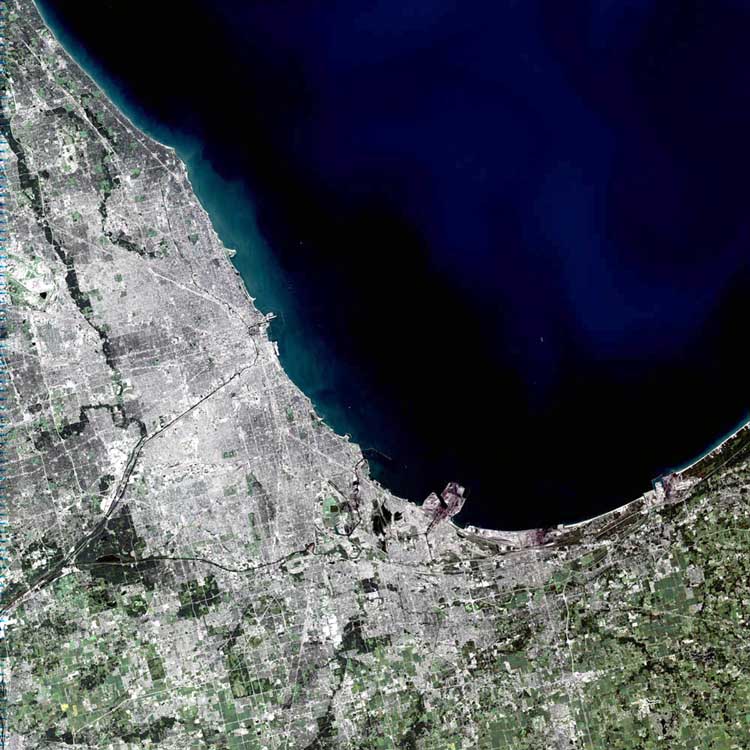
DeKalb is a mid-sized city in northern Illinois and serves as one of the principal communities of DeKalb County, with an estimated population in the low-40,000s. The city has a distinctly college-town character, anchored by Northern Illinois University, and combines small-city walkability with the agricultural heritage of the surrounding prairie landscape. Often considered part of the greater Chicago region, DeKalb sits roughly 60 to 65 miles west of downtown Chicago along the Jane Addams Memorial Tollway, making it a practical crossroads for travelers moving between the city, the Driftless Area, and the agricultural flatlands of north-central Illinois. The community takes its name from Johann de Kalb, the German-born French general of the American Revolution, and that historical connection is woven into local museums and historic sites.
A natural starting point for visitors is the Ellwood House Museum, a Victorian-era mansion and surrounding estate just minutes from downtown DeKalb. The site preserves the home of barbed-wire magnate Isaac Ellwood and offers period furnishings, gardens, and exhibits on local history. As one of the city's most recognizable landmarks, it provides a glimpse into the wealth and civic ambition of late-nineteenth-century northern Illinois, and it sits within a short drive of the NIU campus and the city's historic neighborhoods. More information can be found on the Ellwood House Museum website.
Northern Illinois University is itself a draw, with the NIU campus featuring public art, a performing arts center, and the eventual home of the university's football and convocation events at Huskie Stadium. Visitors traveling for games, graduations, conferences, and cultural performances often find themselves looking for lodging near campus, especially during the academic year and summer events.
Just east of DeKalb lies Sycamore, the DeKalb County seat, which offers a charming historic downtown with locally owned shops, restaurants, and the Sycamore Historic District, a stretch of preserved nineteenth-century architecture worth a slow afternoon stroll. Sycamore is only about ten minutes from DeKalb, making the two towns a natural pairing for visitors who want a small-town Illinois experience within easy reach of the university city.
For travelers willing to venture a bit farther, the broader region opens up quickly. Rockford is roughly 35 miles to the northwest, offering larger-city amenities, while the scenic state parks of the Illinois River valley, including Starved Rock and its cluster of canyons and waterfalls, lie about 75 miles to the south-southwest. To the east, the Chicago suburbs and Lake Michigan shoreline are within a 90-minute drive, making DeKalb a convenient inland base.
DeKalb makes a compelling short-term rental market because it pairs steady, year-round demand from university visitors and regional travelers with proximity to some of northern Illinois's most appealing day-trip destinations. Its central location along the I-39 and I-90 corridors, its walkable historic core, and its balance of small-town charm with big-city access give property owners a reliable mix of leisure, family, and event-driven stays throughout the year.
Want to know if a property in Dekalb is a good investment?
Enter an address to get instant revenue potential and comps.