
Champaign, Illinois
Want to see how Champaign compares to other top cities in Illinois? Explore all city regulations in Illinois. →
Champaign, IL
Challenging To Investors
STR Regulations for Champaign, Illinois
Overview: Are Short-Term Rentals Allowed in Champaign, IL?
Yes, short-term rentals are explicitly allowed in Champaign, Illinois, subject to compliance with city regulations. The city has implemented a structured regulatory framework that permits STR operations while balancing neighborhood interests and ensuring public safety. As of 2026, Champaign requires all short-term rental operators to obtain proper licensing, meet safety standards, and comply with tax obligations. The city's approach reflects its recognition of the economic benefits of short-term rentals while maintaining community standards through comprehensive oversight and enforcement mechanisms.
The regulatory environment continues to evolve, with city officials actively refining requirements based on market conditions and community feedback. Properties near the University of Illinois campus represent particularly attractive opportunities given the consistent demand from students, parents, academics, and visitors throughout the academic year and special events.
What do Airbnb hosts actually earn in Champaign?
Champaign hosts earn a median $25,873/year with $168 ADR and 58% occupancy.
Top performers pull in $36,703+ per year.
See the full Champaign market breakdownHow to Start a Short-Term Rental Business in Champaign
1. Initial Planning and Property Assessment
Before acquiring or listing a property for short-term rental use, conduct a comprehensive evaluation to ensure compliance with local zoning requirements. Properties in residential zones face specific restrictions, including density limitations that require STRs to be at least 200 feet apart. Commercial and mixed-use areas generally offer more operational flexibility with fewer distance requirements.
2. Licensing and Registration Process
The foundation of legal STR operation begins with obtaining a valid short-term rental license from the City of Champaign. This process must be completed before listing properties on platforms like Airbnb or VRBO. The registration requires comprehensive documentation including property surveys, safety certifications, and contact information for local property management representatives who can respond to issues 24/7.
3. Safety and Building Code Compliance
Properties must meet current building codes and International Fire Code standards as adopted by the city. Essential safety features include smoke detectors, carbon monoxide detectors, and clearly marked emergency exits. Properties must also comply with occupancy limits based on square footage and bedroom count, which are designed to ensure guest safety while minimizing neighborhood disruption.
4. Insurance and Financial Preparation
Secure adequate insurance coverage specifically designed for short-term rental operations. This coverage should protect against property damage, liability claims, and business interruption. Additionally, establish proper financial systems for tracking rental income, expenses, and tax obligations.
Required Documents, Permits, Licenses, and Guidelines
Essential Documentation Requirements
STR License Application: Complete application through the City of Champaign's official channels, including:
- Property inspection and safety certification
- Proof of adequate insurance coverage meeting city minimums
- Contact information for a local responsible party available 24/7
- Property surveys and documentation of compliance with fire safety and building codes
Insurance Requirements: Property owners must maintain current insurance coverage that meets or exceeds city standards for short-term rental operations.
Safety Certifications: Properties must pass safety inspections verifying compliance with current building codes and fire safety requirements.
Tax Registration and Compliance
State Sales Tax Registration: Illinois requires STR operators to register with the Illinois Department of Revenue for sales tax purposes and collect applicable rates on rental transactions.
Municipal Lodging Tax Registration: Operators must register for local hotel/motel tax collection and remittance. The city imposes a municipal lodging tax of 6% of gross rental receipts.
Income Tax Documentation: Maintain detailed records of all rental income and expenses for federal and state income tax reporting purposes.
Ongoing Compliance Documentation
Guest Registry and Occupancy Logs: Maintain detailed records of all rental activities, including guest information, rental periods, and any incidents or complaints.
Annual Compliance Reports: Submit required annual documentation demonstrating continued compliance with all operational and safety standards.
Specific Regulations for Short-Term Rentals
City-Level Regulations (Champaign)
Licensing Requirements: All short-term rental properties must obtain a valid STR license before hosting guests. The licensing fee structure varies based on property type and occupancy limits, with annual renewal requirements.
Tax Obligations:
- Municipal lodging tax: 6% of gross rental receipts (remitted monthly to the city)
- State sales tax: Collection and remittance required per Illinois Department of Revenue guidelines
Zoning Restrictions:
- Residential zones: Properties must be at least 200 feet apart, with specific density thresholds per block
- Commercial and mixed-use areas: Fewer distance restrictions and higher allowable concentrations
- University area considerations: Special regulations apply to properties near campus
Safety and Operational Standards:
- Smoke and carbon monoxide detectors required
- Clear emergency exit marking
- Occupancy limits based on square footage and bedroom count
- 24/7 contact availability for guests and neighbors
- Noise control measures and complaint response protocols
County-Level Regulations
While specific Champaign County regulations for short-term rentals were not detailed in the provided content, STR operators should consult with Champaign County officials regarding any additional county-level requirements that may apply to their properties.
State-Level Regulations (Illinois)
Sales Tax Requirements: Illinois requires STR operators to register for state sales tax purposes and collect the applicable rate on rental transactions. The Illinois Department of Revenue provides detailed guidance on compliance requirements.
Business Registration: STR operations may require additional business registrations depending on the structure and scope of the rental operation.
Fire Safety and Building Codes: Properties must comply with state-adopted building codes and International Fire Code standards.
Contact Information for Local Authorities
City of Champaign - Neighborhood Services Department
Primary Contact:
- Phone: 217-403-7070
- Purpose: Rental housing inspections, code compliance questions, STR licensing assistance
General City Contact:
- Address: 102 N. Neil St., Champaign, IL 61820
- Phone: 217-403-8700 (Voice)
- TDD: 217-403-8736
- Website: champaignil.gov/
Department-Specific Contacts:
- Building Safety Division: Through City of Champaign fire department
- Planning and Development Department: For zoning questions and property use requirements
State-Level Authority
Illinois Department of Revenue
- Purpose: Sales tax registration and compliance for short-term rental operations
- Website: www2.illinois.gov/rev/businesses/taxinformation/other/hotel/Pages/default.aspx
Additional Resources
City of Champaign Planning Division:
- Purpose: Updated zoning maps and specific guidance for university-adjacent properties
- Website: champaignil.gov/community-development/planning-zoning/
Source Pages and Additional Resources
- Jaken Finance Group - Champaign STR Laws Guide: www.jakenfinancegroup.com/champaign-short-term-rental-laws-2026-a-complete-guide
- Summer Vacation Rental Management - Champaign Market Guide: www.gosummer.com/vacation-rental-management/champaign-illinois
- City of Champaign - Rental Housing Inspections: champaignil.gov/neighborhood-services/neighborhood-code-compliance/rental-housing-inspections/
- City of Champaign Official Website: champaignil.gov/
- Illinois Department of Revenue - Hotel Tax Information: www2.illinois.gov/rev/businesses/taxinformation/other/hotel/Pages/default.aspx
Important Notes for Investors:
- Regulations continue to evolve, requiring ongoing monitoring of city ordinances and policy changes
- Properties near the University of Illinois campus offer the highest demand potential
- Professional property management services can help ensure consistent compliance with all regulatory requirements
- Early engagement with city officials and code enforcement officers can provide valuable insights into upcoming regulatory changes
- Consider properties that can function as both short-term and long-term rentals for operational flexibility
This guide provides a comprehensive foundation for understanding and complying with Champaign's short-term rental regulations. Given the evolving nature of these laws, investors should regularly consult official city sources and consider working with legal and regulatory professionals to ensure ongoing compliance.
Next step
Found a property in Champaign?
Paste any address and get estimated revenue, cash-on-cash return, and comparable STR performance in under 5 minutes. 3 free analyses per day.
Free brief
Get the free Champaign STR Investment Brief
Revenue data, top neighborhoods, seasonal trends, and the key regulations for Champaign, Illinois in one email.
Champaign
Market Saturation Score
Photos of Champaign


Overview of Champaign
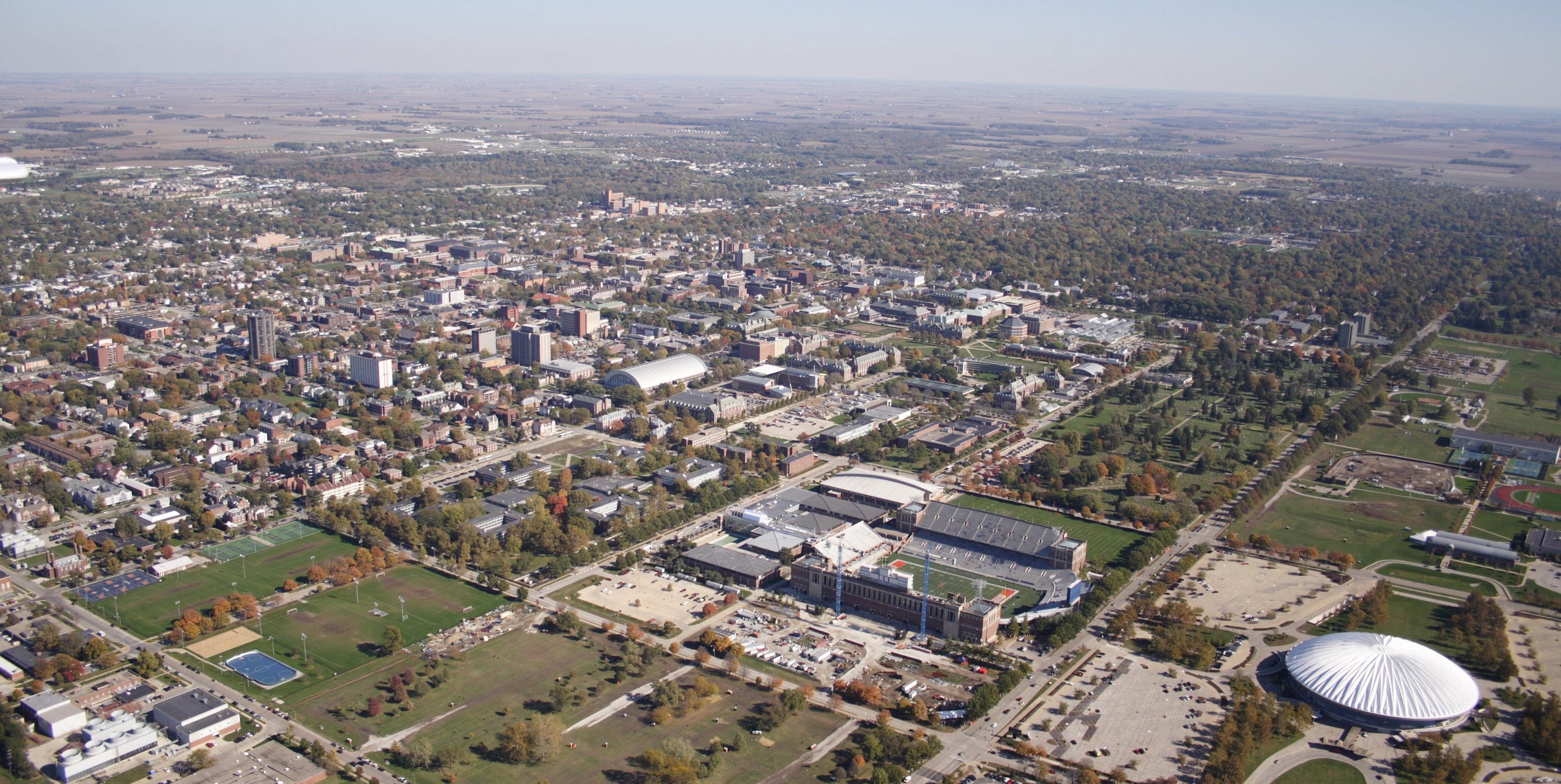
Champaign is a mid-sized city in east-central Illinois and the seat of Champaign County. With a population of roughly 90,000, it forms a tight urban pairing with its neighboring city, Urbana, and the two are usually spoken of together as Champaign-Urbana. The community's rhythm is set almost entirely by the presence of the flagship campus of the University of Illinois, which gives the town the feel of a college town that has matured into a small regional hub. Visitors tend to arrive for university events, Big Ten sports, and conferences, but the area also serves as a comfortable base for exploring the wider prairie landscapes of central Illinois. Champaign sits roughly 135 miles south of Chicago (about a two-and-a-half-hour drive northeast) and is about 80 miles northeast of the state capital, Springfield.
The campus of the University of Illinois at Urbana–Champaign is itself the heart of the local experience, blending historic architecture with green quads and an energetic student scene. A short walk from there, the Krannert Art Museum anchors the area's cultural calendar with rotating exhibitions and a strong collection of modern and ancient works. Across campus, the Spurlock Museum of World Cultures offers a broader sweep, with galleries devoted to daily life and material culture from across the globe, making it a natural stop for families and curious travelers alike.
A few miles west of town, Allerton Park and Retreat Center provides a quieter counterpoint to campus life. Once a private estate and now a University of Illinois property, the park spreads across rolling meadows, formal gardens, and forested trails along the Sangamon River, about a thirty-minute drive from central Champaign. Closer to the city, the twin downtowns of Champaign and Urbana offer independent restaurants, coffee shops, and a compact live-music scene that keeps the streets lively on game days and weekends. To the north, the small town of Mahomet and the surrounding Champaign County Forest Preserves, including the popular Lake of the Woods, add options for hiking, fishing, and a peaceful afternoon outdoors within a twenty-minute drive.
Champaign's appeal as a short-term rental market rests on this mix of year-round university demand, a steady calendar of sporting events and graduations, and easy access to outdoor escapes just beyond the city limits. The downtown cores of Champaign and Urbana are walkable and full of independent businesses that draw visitors, while the surrounding prairie provides room to spread out. With Chicago, Indianapolis, and St. Louis all within a few hours by car, the city sits at a comfortable crossroads of Midwestern travel routes, giving owners a flexible base that performs well across academic calendars, game weekends, and the broader regional tourism season.
Want to know if a property in Champaign is a good investment?
Enter an address to get instant revenue potential and comps.