
Arthur, Illinois
Want to see how Arthur compares to other top cities in Illinois? Explore all city regulations in Illinois. →
Arthur, IL
Very Investor Friendly
STR Regulations for Arthur, Illinois
Purpose: Provide a practical, compliant roadmap for starting and operating a short-term rental (STR) in Arthur, Illinois (Village of Arthur), with attention to Moultrie County and applicable Illinois state requirements. The guidance is grounded only in the source content provided and known statewide structures for STRs; where the content does not provide Arthur-specific rules, we identify what is required by Illinois law and what is unknown at the local level.
Important disclaimer: This guide is for informational purposes only and does not constitute legal advice. Laws change and enforcement practices vary. Always confirm requirements with the local authority before proceeding.
1) Overview: Are Short-Term Rentals Allowed in Arthur, IL?
Yes—short-term rentals appear to be allowed in Arthur, Illinois. The provided Village of Arthur “Permits and Applications” page does not contain any short-term rental licensing or permitting program, nor does it contain any prohibition against STRs. In the absence of city-specific restrictions, the activity is generally governed by underlying zoning and building/health codes, and by state-level registration and tax obligations. If Arthur subsequently adopts local STR-specific ordinances, operators must comply with those requirements. Until then, treat STRs like any other residential use property: ensure compliance with zoning, building, health and safety requirements, and applicable state and county tax obligations.
Key implications:
- No local STR license, permit, or registration is evident on the Arthur permits page; a building permit may be required for structural, plumbing, or occupancy changes.
- State-level sales and local occupancy taxes typically apply to short-term rentals in Illinois; compliance is mandatory even where a city program does not exist.
- If you plan to operate commercially (e.g., bed-and-breakfast or hotel-like services), business licensing and zoning reviews may be required.
References:
- Village of Arthur Permits and Applications (no STR program listed) – arthur-il.gov/residents/permits-and-applications
What do Airbnb hosts actually earn in Arthur?
Arthur hosts earn a median $30,773/year with $169 ADR and 61% occupancy.
Top performers pull in $37,838+ per year.
See the full Arthur market breakdown2) How to Start a Short-Term Rental Business in Arthur
A step-by-step approach reduces risk and speeds time to revenue:
-
Confirm zoning suitability
- Identify your property’s zoning district and permitted uses (residential vs. commercial).
- If you intend to provide hotel-like services (e.g., daily housekeeping, meals, concierge), verify whether this changes the use classification under local ordinances or triggers commercial licensing.
-
Assess building and life-safety compliance
- Determine whether the property will change occupancy classification or require life-safety upgrades (e.g., smoke/CO detectors, egress, fire extinguishers).
- If renovations are planned (kitchen/bath updates, structural changes, new entrances), obtain a Building Permit Application before work begins.
-
Set up tax compliance
- Register with the Illinois Department of Revenue (IDOR) for sales/use tax accounts if you will collect and remit state sales tax and any local occupancy taxes.
- If applicable, register with your local government (Village of Arthur) for any transient occupancy tax or lodging tax administration.
-
Prepare operations and guest policies
- Define check-in/out procedures, maximum occupancy, quiet hours, parking rules, and damage policies.
- Establish cleaning, maintenance, and safety procedures, including record-keeping for incidents.
-
Launch listings and collections
- Publish listings only after verifying your property’s compliance and tax obligations. If your platform does not collect local taxes automatically, configure your listing to collect required taxes at booking or check-in and remit on schedule.
-
Maintain records and renew as needed
- Keep sales receipts, guest logs, expense records, and tax remittance documentation.
- Monitor Village communications for any future STR ordinances and adjust compliance accordingly.
Reference:
- Village of Arthur Permits and Applications (building permit and other forms) – arthur-il.gov/residents/permits-and-applications
3) Required Documents, Permits, Licenses, and Guidelines
Based on the Arthur permits page, the following appear relevant:
-
Building Permit Application
- Required for structural, plumbing, or occupancy changes and for major renovations that affect life safety or use. Prepare plans and specifications as required by the building department.
- Reference: Building Permit Application – arthur-il.gov/residents/permits-and-applications (linked form file/876)
-
Food Vendor Application
- Only applicable if you plan to provide meals or operate a food service component; a bed-and-breakfast with breakfast service may trigger health and food safety requirements.
- Reference: Food Vendor Application – arthur-il.gov/residents/permits-and-applications (linked form file/875)
-
Solicitor’s License Application
- Not typically required for STRs, but included on the permits page; confirm with the Village if any solicitation-related activity is planned on-site (e.g., marketing, on-premise events).
- Reference: Solicitor’s License Application – arthur-il.gov/residents/permits-and-applications (linked form file/1061)
-
Water Request Form and Golf Cart License Application
- Generally unrelated to STRs unless water service or golf-cart use is relevant to your property’s specific services or location.
-
Municipal Code of Ordinances
- Consult the Village Code of Ordinances for any provisions that govern lodging, rental, or hospitality activities (e.g., B&B licensing, occupancy limits, parking, or noise).
- Reference: Village Code of Ordinances – arthur-il.gov/residents/village-code-of-ordinances
-
Health and Safety Guidelines (州/地方)
- Illinois law imposes health and life-safety requirements for lodging; consult the Illinois Department of Public Health for lodging rules. Exact requirements for Moultrie County/Arthur should be confirmed with local authorities.
Note: The Village page does not list an STR-specific permit or license. Treat STRs like other residential uses unless a future ordinance establishes a dedicated process.
4) Specific Regulations for Short-Term Rentals: Arthur, Moultrie County, and Illinois
Because the Village page does not include an STR-specific ordinance, compliance will hinge on general zoning, building, and tax obligations. At the state level, Illinois applies hotel/lodging tax rules to short-term rentals. Below is what is known, and what is unknown, based on the provided content.
4.1 Arthur (Village) — Unknown or Not Specified
- No local STR licensing or registration program appears on the permits page.
- No local occupancy tax program is listed on the permits page.
- Guests-per-stay, stay-length limits, parking rules, and noise restrictions are not specified in the provided content.
- Short-term rental advertising requirements and platform reporting obligations are not detailed on the Village page.
Action: Confirm with the Village whether an STR ordinance has been adopted, or whether underlying zoning already addresses lodging uses. Monitor the Village website for updates.
References:
- Village of Arthur Permits and Applications – arthur-il.gov/residents/permits-and-applications
- Village Code of Ordinances – arthur-il.gov/residents/village-code-of-ordinances
4.2 Moultrie County — Not Specified
- The provided sources do not include county-level STR regulations, licenses, or occupancy tax information.
- Action: Check with the Moultrie County Clerk or County Board for any countywide lodging ordinances or tax impositions.
4.3 State of Illinois — General Framework (Taxes and Health/Safety)
-
Taxes
- Short-term rentals are typically treated like hotel stays in Illinois: guests pay state sales tax and applicable local occupancy/lodging taxes; hosts collect and remit these taxes to the Illinois Department of Revenue (IDOR) and the relevant local government.
- Hosts must register for the appropriate tax accounts and file returns on schedule, even if a local government does not maintain a dedicated STR licensing program.
- If your rental platform (e.g., Airbnb or VRBO) does not automatically collect and remit all applicable taxes, you must do so manually.
-
Health and Safety
- Lodging operations must meet state health and life-safety requirements. For example, smoke and carbon monoxide detectors, fire extinguishers, egress standards, and sanitation protocols may apply. Confirm specifics with the Illinois Department of Public Health and local authorities.
-
Business Conduct
- Provide accurate listings, collect required taxes, and maintain records. Engage responsibly with neighbors to minimize nuisances (noise, parking, trash).
References:
- General information on short-term rental taxation framework – www.mypescpe.com/private/shared/CPEpdfs/8250TEXT.PDF
- For local tax specifics (including municipalities that require local occupancy taxes), consult:
- Avalara Lodging Tax Requirements – www.avalara.com/mylodgetax/en/resources/state-lodging-tax-requirements.html
- Airbnb Occupancy Tax Collection – www.airbnb.com/help/article/2509/in-what-areas-is-occupancy-tax-collection-and-remittance-by-airbnb-available
- VRBO/Stay Taxes Information – help.vrbo.com/articles/What-Stay-Taxes-Lodging-Taxes-does-HomeAway-collect-and-remit
5) Contacts and Authorities
For local and state coordination:
-
Village of Arthur (Village Hall)
- Address: 120 E. Progress, PO Box 139, Arthur, IL 61911
- Phone: 217-543-2927
- Fax: 217-543-3714
- Hours: Mon–Fri, 7:30 am – 3:30 pm
- Website: arthur-il.gov/ (Permits and Applications: arthur-il.gov/residents/permits-and-applications; Village Code of Ordinances: arthur-il.gov/residents/village-code-of-ordinances)
- Notes: For building permits, zoning questions, and any future STR ordinance updates.
-
Illinois Department of Revenue (IDOR)
- Role: State sales/use tax accounts, registration for local occupancy tax collection and remittance, filing guidance.
- Website: www2.illinois.gov/sites/estimator/Instructions/Pages/General-Information.aspx (General tax info hub)
-
Illinois Department of Public Health (IDPH)
- Role: Health and safety requirements for lodging, bed-and-breakfasts, and hospitality operations.
- Website: dph.illinois.gov/
-
Moultrie County (local government)
- Role: County-level regulations or taxes, if any.
- Contact via Moultrie County website or offices (exact contact not provided in sources).
6) Source Links
Use these pages to verify and track changes:
- Village of Arthur — Permits and Applications — arthur-il.gov/residents/permits-and-applications
- Village of Arthur — Village Code of Ordinances — arthur-il.gov/residents/village-code-of-ordinances
- Village of Arthur — Contact Page — arthur-il.gov/contact-us (general contact; for water billing, see arthur-il.gov/contact-us-water-billing-information)
- Short-Term Rental Tax Guide (Course Material) — www.mypescpe.com/private/shared/CPEpdfs/8250TEXT.PDF
- Avalara — State Lodging Tax Requirements — www.avalara.com/mylodgetax/en/resources/state-lodging-tax-requirements.html
- Airbnb — Occupancy Tax Collection and Remittance — www.airbnb.com/help/article/2509/in-what-areas-is-occupancy-tax-collection-and-remittance-by-airbnb-available
- VRBO/Stay — Taxes Collected and Remitted — help.vrbo.com/articles/What-Stay-Taxes-Lodging-Taxes-does-HomeAway-collect-and-remit
—
Summary for investors: Arthur, IL does not show a local STR-specific licensing program in the provided materials. Proceed by confirming zoning and building permit needs, preparing for state sales and local occupancy tax compliance, and adopting robust health/safety and guest policies. Monitor the Village’s code updates for any future STR ordinances.
Next step
Found a property in Arthur?
Paste any address and get estimated revenue, cash-on-cash return, and comparable STR performance in under 5 minutes. 3 free analyses per day.
Free brief
Get the free Arthur STR Investment Brief
Revenue data, top neighborhoods, seasonal trends, and the key regulations for Arthur, Illinois in one email.
Arthur
Market Saturation Score
Photos of Arthur

Overview of Arthur
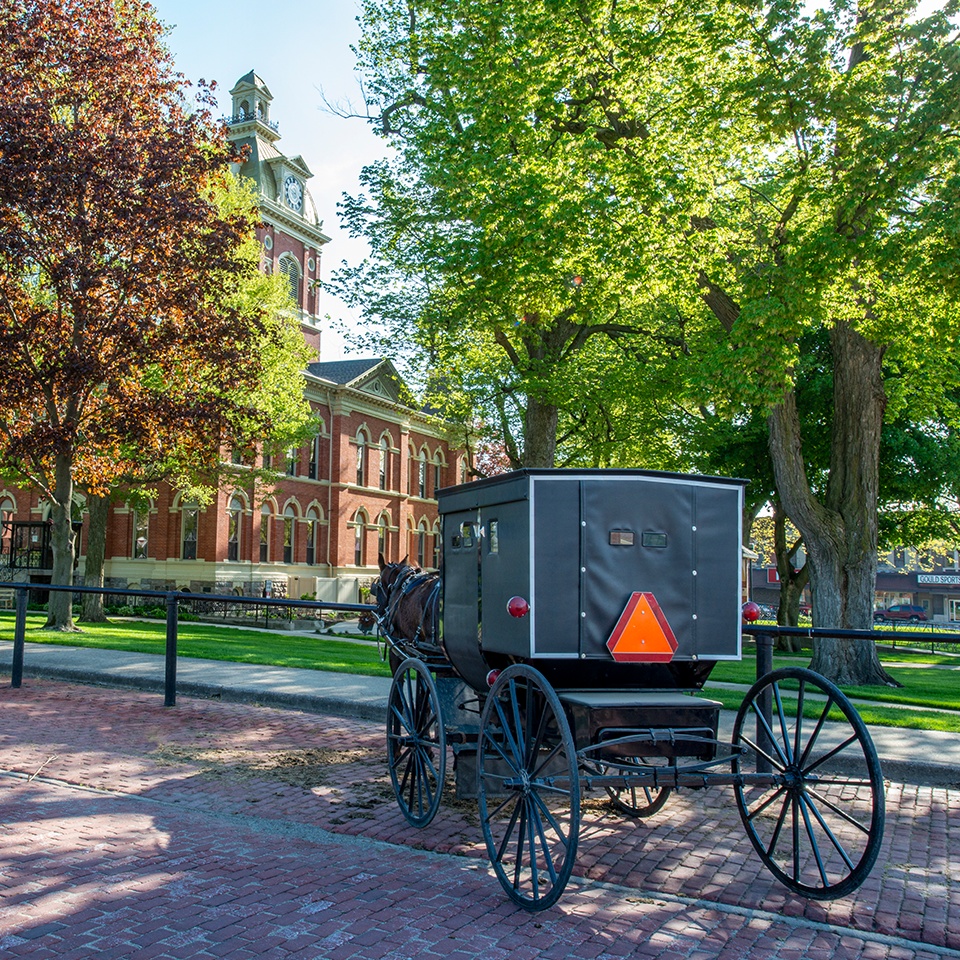
Arthur is a small village in east-central Illinois, situated primarily in Douglas County with a small portion extending into Moultrie County. With a population of roughly 2,200 residents, the village has built a quiet reputation as one of the Midwest's most prominent Amish communities, earning it informal titles like the "Amish Capital of Illinois." Its compact downtown is lined with covered bridges, country bakeries, handcrafted furniture showrooms, and a dense concentration of antique and specialty shops, giving the town a distinctive rural and old-fashioned character that draws visitors from across the region. Arthur lies approximately 40 miles south of Champaign-Urbana and roughly 180 miles south of Chicago, putting it within easy day-trip range of several larger Midwestern population centers while retaining a peaceful, agrarian feel.
Just outside town, Rockome Gardens is a long-standing attraction that combines themed gardens, an old-time village of shops, and a working Amish farm experience. The site sits about five miles from Arthur in neighboring Arcola and offers a relaxed, family-friendly way to explore the area's Amish heritage and rural architecture. It is one of the most-visited draws in the county and pairs naturally with a stroll through Arthur's own downtown.
A short drive east of Arthur, Walnut Point State Park provides a quieter outdoor escape. Located near Oakland roughly 15 miles from the village, the park features a lake for fishing and paddling, miles of hiking trails, picnic areas, and a drive-in campground shaded by mature walnut and oak trees. It is a popular stop for travelers looking to balance browsing Arthur's shops with a few hours of nature.
About 25 miles south of Arthur, near the town of Lerna, the Lincoln Log Cabin State Historic Site preserves the final home of Abraham Lincoln's father and stepmother, along with a working 1840s-style farm. The site offers living-history demonstrations, a heritage orchard, and an interpretive center that places the Lincoln family story in the context of the small, mid-19th-century farms that once dominated this part of Illinois. It pairs well with Arthur's rural theme and adds a meaningful historical layer to a visit.
A bit farther afield, the expansive Lake Shelbyville recreation area lies roughly 35 miles south of Arthur, offering boating, fishing, swimming beaches, and miles of shoreline. With its combination of Amish heritage, antique shopping, nearby state parks, and a scattering of historical sites, Arthur offers short-term rental guests a slower-paced, distinctly Midwestern experience that remains within easy reach of several larger Illinois destinations.
Want to know if a property in Arthur is a good investment?
Enter an address to get instant revenue potential and comps.