
Caldwell, Idaho
Want to see how Caldwell compares to other top cities in Idaho? Explore all city regulations in Idaho. →
Caldwell, ID
Generally Investor Friendly
STR Regulations for Caldwell, Idaho
Overview: Are Short‑Term Rentals Allowed in Caldwell, Idaho?
Yes—short‑term rentals are permitted in the City of Caldwell, Idaho, subject to zoning, building, fire, and tax rules. There is no evidence in the provided sources of a citywide ban on STRs. Property owners should:
- Confirm that short‑term lodging is an allowed use in the subject property’s zoning district (e.g., R‑1, R‑2, R‑3 residential; C‑1, C‑2, C‑3 commercial; Downtown City Center/Downtown Central Business; Mixed‑Use/Regional Commercial; Traditional Neighborhood).
- Meet all development standards (setbacks, height, parking, etc.) for the applicable district and any overlay zones (e.g., historic, airport, floodplain).
- Comply with state lodging tax requirements and any local sales/lodging taxes.
Key city code foundations include the zoning ordinance (Article 1: Title, Purpose, Zoning Districts, Definitions), supplemental district standards (Articles 5–9, 11), and the requirement that all structures and uses conform to district regulations.
What do Airbnb hosts actually earn in Caldwell?
Caldwell hosts earn a median $29,878/year with $153 ADR and 67% occupancy.
Top performers pull in $39,648+ per year.
See the full Caldwell market breakdownHow to Start a Short‑Term Rental in Caldwell
- Confirm Zoning Compliance
- Verify the property’s zoning district and permitted uses. Short‑term lodging must be allowed where the property sits.
- Review overlay districts that could affect development or operation (e.g., HD‑1 Steunenberg Residential Historic District; Airport land use/noise limitation overlays; UD‑1/UD‑2 urban design overlays; Floodplain FP‑1; Scenic corridors SO‑1/SO‑2/SO‑3).
- For split‑zoned parcels, the most restrictive provisions generally apply across the entire lot unless a 75% area exception applies or the parcel is subdivided. Check 10‑01‑08 for details.
- Determine Whether You Need Land Use/Development Approvals
- Special use permits, variances, or planned unit development (PUD) procedures may be necessary depending on the property and use intensity. Refer to Article 1 duties of the Commission/Hearing Examiner and Director for variance authority and the subdivision/planned development standards.
- Satisfy Standard Building, Safety, and Fire Requirements
- Comply with building codes, life‑safety standards, and any occupancy limits. If you plan renovations, ensure structural, electrical, mechanical, and fire safety systems meet current code and obtain required inspections/permits.
- Register for and Collect State and Local Taxes
- Idaho imposes sales tax and additional lodging/travel taxes on short‑term rentals (definitions typically use “30 days or less”). Many rental marketplaces collect and remit lodging taxes; if you rent directly, you must register as a retailer and collect/report all taxes due.
- Required filings typically include Idaho sales tax and Travel & Convention Tax (state). You may also owe applicable auditorium district taxes and local/city sales taxes depending on the property location. The Tax Commission provides detailed guidance on lodging taxes and marketplace responsibilities.
- Maintain Compliance, Records, and Responsiveness
- Keep accurate records of reservations, taxes collected/remitted, and correspondence with neighbors and code enforcement.
- Respond promptly to complaints (noise, parking, trash). Nuisance issues can trigger code enforcement actions.
Required Documents, Permits, Licenses, and Guidelines
-
Zoning/District Verification
- Proof of zoning district and any applicable overlay (available from the City’s zoning map and Chapter 10 zoning ordinance).
-
Building and Safety (as applicable)
- Building permits and inspections for any construction, alteration, or change of use.
- Life‑safety/fire code compliance consistent with building standards; occupancy limits may apply.
-
Land Use Approvals (as applicable)
- Special use permit (if lodging requires special approval in the district).
- Variance (for deviations from numerical standards per 10‑01‑02‑3; up to 20% variance authority for certain dimensional standards).
- Planned Unit Development (PUD) for integrated mixed‑use or clustered residential proposals (see PUD references in the zoning code).
-
Business/Tax Registration
- Register with the Idaho State Tax Commission if you rent directly or are responsible for lodging tax collection/remittance.
- If using a marketplace that handles collection/remittance, confirm they are properly registered and that all required taxes are being collected for your property.
- Follow Idaho’s lodging guidance on taxes, filing, recordkeeping, and marketplace versus direct‑rental responsibilities.
-
HOA/Covenants (if applicable)
- Review private restrictions that may limit rentals of fewer than 30 days or impose occupancy, parking, or noise limits.
Specific Regulations for Short‑Term Rentals in Caldwell (City, County, State)
Caldwell Zoning Ordinance (Chapter 10)
- Article 1 establishes zoning districts, overlay zones, purpose statements, and general conformity requirements. STRs must conform to the district’s use table and development standards.
- Definitions (10‑01‑10) include accessory buildings/uses and standards for accessory dwelling units; ensure any ADU or ancillary structures are compliant.
- Overlay Districts (10‑01‑04) include:
- Airport Impact Overlays (APO‑1 land use limitation, APO‑2 noise abatement) that may affect allowable intensity/design near the airport.
- Historic Districts (HD‑1 Steunenberg Residential Historic; HD‑2 Downtown Local; HD‑3 North Caldwell Historic) that include design review and preservation provisions (administered via Chapter 2, Article 17).
- Urban Design Overlays (UD‑1 Downtown; UD‑2 River District; UD‑3 Neighborhood Character) that set urban design standards (signage, massing, streetscape).
- Floodplain (FP‑1) with prohibitions in floodways and additional protections per Chapter 12, Article 15.
- Scenic Corridors (SO‑1 Indian Creek; SO‑2 Key Gateway & Corridor; SO‑3 Boise River) to protect visual and environmental resources.
- Entertainment District Overlay (ED‑1 Caldwell Event Center).
- Split Zoning and FLUM Alignment (10‑01‑08 and 10‑01‑09) can affect whether and how a parcel may be used and subdivided to match land use visions.
Supplemental District Standards (Articles 5–9, 11)
- Residential Districts (RS‑1/RS‑2; R‑1/R‑2/R‑3) include density, setbacks, height, parking, and design criteria.
- Commercial and Mixed‑Use Districts (C‑1/C‑2/C‑3/C‑4; H‑C; D‑CC/D‑CB; T‑N) establish permitted intensities, parking ratios, frontage and signage standards, and allowed uses. Check the specific tables for lodging/vacation rental allowances in each zone.
- Airport, Historic, Floodplain, and Urban Design provisions are detailed in Article 11 and referenced overlay sections; conformance is mandatory.
State of Idaho Tax Rules for Lodging/Short‑Term Rentals
- Idaho defines short‑term rentals as lodging rented for 30 days or less. Rentals are subject to state sales tax and Travel & Convention Tax. Additional auditorium district and local/city sales taxes may apply.
- Short‑term rental marketplace responsibility:
- Marketplaces that arrange and collect payment generally must register and remit all applicable taxes (state sales and T&C tax, auditorium district tax, and local/city taxes for the property’s location).
- Direct‑rental responsibility:
- Owners renting directly must register as a retailer, collect the sales price of lodging and related services, and remit all applicable taxes to the Idaho State Tax Commission and to the city as required.
- Filing and recordkeeping guidance is provided by the Idaho State Tax Commission, including separate pages for lodging basics, tax types, filing, and recordkeeping.
Tax Collection and Remittance Summary for STRs
- Sales Tax + Travel & Convention Tax: Remitted to the Idaho State Tax Commission.
- Auditorium District Tax: Remitted to the Idaho State Tax Commission when applicable.
- Local/City Sales Taxes: Remitted to the city where the property is located.
- Direct vs Marketplace Rentals:
- Marketplace arranges and collects: Marketplace remits all applicable taxes.
- Direct rental by owner: Owner registers and remits all applicable taxes.
- Mixed method: Owner remits on direct bookings; marketplace remits on platform bookings.
Contact Information (Local Authority in Charge of STRs)
-
City of Caldwell – Planning and Zoning (zoning permits, use compliance)
- Address: 621 E. Cleveland Blvd., Caldwell, ID 83605
- Phone: (208) 455‑3000
- Website: www.cityofcaldwell.org
-
Idaho State Tax Commission (lodging/sales tax registration and compliance)
- Phone: (208) 334‑7660
- Mailing Address: P.O. Box 36, Boise, ID 83722
- Website: tax.idaho.gov
-
Canyon County Assessor/Clerk (property records, parcel information)
- Phone: (208) 454‑7561
- Website: www.canyoncountyassessor.us
Links to Source Pages
- Idaho State Tax Commission – Lodging: Short‑term Rental Marketplaces:
- Idaho State Tax Commission – Sales and Use Tax Guides:
- Idaho State Tax Commission – Forms (sales/use, lodging):
- Caldwell Zoning Ordinance – Chapter 10, Article 1 (Title, Purpose, Zoning Districts, Definitions, Split Zoning, FLUM Alignment):
- RedAwning – Idaho Short‑Term Rental Laws (general overview):
Practical Compliance Checklist for Caldwell STR Investors
- Confirm zoning district permits lodging (or secure required special use/variance).
- Validate overlay constraints (historic, airport, floodplain, scenic/urban design).
- Obtain building permits/inspections as needed and confirm occupancy limits.
- Register with the Idaho State Tax Commission if renting directly; verify marketplace tax collection arrangements if applicable.
- Set up tax remittances for state, auditorium district, and local/city taxes.
- Verify HOA/covenants; implement house rules for noise, parking, trash.
- Maintain records and an incident response plan for neighbor issues and code enforcement inquiries.
This guide reflects the provided sources. Because local ordinances and tax rules can change, always verify current requirements with the City of Caldwell and the Idaho State Tax Commission before initiating operations.
Next step
Found a property in Caldwell?
Paste any address and get estimated revenue, cash-on-cash return, and comparable STR performance in under 5 minutes. 3 free analyses per day.
Free brief
Get the free Caldwell STR Investment Brief
Revenue data, top neighborhoods, seasonal trends, and the key regulations for Caldwell, Idaho in one email.
Caldwell
Market Saturation Score
Photos of Caldwell
Overview of Caldwell
Caldwell sits in southwestern Idaho as the county seat of Canyon County, with an estimated population of roughly 65,000 residents that has expanded steadily as part of the broader Boise metropolitan growth. The city has a working agricultural heritage that still colors its identity, with surrounding onion, sugar beet, mint, and corn fields giving way to newer residential subdivisions and a revitalizing downtown. Caldwell is best known locally as a gateway to the Snake River wine region and as the home of the College of Idaho, the state's oldest private liberal arts college. It lies approximately 30 miles west of Boise along Interstate 84, making it a convenient inland stopover for travelers exploring Treasure Valley and points beyond.
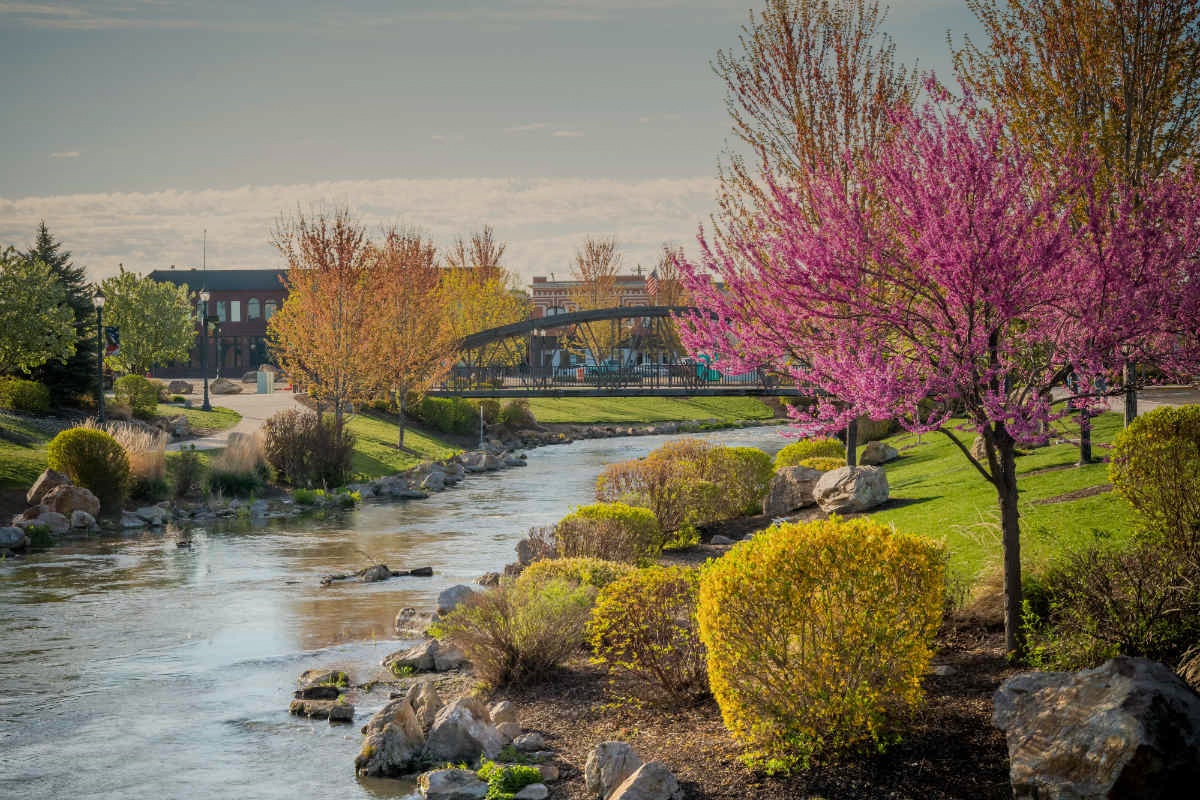
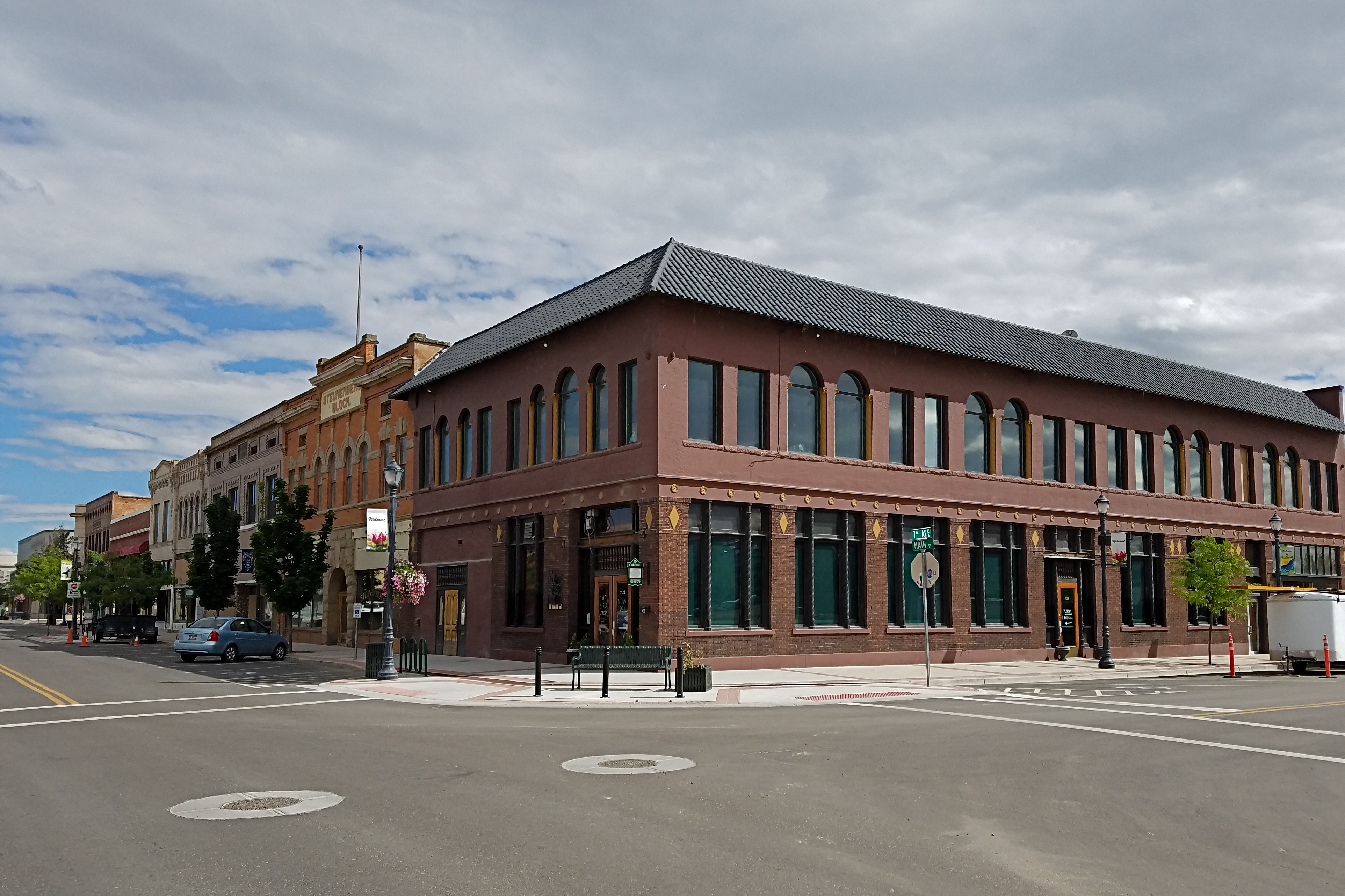
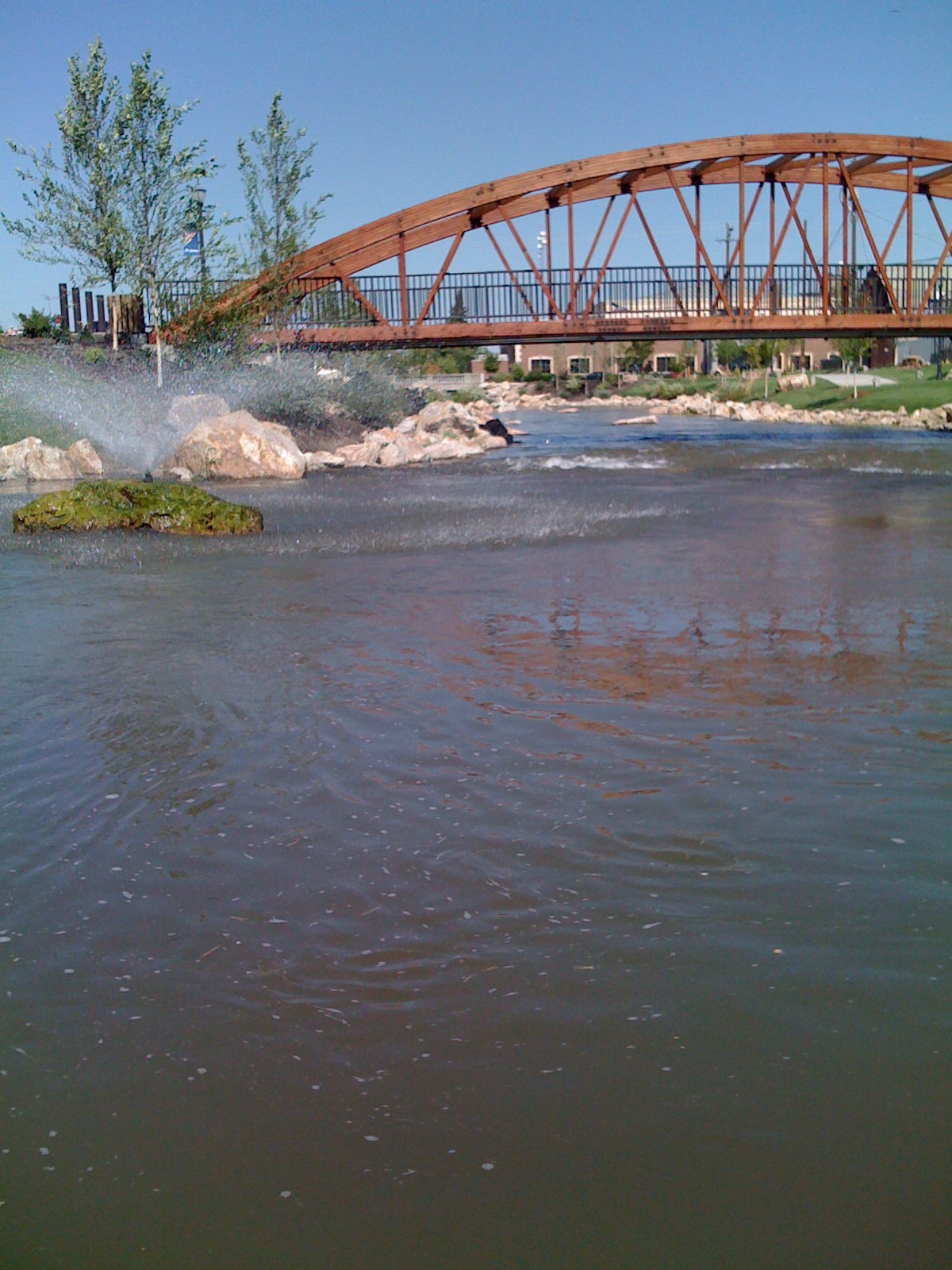
A short walk or quick drive into the heart of town reveals Indian Creek Plaza, a revitalized public gathering space along South Kimball Avenue that hosts year-round events, a seasonal ice rink in winter, and outdoor concerts in warmer months. The plaza has helped reshape downtown Caldwell's image from a quiet farm town to a community with a recognizable social core, drawing both locals and visitors for farmers markets, cultural festivals, and the long-running Caldwell Night Rodeo each August.
Just southwest of the city, Deer Flat National Wildlife Refuge wraps around Lake Lowell, a roughly 9,000-acre reservoir that supports waterfowl migration, hiking, fishing, and wildlife observation. The refuge's Lake Lowell sector offers paved and dirt trails, observation points, and boat access, with the visitor area about a fifteen-minute drive from downtown Caldwell. It's a popular draw for birders pursuing herons, pelicans, bald eagles, and seasonal flocks along the Pacific Flyway.
Northwest of Caldwell, the Sunny Slope area along the Snake River Canyon has emerged as a small but distinctive wine-producing district, with several tasting rooms clustered within a roughly twenty-minute drive of the city. Visitors can sample varietals grown on canyon benches and visit cideries and farm stands that highlight the region's agricultural roots. Further afield, the Owyhee Mountains and the Morley Nelson Snake River Birds of Prey National Conservation Area lie within roughly an hour's drive to the south and west, offering hiking, rock hounding, and seasonal rafting on a stretch of the Snake River known for dramatic basalt cliffs and raptor nesting habitat.
For short-term rental investors, Caldwell combines the affordability of a mid-sized Idaho city with the steady demand generated by Boise's overflow, College of Idaho's campus calendar, rodeo week, wine-tourism traffic, and outdoor recreation. Its position in Treasure Valley places it within easy reach of Boise's airport, the ski slopes of Bogus Basin, and the Snake River corridor, giving it a versatile appeal for couples, families, and outdoor travelers looking to base themselves outside the busier state capital.
Want to know if a property in Caldwell is a good investment?
Enter an address to get instant revenue potential and comps.