
Cedar Rapids, Iowa
Want to see how Cedar Rapids compares to other top cities in Iowa? Explore all city regulations in Iowa. →
Cedar Rapids, IA
Generally Investor Friendly
STR Regulations for Cedar Rapids, Iowa
Overview: Are short‑term rentals allowed in Cedar Rapids, IA?
Yes. Short‑term rentals (STRs) are explicitly allowed in Cedar Rapids, Iowa. Iowa’s state framework (House File 2641) prohibits municipalities from outright banning STRs and restricts cities from requiring a license or permit that targets only STRs. Cedar Rapids therefore permits STRs while regulating them through general rental property rules, local safety standards, and business licensing requirements. Before operating, confirm current local requirements with the City of Cedar Rapids and the Iowa Department of Revenue.
Sources: [3], [1]
What do Airbnb hosts actually earn in Cedar Rapids?
Cedar Rapids hosts earn a median $30,221/year with $120 ADR and 90% occupancy.
Top performers pull in $42,924+ per year.
See the full Cedar Rapids market breakdownHow to start a short‑term rental business in Cedar Rapids
- Research local requirements: Identify zoning, permits, safety standards, and local taxes that apply to your property type (primary vs. non‑primary residence). Check the City of Cedar Rapids planning, housing, and tax pages for current requirements.
- Confirm zoning compliance: Verify that STRs are permitted in your property’s zoning district and note any density, parking, or occupancy constraints.
- Obtain required permits and licenses: Apply for the city’s rental permit/business license and any special approvals if operating a non‑primary residence STR in designated areas. Submit plans and proof of insurance if requested.
- Meet safety standards: Install and maintain smoke detectors, carbon monoxide alarms, fire extinguishers, emergency egress, and comply with building codes.
- Register for tax collection: Obtain a sales tax permit from the Iowa Department of Revenue and set up hotel/motel tax collection and remittance for stays of 90 days or fewer (state rate 5%), plus any applicable local option hotel/motel taxes.
- Secure appropriate insurance: Replace or endorse your homeowners policy with STR‑specific property and liability coverage (minimum $1,000,000 liability commonly referenced by market observers; verify with city and insurer).
- Designate a 24/7 local contact: Provide a local contact person with authority and access to respond to issues promptly.
- Prepare operations: Implement guest screening, quiet‑hours enforcement, parking management, cleaning protocols, and record‑keeping for taxes and permits.
Sources: [3], [1], [2], [4], [5]
Required documents, permits, licenses, and guidelines
- Property deed or lease documentation proving legal right to operate
- Detailed property information, including address, floor plans, and specifications
- Owner/operator identification and contact details
- Local 24/7 contact information for emergency response
- Proof of STR insurance (property and liability; city may require minimum coverage)
- Iowa sales tax permit number (from Iowa Department of Revenue)
- Safety inspection certificates or self‑certifications as required by the city
- License/permit displays and annual renewal documentation
- Guest registration logs, house rules, cleaning/maintenance records, and tax collection/remittance records
Sources: [3], [1]
Specific regulations for STRs (city, county, and state)
-
State (Iowa)
- House File 2641: Prohibits cities from banning STRs and restricts targeted STR licensing. Cities may implement general rental permits and business licenses applicable to all rentals.
- Definitions: STRs are typically defined as lodging for fewer than 30 days. For tax purposes, stays of 90 days or fewer are subject to hotel/motel tax.
- State hotel/motel tax: 5% on accommodations of 90 days or fewer. Register and remit via the Iowa Department of Revenue.
- Sales tax and local options: Iowa sales tax (commonly 6%) applies to lodging; many jurisdictions add local option hotel/motel taxes, increasing total rates.
- Safety baseline: Standard residential building, fire, and life‑safety codes apply (smoke/CO detectors, fire extinguishers, egress, etc.).
-
County (Linn County)
- Typical county roles include assessment and tax collection. No dedicated STR permit programs were identified in the provided materials. Verify any county‑level lodging taxes or health/safety requirements directly.
-
City (Cedar Rapids)
- Permits/licenses: A city permit/business license is required for rental properties, including STRs. Annual renewal is standard; fees and application details are set by the city. The Jaken Finance article references a $150 fee, which should be confirmed directly with the city.
- Zoning: STRs are allowed in most zones, but density and location limits may apply, particularly for non‑primary residence STRs. The cited article suggests caps on non‑primary STRs and separation requirements; verify current thresholds.
- Occupancy: Cedar Rapids commonly enforces occupancy limits (e.g., two adults per bedroom plus two additional guests, with overall caps). The cited article notes a cap of 10 people; verify current limits with city authorities.
- Safety/inspection: Requirements include functional smoke detectors, CO alarms where applicable, fire extinguishers, marked exits, and building code compliance. Regular inspections and complaint‑driven enforcement are typical.
- Taxes: Cedar Rapids applies Iowa’s state hotel/motel tax (5%) plus a local option hotel/motel tax. Market sources indicate the local rate is 7%, for a combined 12% lodging tax, though investors should verify the exact rate and filing cadence with the city and state.
Sources: [1], [3], [4], [2], [5]
Tax obligations
- State hotel/motel tax: 5% on gross receipts for stays of 90 consecutive days or fewer; register with the Iowa Department of Revenue and file per the required schedule (monthly/quarterly based on volume).
- Local option hotel/motel tax: Many Iowa cities and counties, including Cedar Rapids, levy an additional lodging tax. Market sources indicate Cedar Rapids’ local rate is 7%, bringing the combined rate to approximately 12%. Confirm current rates and remittance procedures with city finance/tax authorities.
- Income taxes: Rental income is taxable at the federal level and may be taxable under Iowa state income tax rules. Consult a tax professional for deductions (depreciation, repairs, utilities, platform fees, etc.).
- Property tax classification: Some jurisdictions classify STR properties differently for assessment purposes; verify with the Linn County Assessor if classification changes impact your tax liability.
Sources: [1], [2], [5]
Contact information (local authority in charge of STRs)
-
City of Cedar Rapids (primary permitting, zoning, safety)
- Official city website: www.cedar-rapids.org/
- Planning and Development Services (zoning, permit questions)
- Housing & Neighborhood Services (rental standards)
- Finance/Tax Department (hotel/motel tax collection)
-
State (tax registration and compliance)
- Iowa Department of Revenue: tax.iowa.gov/
-
County (assessment and property tax)
- Linn County Assessor: www.linncountyiowa.gov/Assessor
Note: Specific phone numbers and email contacts vary; obtain current contacts directly from the official city, county, and state websites listed above.
Sources: [3], [1]
Source links
- Iowa Short‑Term Rental Laws: A Complete Guide for Owners — Checkmate Rentals: www.checkmaterentals.com/blog/iowa-short-term-rental-laws
- Cedar Rapids Short‑Term Rental Laws 2026: A Complete Guide — Jaken Finance Group: www.jakenfinancegroup.com/cedar-rapids-short-term-rental-laws-2026-a-complete-guide
- Cedar Rapids, Iowa — STR Regulations — STRProfitMap: www.strprofitmap.com/regulations/IA/cedar-rapids
- Short‑term Rental Regulation in Cedar Rapids, IA — Chalet: www.getchalet.com/rental-regulations/cedar-rapids-ia
- Iowa Short Term Rental Laws: AirBnB & Vacation Rental Regulations — RedAwning: www.redawning.com/pm/post/iowa-short-term-rental-laws
Important note for investors: Municipal licensing, safety, zoning, and tax details can change, and enforcement practices vary. Always verify current requirements with the City of Cedar Rapids (planning, housing, finance), Linn County (assessor), and the Iowa Department of Revenue before purchasing or operating an STR.
Next step
Found a property in Cedar Rapids?
Paste any address and get estimated revenue, cash-on-cash return, and comparable STR performance in under 5 minutes. 3 free analyses per day.
Free brief
Get the free Cedar Rapids STR Investment Brief
Revenue data, top neighborhoods, seasonal trends, and the key regulations for Cedar Rapids, Iowa in one email.
Cedar Rapids
Market Saturation Score
Photos of Cedar Rapids


Overview of Cedar Rapids
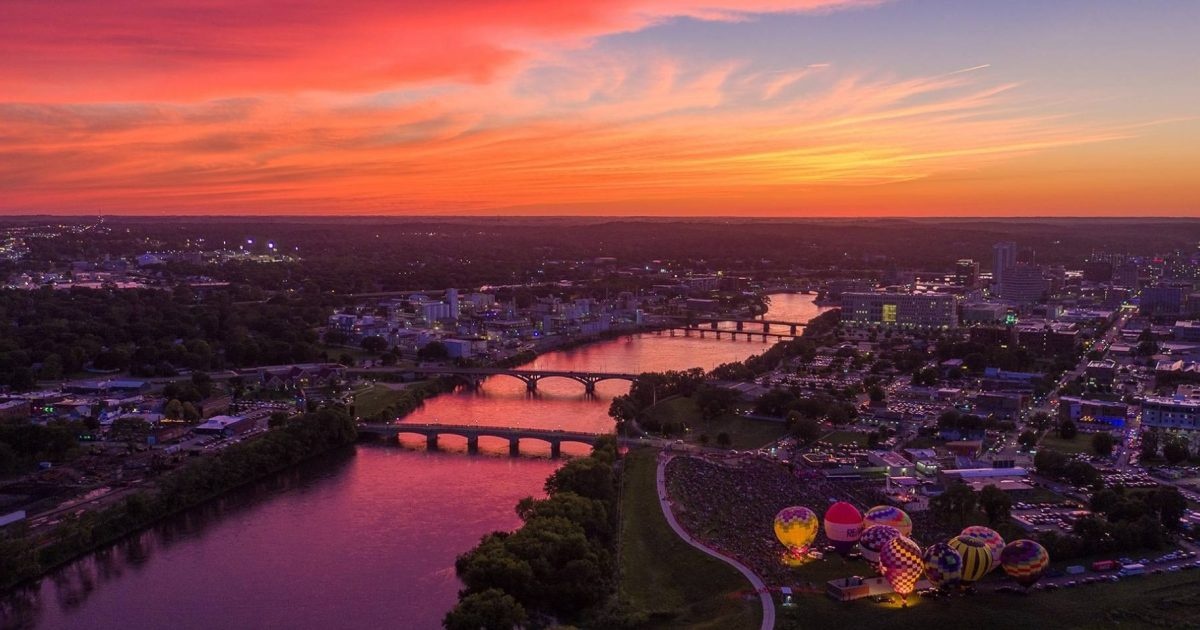
Cedar Rapids is the second-largest city in Iowa and the county seat of Linn County, situated in the eastern part of the state along the Cedar River. With a population of approximately 135,000, it has a mid-sized, friendly character rooted in its industrial heritage and strong Czech immigrant roots. The city serves as a regional hub for manufacturing—particularly cereal and grain processing—and as a convenient gateway to eastern Iowa's natural areas, the University of Iowa in nearby Iowa City, and the broader Corridor region that connects to the Quad Cities. Cedar Rapids lies about 130 miles east of Des Moines and roughly 220 miles west of Chicago, putting it within an easy drive of both metropolitan amenities and small-town Iowa landscapes.
The National Czech & Slovak Museum and Library celebrates the heritage of Czech and Slovak immigrants who shaped the city's Czech Village/New Bohemia district, just south of downtown. The museum features exhibits on immigration, culture, and history, and the surrounding neighborhood is known for its bakeries, restaurants, and European-style architecture. National Czech & Slovak Museum
A short drive north of downtown brings visitors to Brucemore, a 26-acre estate that has been preserved as a museum of local history and Gilded Age architecture. The mansion, gardens, and grounds offer guided tours and seasonal events that highlight the lives of prominent Cedar Rapids families from the late 19th and early 20th centuries. Brucemore
For art lovers, the Cedar Rapids Museum of Art houses one of the most significant collections of works by Iowa native Grant Wood, along with changing exhibitions and the artist's preserved studio. The museum draws regional visitors interested in the story behind one of America's most recognizable 20th-century painters. Cedar Rapids Museum of Art
Outdoor recreation is within easy reach at Palisades-Kepler State Park, a scenic preserve along the Cedar River roughly 20 minutes east of the city. The park features dramatic limestone bluffs, hiking trails, and river overlooks, making it a popular day-trip destination for hiking, picnicking, and wildlife watching. Palisades-Kepler State Park
Cedar Rapids offers short-term rental owners a compelling combination of steady business travel driven by its manufacturing base, cultural attractions that draw regional visitors, and outdoor escapes that appeal to weekend travelers exploring eastern Iowa. Its location between Des Moines and the Quad Cities, along with easy access to Iowa City, supports a diverse mix of guests—from corporate visitors to families and road-trippers—looking for an affordable, authentic Midwestern stay.
Want to know if a property in Cedar Rapids is a good investment?
Enter an address to get instant revenue potential and comps.