
Hilo, Hawaii
Want to see how Hilo compares to other top cities in Hawaii? Explore all city regulations in Hawaii. →
Hilo, HI
Challenging To Investors

STR Regulations for Hilo, Hawaii
Overview: Are Short-Term Rentals Allowed in Hilo, HI?
Yes, short-term rentals are allowed in Hilo, Hawaii, but with significant restrictions and requirements. Short-term vacation rentals (STVRs) are permitted only in specific zoning districts or under a Nonconforming Use Certificate (NUC) for properties that were legally operating before certain cutoff dates. The regulatory framework is established at the Hawaii County level through Ordinance 2018-114 (Bill 108), which defines where STVRs can operate, establishes operational standards, and provides a path for existing STVRs to continue through a nonconforming use certification process.
What do Airbnb hosts actually earn in Hilo?
Hilo hosts earn a median $45,817/year with $191 ADR and 76% occupancy.
Top performers pull in $63,276+ per year.
See the full Hilo market breakdownHow to Start a Short-Term Rental Business in Hilo
Step 1: Pre-Application Due Diligence
- Zoning Verification: Confirm your property is in an permitted zoning district (V, CG, CV districts; Residential and commercial zoning in General Plan Resort and Resort Node areas; RM district for multifamily dwellings with condominium property regime)
- HOA/CC&R Review: Check if your property association prohibits short-term rentals
- Building Compliance: Ensure the property meets all current building codes and safety requirements
Step 2: Obtain Required Licenses and Permits
- Hawaii County STVR Registration: Apply through the Planning Department
- Nonconforming Use Certificate (if applicable): For properties operating before April 1, 2019
- State Tax Licenses: Register for Transient Accommodations Tax (TAT) and General Excise Tax (GET)
Step 3: Property Preparation
- Safety Upgrades: Install required smoke detectors, carbon monoxide detectors, and emergency evacuation plans
- Insurance: Obtain short-term rental insurance with minimum $1,000,000 liability coverage
- Documentation: Prepare site plans, floor plans, and compliance statements
Step 4: Operational Setup
- Property Management: Decide whether to self-manage or hire a licensed property manager
- Platform Registration: Register on Airbnb, VRBO, and other platforms with proper permit numbers
- Tax Systems: Set up systems for collecting and remitting TAT and GET
Required Documents, Permits, Licenses, and Guidelines
Hawaii County Requirements
- STVR Registration Application with supporting documents
- Nonconforming Use Certificate Renewal (annual requirement if applicable)
- STVR Change of Information Application (for property modifications, ownership changes)
Required Documentation Package
-
Property Information:
- STVR address and Tax Map Key (TMK) number
- Site plan showing property boundaries, dimensions, setbacks, easements
- Floor plan identifying room locations and uses
- Final approvals from Building Division
-
Owner/Operator Information:
- Applicant's name, address, phone, email
- Owner's information (if different from applicant)
- "Reachable Person" contact information (24/7 emergency contact)
- Owner authorization documentation if applicable
-
Legal and Tax Documents:
- Hawaii State TAT license
- Hawaii State GET license
- Statement of Compliance with applicable regulations
- Processing fee payment ($500 for initial registration)
-
Safety and Insurance:
- Proof of minimum $1,000,000 liability insurance
- Emergency evacuation plans
- Safety equipment verification
State-Level Requirements
- TAT Registration: $5 for 1-5 units, $15 for 6+ units
- GET Registration: $15 fee
- Federal EIN: Required for tax reporting
Specific Regulations for Short-Term Rentals
Zoning Restrictions
Permitted Zoning Districts:
- V (Resort): Full STVR allowance
- CG (General Commercial): STVR permitted
- CV (Visitor Commercial): STVR permitted
- Residential and Commercial within General Plan Resort and Resort Node areas
- RM (Multiple Family Residential) for condominium properties with proper regime
Prohibited/Restricted Areas:
- Most pure residential districts outside designated resort areas
- Agricultural zoned properties (with limited exceptions)
- Properties without proper zoning clearance
Operational Requirements
- Definition: STVRs must have no more than 5 bedrooms and be rented for less than 30 consecutive days
- Owner Occupancy: Owner or operator does not need to reside on-site (unlike some other Hawaii counties)
- Registration: Non-transferable; new application required for ownership changes
- Record Keeping: Must maintain guest records for inspection
Nonconforming Use Certificate (NUC) Program
- Eligibility: Properties legally operating STVRs before April 1, 2019
- Annual Renewal: Required to maintain operation outside permitted zones
- Fees: $500 initial application, $250 annual renewal
- Limitations: Subject to ongoing regulatory compliance
Safety and Building Requirements
- Fire Safety: Compliance with Hawaii County fire codes
- Building Codes: Must meet current residential building standards
- Emergency Access: Clear emergency evacuation routes required
- Parking: Designated parking spaces must be shown on site plan
Platform Compliance
- Permit Display: NUC number must be prominently displayed in all listings
- Advertising: Must include valid registration numbers in all marketing materials
- Platform Cooperation: Airbnb, VRBO, and other platforms must be used for bookings
Contact Information for Local Authority
Hawaii County Planning Department - East Hawaii (Hilo) Office
Address: Aupuni Center 101 Pauahi Street, Suite 3 Hilo, HI 96720
Phone: 808-961-8288 Fax: 808-961-8742 Email: planning@hawaiicounty.gov
Hours: 7:45 AM - 4:30 PM, Monday-Friday
West Hawaii (Kona) Office (also handles some Big Island areas): West Hawaii Civic Center Building E, 2nd Floor 74-5044 Ane Keohokalole Highway Kailua-Kona, HI 96740
Phone: 808-323-4770 Fax: 808-327-3563
Hawaii Department of Taxation
Website: tax.hawaii.gov Phone: Contact for TAT and GET registration and filing requirements
Links to Source Pages
Primary Official Sources
- Hawaii County Planning Department - Short-Term Vacation Rentals: www.planning.hawaiicounty.gov/resources/short-term-vacation-rentals
- STVR Application Packet: records.hawaiicounty.gov/Weblink/1/edoc/115580/STVR%20Registration%20Form%2003.31.2022.pdf
- STVR Statement of Compliance: records.hawaiicounty.gov/Weblink/1/edoc/115581/STVR%20Registration%20Stmt%20of%20Compliance%2003.31.2022.pdf
- Nonconforming Use Certificate Renewal Application: records.hawaiicounty.gov/Weblink/1/edoc/115578/STVR%20NUC%20Renewal%20Application%2003.31.2022.pdf
- Planning Department Rule 23: www.planning.hawaiicounty.gov/home/showpublisheddocument/301491/637203350591400000
- Ordinance 2018-114 (Bill 108): www.planning.hawaiicounty.gov/home/showpublisheddocument/301489/637203350585600000
Supporting Information Sources
- Real Property Tax Website (for TMK numbers): qpublic.schneidercorp.com/Application.aspx?AppID=1048&LayerID=23618&PageTypeID=2&PageID=9876
- Hawaii County Contact Information: www.planning.hawaiicounty.gov/about-us/contact-us
- Complete Planning Department Rules: records.hawaiicounty.gov/weblink/Browse.aspx?dbid=1&startid=56244
Additional Resources
- Hawaii Life Big Island STR Guide: www.hawaiilife.com/blog/big-island-essentials-the-8-most-asked-questions-about-short-term-rentals/
- Summer STR Guide - Hawaii: www.gosummer.com/post/hawaii-short-term-rental-laws
- Checkmate Rentals Hawaii Guide: www.checkmaterentals.com/blog/short-term-rental-laws-hawaii
Important Note: Short-term rental regulations in Hawaii County are subject to change. Always verify current requirements with the Hawaii County Planning Department before making investment decisions. New legislation is regularly proposed that could affect STVR operations, so ongoing monitoring of regulatory changes is essential for maintaining compliance and protecting your investment.
Next step
Found a property in Hilo?
Paste any address and get estimated revenue, cash-on-cash return, and comparable STR performance in under 5 minutes. 3 free analyses per day.
Free brief
Get the free Hilo STR Investment Brief
Revenue data, top neighborhoods, seasonal trends, and the key regulations for Hilo, Hawaii in one email.
Hilo
Market Saturation Score
Photos of Hilo
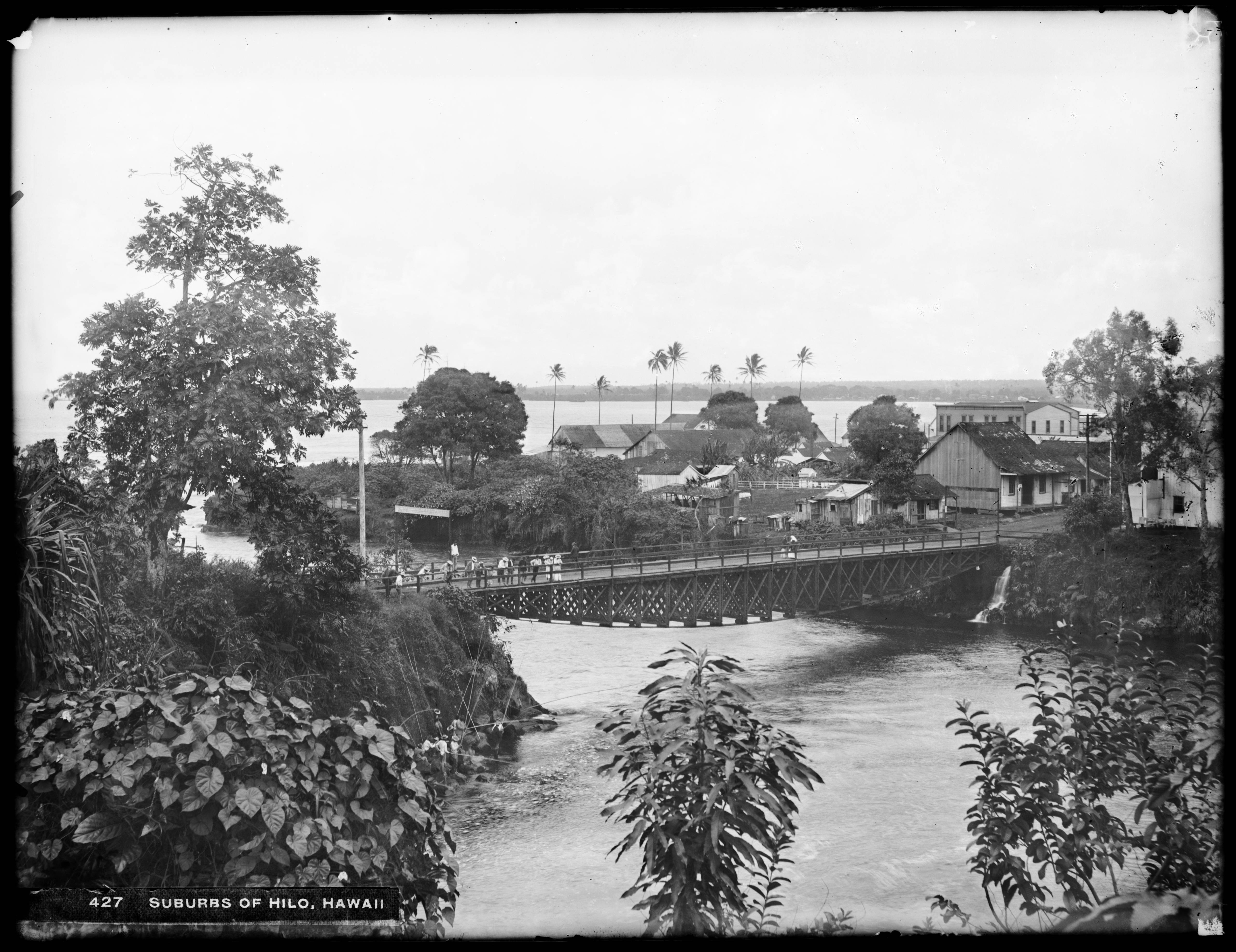


Overview of Hilo
Hilo sits on the eastern shore of the Island of Hawaiʻi, also known as the Big Island, where it serves as the county seat of Hawaiʻi County. With a population of roughly 45,000, it is the largest town on the windward coast and a working port city set against a backdrop of tropical rain forest and volcanic peaks. Often described as one of the wettest cities in the United States, Hilo has a relaxed, lived-in character shaped by its historic wooden storefronts, a deepwater harbor, and a slower pace than the island's resort-focused west side. It is best known as a gateway to Hawaiʻi Volcanoes National Park and the upper slopes of Mauna Kea. Hilo lies about 200 miles by air southeast of Honolulu on Oʻahu, and roughly 90 miles east of Kailua-Kona across the island's central saddle road.
A short drive southwest of Hilo, Hawaiʻi Volcanoes National Park anchors much of the visitor activity on the windward side. The park, roughly 45 minutes from town along the Hawaiʻi Belt Road, encompasses two of the world's most active volcanoes, Kīlauea and Mauna Loa, with crater overlooks, lava tube walks, and rainforest trails that easily fill a full day. Most travelers pair a park visit with an evening return to Hilo, which has long shaped the city's role as an overnight base for volcano tourists.
About 15 miles north of downtown, ʻAkaka Falls State Park draws visitors to a roughly 440-foot waterfall set within a verdant gorge. The park's short loop trail passes through bamboo groves, orchid plantings, and towering tree ferns before reaching overlooks of both ʻAkaka Falls and the smaller Kahūnā Falls. It is an easy half-day excursion from Hilo and a popular stop along the Hamākua Coast.
Closer to town, Rainbow Falls sits within Wailuku River State Park just minutes from downtown Hilo. The 80-foot cascade, named for the rainbows that form in its morning spray, is a quick stop for early risers and is reached by a short walking path through native foliage. Nearby, the Pacific Tsunami Museum documents the 1946 and 1960 tsunamis that reshaped Hilo Bay and offers a meaningful window into the town's coastal history for visitors curious about how the harborfront came to look the way it does.
Together, these draws position Hilo as a base for travelers who want a quieter, more local alternative to the Big Island's resort corridors. Its combination of walkable downtown, working harbor, and proximity to the volcano, waterfalls, and high-elevation observatories means short-term rentals here serve a steady flow of nature-focused visitors year-round, particularly those whose itineraries center on Hawaiʻi Volcanoes National Park and the scenic drive up the Hamākua Coast.
Want to know if a property in Hilo is a good investment?
Enter an address to get instant revenue potential and comps.