
Haleiwa, Hawaii
Want to see how Haleiwa compares to other top cities in Hawaii? Explore all city regulations in Hawaii. →
Haleiwa, HI
Challenging To Investors
STR Regulations for Haleiwa, Hawaii
Overview: Are STRs allowed in Haleiwa, HI?
Haleiwa is a community on Oʻahu; there is no separate city government or city-level short‑term rental (STR) code that supersedes county or state rules. In short: yes—STRs can operate in Haleiwa, but only if they comply with Honolulu County rules and Hawaii state law.
For the City and County of Honolulu, STRs (also called transient vacation units or TVUs) are allowed only in:
- Resort‑zoned areas (e.g., Waikiki, Ko Olina, Turtle Bay, Makaha); and
- A few specific apartment‑zoned areas designated by ordinance.
Outside those zones, STRs are generally prohibited unless the property has a valid Nonconforming Use Certificate (NUC)—often called “grandfathered”—originally issued prior to October 22, 1986 and renewed every year. No new NUCs are being issued.
Important enforcement context for Oʻahu (including Haleiwa): The Department of Planning and Permitting (DPP) currently enforces the 30‑day minimum stay rule across the board. This is the practical operating standard investors should follow until the enforcement posture changes.
Sources:
- Honolulu DPP STR page; Land Use Ordinance, Ordinance 22‑7, and Ordinance 24‑14 (www.honolulu.gov/dpp/permitting/str/)
- Happy Vacations Hawaii summary of enforcement (DPP enforcing “less than 30 consecutive days” under current practice) (www.happyvacationshawaii.com/understanding-oahus-rental-limits-for-short-term-and-monthly-stays/)
What do Airbnb hosts actually earn in Haleiwa?
Haleiwa hosts earn a median $35,320/year with $261 ADR and 72% occupancy.
Top performers pull in $75,266+ per year.
See the full Haleiwa market breakdownMarket Entry: How to start a short‑term rental business in this market
Use this sequence to launch legally:
- Verify zoning eligibility
- Confirm the subject property lies within an allowed resort zone or an eligible apartment zone per Honolulu’s STR maps. If not, determine whether the property qualifies as a pre‑1986 grandfathered unit with a current NUC.
- Honolulu provides an STR Eligibility Map (cchnl.maps.arcgis.com/apps/webappviewer/index.html?id=ed2eec39157f41d3a27901de4b3f7530) and a Compliance Map showing registered STRs and violations (cchnl.maps.arcgis.com/apps/webappviewer/index.html?id=a87c9d1a9c4147c48286f569701f21b4).
- Decide your STR type
- Hosted “Bed & Breakfast Home” (B&B): Owner or permanent resident is present. Up to 2 rooms, max 2 adult transient occupants per room.
- Unhosted “Transient Vacation Unit” (TVU): Whole‑home or independent unit; maximum 2 adult transient occupants per room.
- Register with Honolulu (DPP)
- Create an account in HNL Build and complete the STR registration (or renewal, if applicable) through the DPP portal (honolulu.my.site.com/s/). Follow DPP step‑by‑step guides and submit all required documents and fees.
- Obtain State tax licenses
- Transient Accommodations Tax (TAT) license and General Excise Tax (GET) license from the Hawaii Department of Taxation. These are prerequisites for Honolulu STR registration.
- Put safety, compliance, and operations in place
- Assemble the required informational binder, confirm minimum insurance coverage, and establish on‑island management if you are an off‑island owner.
- List and operate
- Use compliant listings, display registration numbers where required, and keep records for audits, renewals, and inspections.
Key references:
- Honolulu DPP STR registration/renewal process and guides (www.honolulu.gov/dpp/permitting/str/)
- State‑wide tax requirements and TAT/GET (www.gosummer.com/post/hawaii-short-term-rental-laws)
Required documents, permits, licenses, and guidelines
Honolulu STR registration (initial) typically requires:
- Title report or deed
- GET license and TAT license
- Insurance coverage: minimum $1,000,000 per occurrence in commercial general liability or homeowner’s policy with business liability coverage
- Real property tax home exemption (for B&Bs)
- Evidence STR is permitted by the applicable association/HOA (if applicable)
- Informational binder that must include:
- Floor plan identifying transient bedrooms, max occupancy per bedroom, and fire exits
- Parking plan
- Trash collection/disposal instructions
- House rules
- Emergency contact list
- Statement of Compliance (download and sign the DPP form)
- Initial registration fee: $1,000
Honolulu STR renewal typically requires:
- Updated Statement of Compliance
- Proof of current GET and TAT
- Evidence of association permission (if applicable)
- Updated informational binder (if changes)
- Renewal fee: $500
- Timeline note: NUC renewals run Sep 1–Oct 15 annually; failure to renew by Oct 15 results in automatic loss of the NUC.
State licenses (required for all Hawaii STRs):
- TAT license: $5 for 1–5 units; $15 for 6+ units (non‑refundable; paid when registering each property for TAT)
- GET license: $15 (one‑time)
- Post licenses in listings where required and keep copies in your operating file
On‑island agent requirement:
- Out‑of‑state/off‑island owners must designate a licensed on‑island agent or property manager (HRS §521‑43(f)). This is a legal obligation, not optional.
Key references:
- Honolulu DPP registration document checklist and forms (www.honolulu.gov/dpp/permitting/str/)
- State tax licensing summary (www.gosummer.com/post/hawaii-short-term-rental-laws)
Specific regulations for STRs in Honolulu County and Hawaii State
Definition and duration
- Honolulu: STRs are lodging provided for fewer than 30 consecutive days.
- State (Hawaii): “Transient accommodations” are rentals of fewer than 180 consecutive days (Hawaii Revised Statutes Chapter 237D).
Allowed locations (Honolulu)
- STRs are only permitted in resort‑zoned areas and a small set of specific apartment‑zoned areas mapped by ordinance.
- Outside those zones, only “grandfathered” STRs with a valid NUC may continue. No new NUCs are issued.
Allowed STR types and occupancy limits
- B&B (hosted): Up to 2 rooms; max 2 adult transient occupants per room; owner or permanent resident must be present.
- TVU (unhosted/whole home): Max 2 adult transient occupants per room.
Enforcement and minimum stay
- Ordinance 22‑7 (2022) attempted to impose a 90‑day minimum stay outside resort zones; Ordinance 25‑2 (2025) reinstates the 90‑day minimum on paper.
- However, DPP’s current enforcement stance continues to apply the 30‑day minimum “across the board,” particularly due to a court injunction and practical enforcement limits. Pre‑existing STRs can continue as nonconforming uses under the 30‑day rule. Investors should assume the 30‑day minimum governs operations until the enforcement posture changes.
Zoning control and amortization
- Act 017 (SB 2919, 2024) grants counties broader authority to regulate the time, place, manner, and duration of STRs, and to phase out or amortize STR uses in residential or agricultural zones.
Nonconforming Use Certificates (NUCs)
- Available only to STRs operating before Oct 22, 1986 that were issued a NUC.
- Annual renewal window: Sep 1–Oct 15. Failure to renew by Oct 15 results in automatic loss of NUC.
- NUC holders can operate as STRs outside resort zones (subject to other rules), but NUC status is not transferable and new NUCs are not issued.
Disclosure at sale
- Sellers must provide a Short‑Term Rental Disclosure Form (rev. May 2025) to buyers indicating whether the property may legally be used as an STR.
References:
- Honolulu DPP STR page and linked ordinances (www.honolulu.gov/dpp/permitting/str/)
- State definition: HRS 237D (files.hawaii.gov/tax/legal/hrs/hrs_237d.pdf)
- Act 017 (SB 2919) grant of county authority (data.capitol.hawaii.gov/sessions/sessionlaws/Years/SLH2024/SLH2024_Act17.pdf)
Taxes and ongoing compliance
State taxes
- Transient Accommodations Tax (TAT): 10.25% of gross rental income (statewide)
- General Excise Tax (GET): 4% statewide base + 0.5% Oʻahu surcharge = 4.5% total on gross rental income
- County Transient Accommodations Tax (OTAT): 3% on Oʻahu for rentals under 180 days (this is in addition to the state TAT)
- Income tax: Federal and State income taxes apply to net rental income
Collection and remittance
- Hosts must collect and remit TAT, GET (including Oʻahu surcharge), and OTAT, and file timely returns.
- Use your TAT and GET license numbers on listings and keep detailed records for audits.
Annual renewals and maintenance
- Honolulu STR registration is annual (renewal fee $500).
- NUC renewals are Sep 1–Oct 15 each year.
- Keep your informational binder, insurance, and emergency contacts current and readily available.
References:
- TAT rate (files.hawaii.gov/tax/legal/taxfacts/tf96-2.pdf)
- GET information (tax.hawaii.gov/geninfo/get/)
- Honolulu OTAT overview (www.honolulu.gov/budget/oahu-transient-accommodations-tax.html)
Key contacts for permitting, enforcement, and reporting
City and County of Honolulu — Department of Planning and Permitting (DPP)
- Address: 650 South King Street, 7th Floor, Honolulu, HI 96813
- Phone: (808) 768‑8000
- Fax: (808) 768‑6743
- STR page: www.honolulu.gov/dpp/permitting/str/
- HNL Build portal (applications): honolulu.my.site.com/s/
- STR Eligibility Map: cchnl.maps.arcgis.com/apps/webappviewer/index.html?id=ed2eec39157f41d3a27901de4b3f7530
- STR Compliance Map: cchnl.maps.arcgis.com/apps/webappviewer/index.html?id=a87c9d1a9c4147c48286f569701f21b4
- STR FAQ: www.honolulu.gov/dpp/permitting/str/str-faq/
- Request for Investigation (report suspected illegal STRs): www.honolulu.gov/dpp/rfi/
Hawaii Department of Taxation (statewide TAT/GET)
- Main site: tax.hawaii.gov/
- TAT/GET licensing and filing information are available on the Department of Taxation website.
Honolulu DPP leadership (for formal correspondence)
- Dawn Takeuchi Apuna, Director
- Bryan Gallagher, Deputy Director
- Regina Malepeai, 2nd Deputy Director
Oahu Short‑Term Rental Alliance (OSTRA)
- Industry advocacy and updates (useful for monitoring changes): www.ostra.org
Important source links
- Honolulu DPP Short‑Term Rentals page (ordinances, maps, guides): www.honolulu.gov/dpp/permitting/str/
- STR Eligibility Map (Honolulu): cchnl.maps.arcgis.com/apps/webappviewer/index.html?id=ed2eec39157f41d3a27901de4b3f7530
- STR Compliance Map (Honolulu): cchnl.maps.arcgis.com/apps/webappviewer/index.html?id=a87c9d1a9c4147c48286f569701f21b4
- Land Use Ordinance (LUO) and Ordinances 22‑7 and 24‑14 (zoning/STR maps): www.honolulu.gov/dpp/wp-content/uploads/sites/56/2024/09/land-use-ordinance.pdf
- Ordinance 22‑7 (STR minimum stay changes): www.honolulu.gov/dpp/wp-content/uploads/sites/56/2024/07/ORD22-007.pdf
- Ordinance 24‑14 (STR zoning/apartment areas): www.honolulu.gov/dpp/wp-content/uploads/sites/56/2024/09/Ord24-014.pdf
- Ordinance 22‑6 (STR disclosure form requirement): www.honolulu.gov/dpp/wp-content/uploads/sites/56/2024/07/ORD22-006.pdf
- Short‑Term Rental Disclosure Form (rev. May 2025): www4.honolulu.gov/docushare/dsweb/Get/Document-350454/STR%20Disclosure%20Form.pdf
- HNL Build portal (apply/renew): honolulu.my.site.com/s/
- Hawaii STR laws overview (state definition, tax licenses, county nuances): www.gosummer.com/post/hawaii-short-term-rental-laws
- HRS 237D (state transient accommodations definition): files.hawaii.gov/tax/legal/hrs/hrs_237d.pdf
- TAT rate and tax facts: files.hawaii.gov/tax/legal/taxfacts/tf96-2.pdf
- GET information: tax.hawaii.gov/geninfo/get/
- Honolulu OTAT page: www.honolulu.gov/budget/oahu-transient-accommodations-tax.html
- Act 017 (SB 2919, 2024) — county authority over STRs: data.capitol.hawaii.gov/sessions/sessionlaws/Years/SLH2024/SLH2024_Act17.pdf
- Oʻahu STR enforcement summary (30‑day enforcement reality): www.happyvacationshawaii.com/understanding-oahus-rental-limits-for-short-term-and-monthly-stays/
- Request for Investigation (report illegal STRs): www.honolulu.gov/dpp/rfi/
- OSTRA: www.ostra.org
Notes and cautions for Haleiwa investors
- STRs are prohibited outside resort‑designated and eligible apartment areas unless the property holds a valid, current NUC. No new NUCs are issued.
- DPP’s current enforcement maintains a 30‑day minimum stay across O
Next step
Found a property in Haleiwa?
Paste any address and get estimated revenue, cash-on-cash return, and comparable STR performance in under 5 minutes. 3 free analyses per day.
Free brief
Get the free Haleiwa STR Investment Brief
Revenue data, top neighborhoods, seasonal trends, and the key regulations for Haleiwa, Hawaii in one email.
Haleiwa
Market Saturation Score
Photos of Haleiwa


Overview of Haleiwa
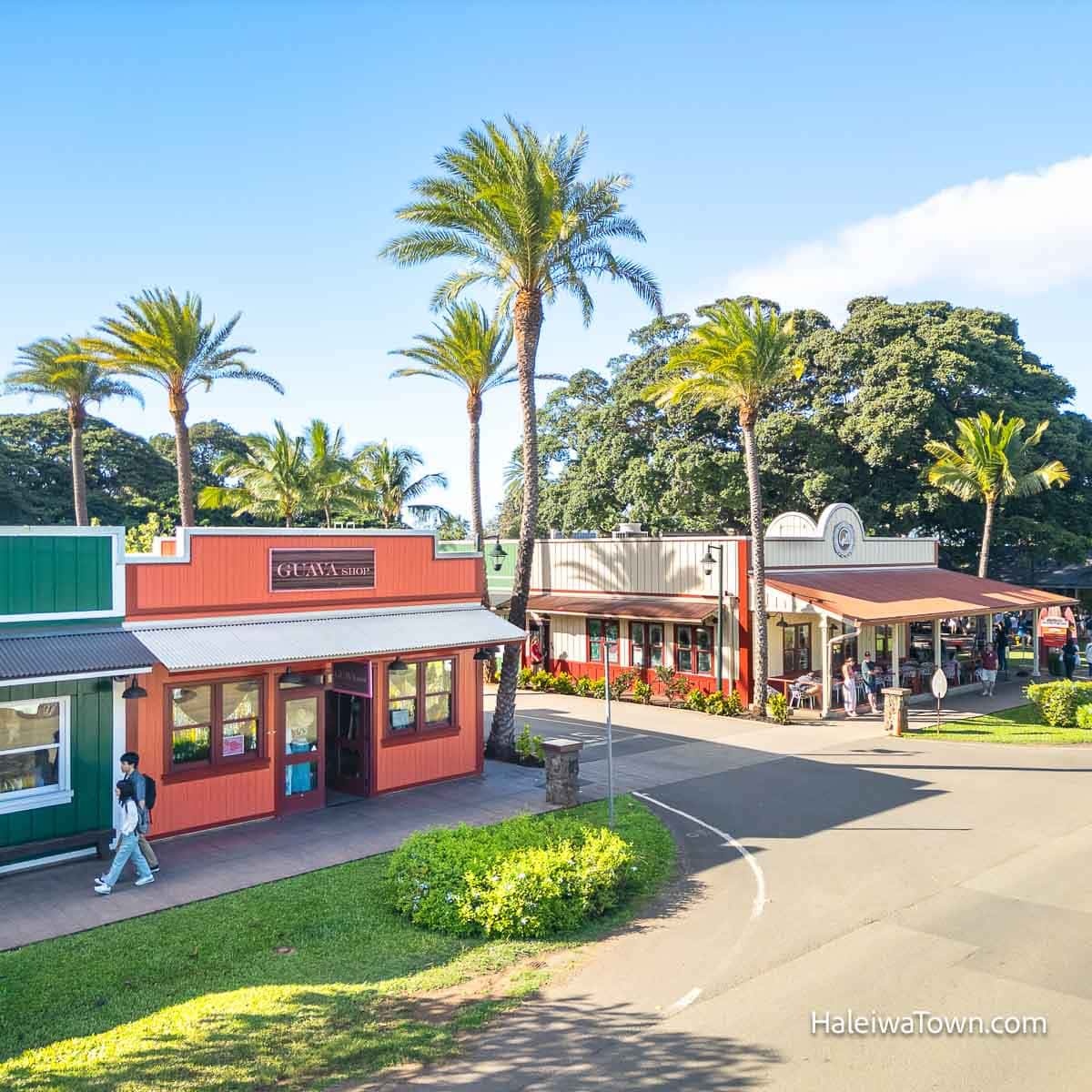
Haleiwa is a small historic town on the North Shore of the island of Oahu, located within the City and County of Honolulu, Hawaii. With a population of roughly 4,000 residents, it has long served as the cultural and commercial hub of the North Shore, drawing on a laid-back, surf-town atmosphere set among colorful plantation-era storefronts. The town is best known as a gateway to some of the most famous surf beaches in the world and as a convenient staging point for visitors exploring the laid-back communities, beaches, and natural landmarks of Oahu's northern coast. It sits roughly 30 to 40 miles northwest of Honolulu, about an hour's drive in light traffic along the H-2 and H-1 highways, and is reached by way of the scenic Kamehameha Highway past Dole Plantation.
Just a few minutes north of the town center lies Waimea Bay, one of the North Shore's most iconic beaches. In winter months, the bay draws enormous winter swells and big-wave surf contests, while in the calmer summer season it transforms into a beloved swimming and cliff-jumping spot, with a broad crescent of sand backed by a sizable public park. Continuing north along the highway, the road passes through the Pupukea area, home to world-renowned reefs and surf breaks. Ehukai Beach, the setting for the Banzai Pipeline, is one of the most photographed surf locations on earth and hosts the Pipeline Masters each winter, drawing professional surfers and spectators from across the globe.
A short drive south of Haleiwa, in the central Wahiawa Plateau area, Dole Plantation offers a family-friendly stop along the route between Honolulu and the North Shore. Founded in the early 20th century, the site includes the company's original retail operation, plantation gardens, a short train ride, and the well-known Pineapple Garden Maze, making it one of Oahu's most visited roadside attractions. Further north, roughly 30 to 40 minutes from Haleiwa, the Polynesian Cultural Center in Laie brings together recreated villages representing the cultures of Hawaii, Samoa, Tahiti, Fiji, Aotearoa, Tonga, and Rapa Nui, paired with traditional performances and an evening luau.
Haleiwa itself adds considerable appeal through its compact historic downtown, where visitors can browse surf shops, art galleries, and the cluster of famed shrimp trucks that have become a North Shore rite of passage. The combination of small-town character, a strong year-round tourism base, easy access to globally recognized beaches, and proximity to both Honolulu and the rest of Oahu makes Haleiwa a particularly compelling location for short-term rental operators. Owners benefit from a destination that draws returning surfers in winter, families and beachgoers in summer, and travelers year-round who use the town as a comfortable base for exploring the island's wild and beautiful northern coast.
Want to know if a property in Haleiwa is a good investment?
Enter an address to get instant revenue potential and comps.