
Statesboro, Georgia
Want to see how Statesboro compares to other top cities in Georgia? Explore all city regulations in Georgia. →
Statesboro, GA
Generally Investor Friendly
STR Regulations for Statesboro, Georgia
Executive Overview: Are Short-Term Rentals Allowed?
Short-term rentals are permitted in Statesboro, GA, though not explicitly regulated as a distinct category in the city code. Based on the Unified Development Code, lodging establishments are explicitly allowed in the Central Business District (CBD) and other commercial areas, while traditional residential short-term rental operations must comply with standard residential use provisions in their respective zoning districts.
Statesboro's regulatory framework treats short-term rentals under existing zoning categories rather than through standalone STR regulations, creating a compliance environment that relies heavily on underlying zoning district permissions and general use standards.
What do Airbnb hosts actually earn in Statesboro?
Statesboro hosts earn a median $28,106/year with $213 ADR and 44% occupancy.
Top performers pull in $38,078+ per year.
See the full Statesboro market breakdownStarting a Short-Term Rental Business in Statesboro
Step 1: Property Acquisition and Zoning Compliance
Before purchasing or developing a property for short-term rental use, investors must:
- Verify Zoning Compliance: Confirm the property is located in a zoning district that allows the intended STR use
- Review Use Permissions: Check whether lodging establishments or residential rentals are permitted by right or require special use permits
- Understand Density Limitations: Review maximum density requirements, especially in residential zones
- Assess Parking Requirements: Determine if off-street parking spaces are required based on the zoning district
Step 2: Business Structure and Licensing
- Business Registration: Register the STR business with the City of Statesboro
- Tax Registration: Obtain appropriate tax identification numbers for local and state taxes
- Insurance Coverage: Secure adequate liability and property insurance
- Professional Consultation: Engage local legal and accounting professionals familiar with Georgia STR regulations
Step 3: Property Development and Compliance
- Building Permits: Obtain necessary permits for any renovations or modifications
- Safety Inspections: Ensure compliance with fire, safety, and building codes
- Accessibility Compliance: Meet ADA requirements if applicable
- Utility Connections: Ensure proper water, sewer, and utility services
Step 4: Marketing and Operations
- Platform Registration: List properties on approved platforms
- Local Compliance: Develop operational procedures that comply with city codes
- Guest Communication: Establish clear communication protocols regarding local regulations
- Record Keeping: Maintain detailed records for tax and regulatory compliance
Required Documents, Permits, and Licenses
Primary Legal Documents
- Property Deed or Ownership Documentation: Proof of legal property ownership
- Business License: Municipal business registration
- State Business Registration: Georgia Secretary of State registration if operating as LLC/corporation
- Tax Identification Numbers: Federal EIN and Georgia state tax ID
- Zoning Verification Letter: Documentation confirming allowable use for STR operation
Permits and Approvals
- Building Permits: Required for any construction, renovation, or structural modifications
- Fire Safety Permits: Compliance with fire marshal requirements
- Health Department Permits: If serving food or providing other services requiring health oversight
- Special Use Permits: May be required in certain zoning districts (particularly residential zones)
- Sign Permits: For any exterior signage identifying the STR business
Insurance and Financial Documents
- General Liability Insurance: Minimum coverage as required by law
- Property Insurance: Coverage for building and contents
- Business Interruption Insurance: Protection against income loss
- Workers' Compensation: If employing staff
- Financial Statements: Required for loan applications and business verification
Operational Documents
- Emergency Contact Information: Local contacts for guests
- House Rules and Regulations: Clear guidelines for guest behavior and property use
- Damage and Security Policies: Procedures for handling damages and security deposits
- Local Tax Compliance: Documentation for hotel/motel taxes and other local assessments
Zoning Districts and STR Permissions
Central Business District (CBD)
Status: Lodging establishments are explicitly permitted Key Advantages:
- No parking requirements for lodging establishments
- Mixed-use development opportunities
- High-density potential
- Active pedestrian environment
Limitations:
- Must comply with active frontage requirements
- Curb cut restrictions for parking facilities
- Height limitations (65 feet for mixed-use, 45 feet for non-residential)
Residential Districts - STR Compliance Analysis
R-2 Townhouse Residential District
Traditional STR Status: Likely requires special use permit for commercial lodging use Alternative Options: Accessory Dwelling Units are permitted without parking requirements Considerations: Maximum 12 units per acre density limit
R-3 Medium Density Multi-Household Residential District
Traditional STR Status: Commercial lodging likely requires special use permit Alternative Options: Cottage Courts permitted with 1 space per dwelling unit Considerations: 35-foot height limit, 50% building coverage maximum
R-4 High Density Residential District
Traditional STR Status: Commercial lodging likely requires special use permit Alternative Options: Cottage Courts permitted with 1 space per dwelling unit Considerations: 75-foot height limit, special use permit required for >12 units/acre
R-6, R-15, R-40 One-Household Residential Districts
Traditional STR Status: Commercial lodging likely prohibited or requires extensive permitting Alternative Options: Accessory Dwelling Units permitted in R-6, R-15, R-40 Considerations: Strict residential use protections, significant setback requirements
Commercial Districts
Highway Oriented Commercial (HOC): Likely permits lodging establishments Mixed-Use District (MX): Potentially suitable for commercial lodging operations Office District (O): Limited STR potential, primarily for business-oriented lodging
State-Level Georgia STR Regulations
Since Statesboro lacks specific short-term rental ordinances, operations must comply with Georgia state regulations:
Georgia Hotel/Motel Tax Requirements
- Registration Required: Operators must register with Georgia Department of Revenue
- Tax Collection: 5% state sales tax plus local hotel/motel taxes
- Filing Requirements: Monthly or quarterly tax returns depending on volume
- Record Keeping: Maintain detailed guest and revenue records
State Building and Safety Codes
- Georgia State Minimum Standard Codes: Compliance with state building, fire, and safety codes
- Local Amendments: Cities may adopt more restrictive codes
- Inspection Requirements: Regular safety and compliance inspections
Insurance and Liability Requirements
- Minimum Coverage: Georgia law requires specific liability minimums
- Property Insurance: Comprehensive coverage recommendations
- Business License: State business registration requirements
Local Contact Information
City of Statesboro - Planning and Development
Address: 50 East Main Street, Statesboro, GA 30458 Phone: (912) 764-5468 Website: www.statesboroga.gov Email: planning@statesboroga.gov Services: Zoning verification, building permits, planning consultation
Bulloch County Government
Address: 115 North Main Street, Statesboro, GA 30458
Phone: (912) 489-1660
Website: www.bullochcounty.net
Services: County tax assessment, development permits outside city limits
Georgia Department of Revenue
Phone: (877) 423-6711 Website: dor.georgia.gov Email: gar@dor.ga.gov Services: Business tax registration, hotel/motel tax compliance
Statesboro Fire Department
Address: 25 North College Street, Statesboro, GA 30458 Phone: (912) 764-5111 Services: Fire safety inspections, emergency planning
Bulloch County Health Department
Address: 512 Floyd Street, Statesboro, GA 30458 Phone: (912) 764-3805 Website: phdistrict9-2.org Services: Health permits, restaurant licensing (if applicable)
Specific Regulatory Considerations
Parking Requirements by District
- CBD District: No parking required for lodging establishments
- Residential Districts: Typically 1-2 spaces per dwelling unit depending on bedroom count
- Commercial Districts: Variable requirements based on specific district standards
- Accessory Dwelling Units: Generally no parking requirements
Building and Safety Standards
- Fire Safety: Compliance with International Fire Code requirements
- Building Codes: Georgia State Minimum Standard Codes apply
- Accessibility: ADA compliance required for public accommodations
- Utilities: Proper water, sewer, and electrical connections mandatory
Operational Restrictions
- Noise Ordinances: Compliance with local noise regulations
- Occupancy Limits: Maximum occupancy based on bedroom count and safety codes
- Length of Stay: No minimum stay requirements under current regulations
- Guest Privacy: Respect for adjacent property owner rights
Tax Implications
- Hotel/Motel Tax: 5% state rate plus local add-ons
- Sales Tax: Applicable to all rental charges
- Property Tax: Standard residential or commercial property tax rates
- Business Income Tax: Federal and state income tax obligations
Recommendations for STR Investors
Due Diligence Process
- Title Search: Verify ownership and any deed restrictions
- Zoning Analysis: Confirm allowable uses and permit requirements
- Financial Modeling: Account for all regulatory costs and tax implications
- Market Analysis: Assess local demand and competition
Risk Mitigation Strategies
- Legal Consultation: Engage attorneys familiar with local zoning and STR regulations
- Insurance Optimization: Work with specialized insurance providers
- Regulatory Monitoring: Stay informed about potential code changes
- Community Relations: Maintain positive relationships with neighbors and local officials
Investment Considerations
- CBD Properties: Offer the highest regulatory certainty for lodging operations
- Accessory Dwelling Units: Provide STR opportunities in residential areas with fewer restrictions
- Mixed-Use Potential: Consider properties that could accommodate both residential and commercial components
- Development Timing: Factor permitting and approval timelines into investment projections
Source Materials
Primary Source:
- Unified Development Code, City of Statesboro, Georgia
- Document Date: September 12, 2023 (For Adoption)
- Official URL: www.statesboroga.gov/wp-content/uploads/2023/09/2023-09-12_UDC_Statesboro-GA_V2-1.pdf
Note: This guide is based solely on the provided Unified Development Code document. Additional city ordinances, county regulations, or recent amendments may apply. Investors should verify current regulations with local authorities before making investment decisions.
This analysis is for informational purposes only and does not constitute legal advice. Investors should consult with qualified legal and real estate professionals before making investment decisions in Statesboro, Georgia.
Next step
Found a property in Statesboro?
Paste any address and get estimated revenue, cash-on-cash return, and comparable STR performance in under 5 minutes. 3 free analyses per day.
Free brief
Get the free Statesboro STR Investment Brief
Revenue data, top neighborhoods, seasonal trends, and the key regulations for Statesboro, Georgia in one email.
Statesboro
Market Saturation Score
Photos of Statesboro


Overview of Statesboro
Statesboro sits in Bulloch County in the southeastern Georgia coastal plain, with a city population of roughly 33,000. Best known as the home of Georgia Southern University, the town has the easygoing rhythm of a college community layered over a long agricultural heritage, and it serves as a natural gateway to the Georgia coast and the Lowcountry marshes that begin a short drive to the east. It lies about 50 miles northwest of Savannah, putting weekend trips to the historic district, the beaches, and the barrier islands comfortably within reach.
Georgia Southern University is the engine of local life and the most obvious draw for visitors. The campus hosts the Eagles athletic program, frequent concerts, conferences, and family weekends, and it anchors the restaurant and entertainment scene on and around the edge of downtown. Georgia Southern University is the economic and cultural center of the county and a key reason short-term demand spikes around graduation, move-in, and major game days.
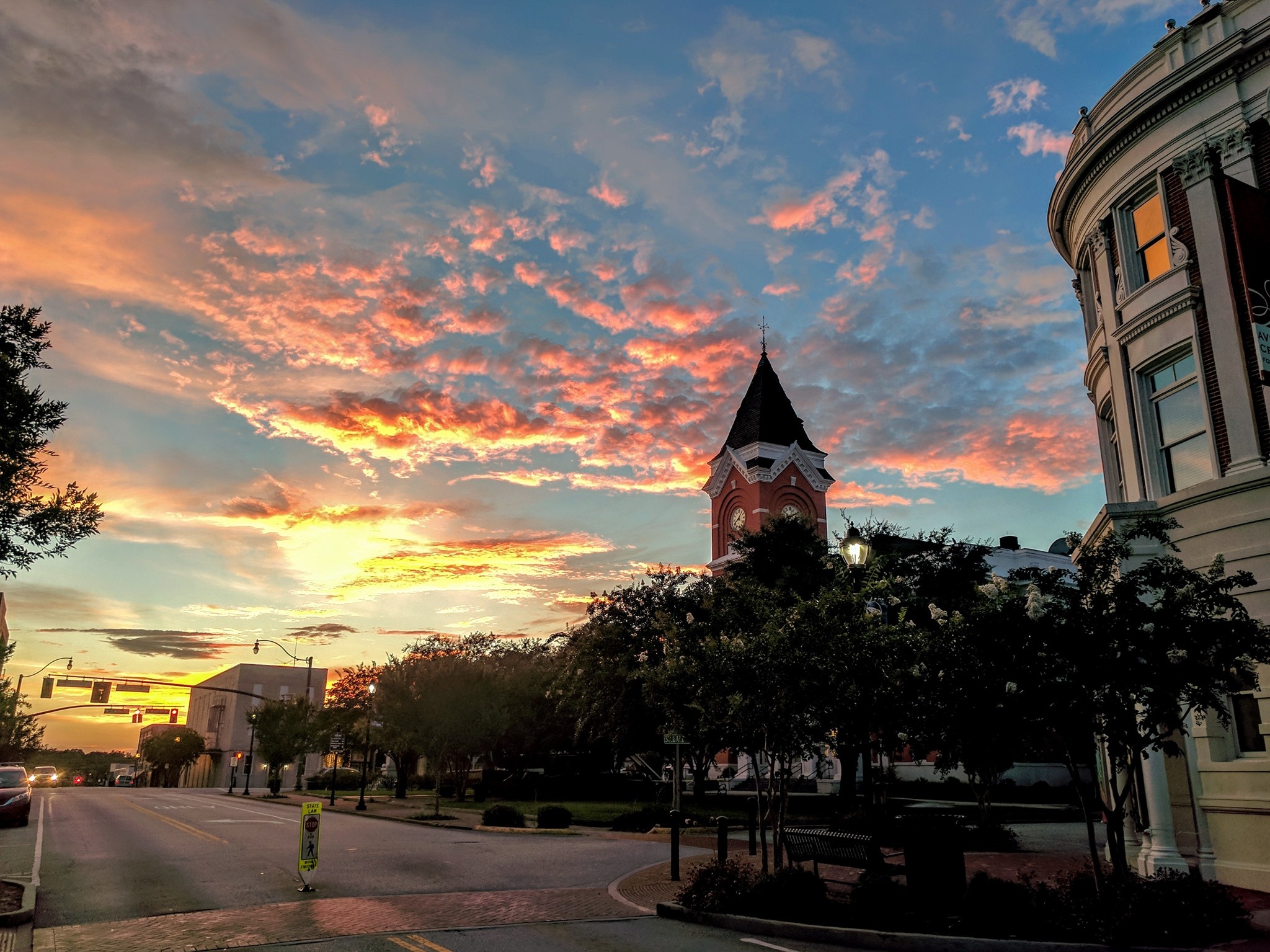
Downtown Statesboro centers on a walkable Main Street lined with locally owned restaurants, coffee shops, and small boutiques, with the Averitt Center for the Arts providing theater, gallery space, and music programming just off the square. The area gives the city a small-town feel without the deadness of a pure college town, and it tends to be where visitors linger between campus events and day trips in the countryside.
Outdoor lovers are within a short drive of two state parks that offer very different experiences. George L. Smith State Park, roughly 25 minutes north of town, wraps around a cypress-lined mill pond and offers cabins, kayaking, and one of the surviving 19th-century covered bridges in the region. Magnolia Springs State Park, a little farther west near Millen, is known for crystal-clear natural springs, a Civil War-era earthwork, and a campground shaded by magnolias and oaks.
The strongest argument for Statesboro as a short-term rental base is the mix it offers: a year-round university calendar, a real downtown, two distinctive state parks within a half-hour, and the lure of Savannah and the Georgia barrier islands roughly an hour down the road. Guests can settle into a quiet Southern town and still be at Tybee Island, the historic squares of Savannah, or the marshes around Hilton Head before lunch, a combination few cities this size can match.
Want to know if a property in Statesboro is a good investment?
Enter an address to get instant revenue potential and comps.