
Folkston, Georgia
Want to see how Folkston compares to other top cities in Georgia? Explore all city regulations in Georgia. →
Folkston, GA
Generally Investor Friendly
STR Regulations for Folkston, Georgia
1) Overview: Are short‑term rentals allowed in Folkston, GA?
Direct answer: The City of Folkston does not prohibit short‑term rentals. Folkston levies a 5% “hotel‑motel” excise tax on transient lodging and requires “lodging providers” (anyone furnishing lodging for value to the public) to register with the City, collect the tax, and file monthly returns. There is no separate STR license; compliance flows through the lodging provider registration and tax administration.
- The tax applies to “guest room” occupancy in a “hotel” (a broad definition that captures lodging businesses) and is due on every occupancy unless an exemption applies (see exemptions below).
- If you operate a short‑term rental in Folkston’s incorporated limits, you are a lodging provider subject to city tax and administration.
- The Land Development Code defines “Dwelling, Unit” and “Transient use such as hotels and motels,” but does not include an explicit short‑term rental category. Confirm with zoning that STR use is permitted at your address (transient lodging is generally a commercial use and is typically allowed in commercial/mixed‑use zoning districts; verify district‑specific allowances).
Bottom line: STRs are allowed in Folkston if your property use is compliant with zoning and you fulfill the lodging provider registration and tax obligations.
What do Airbnb hosts actually earn in Folkston?
Folkston hosts earn a median $14,626/year with $106 ADR and 38% occupancy.
Top performers pull in $23,101+ per year.
See the full Folkston market breakdown2) How to start a short‑term rental business in Folkston
- Confirm zoning suitability:
- Transient lodging is typically a commercial lodging use. Check your zoning district with the City Manager or Zoning Administrator to ensure STRs are permitted at your location. If required, obtain any site‑specific approvals before operating.
- Register as a lodging provider:
- File a registration with the City Clerk within 30 days of commencing business (the ordinance requires registration “immediately” upon engaging in business and no later than 30 days after the ordinance’s effective date; for new businesses, register before or immediately at launch).
- The City Clerk issues a Certificate of Authority to collect the tax once registered.
- Set up tax collection:
- Collect a 5% tax on the amount of rent for transient occupancy.
- Provide receipts to each guest reflecting rent and applicable taxes.
- Apply exemptions carefully (see Section 3).
- File and remit monthly:
- Due date: on or before the 20th day of the month following the reporting month.
- Timely filers may deduct a 3% vendor credit on tax due.
- If your estimated monthly tax exceeds $2,500 (and you had >$2,500 in any three consecutive months of the prior fiscal year), you must file an estimated return and remit at least 50% of estimated tax by the 20th day of the same month.
- Maintain records:
- Keep folios, receipts, exemption certificates, and related documents for a minimum of three years. Records must be available for City examination/audit.
- Keep operating standards in mind:
- STRs are “transient use” and distinct from long‑term residential dwellings; your business activities (parking, noise, signage, etc.) must remain compliant with the Land Development Code (e.g., signage, setbacks, parking, and use provisions).
- Insurance and safety:
- Standard STR practice applies: carry appropriate property and liability coverage, confirm smoke/CO detectors, and follow best‑practice safety standards. The provided documents do not specify STR safety codes, but compliance with state/local building and fire codes is expected.
3) Required documents, permits, licenses, and guidelines
- Lodging provider registration:
- Registration form with the City Clerk (name under which business is transacted, business location(s), and other required information).
- Registration signed by the owner (individual), a member/partner (partnership/association), or an officer (corporation).
- A separate registration is required for each place of business; the Certificate of Authority must state the name and location of the business it covers.
- Certificate of Authority:
- Issued by the City Clerk upon registration, authorizing you to collect the tax.
- Monthly returns:
- Return of Tax on Lodging form reporting gross rent, exempt rent, tax collected, vendor credit, penalties/interest (if applicable).
- Attach supporting records as necessary. Filing deadlines and vendor credit rules apply.
- Recordkeeping:
- Maintain all folios, receipts, exemption certificates, and any other documents the City Clerk prescribes for at least three years. The City may examine these records and audit your operation.
- Zoning compliance:
- Verify zoning district allowance for STR use before opening. The Land Development Code provides definitions but does not enumerate a specific “short‑term rental” use category; confirm with the City Manager or Zoning Administrator.
4) Specific regulations (City, County, State) for short‑term rentals
- City of Folkston — Hotel‑Motel Excise Tax (Ordinance No. 1016‑00‑4):
- Tax rate: 5% of rent for transient lodging.
- Exemptions:
- Permanent residents (occupancy ≥ 10 continuous days) are exempt from tax after becoming permanent residents.
- Occupants whose residence was destroyed by fire or casualty, with written certification.
- U.S. and Georgia governments and instrumentalities (when traveling on official business with substantiation or paying by government credit/debit card).
- Foreign diplomats with substantiation from the U.S. Department of State.
- Occupancy provided without charge is exempt.
- Collection and remittance:
- Lodging providers must collect tax at the time rent is collected.
- Provide a receipt to each guest reflecting rent and applicable taxes.
- Filing deadlines and payments:
- Monthly due date: the 20th day of the month following the tax period.
- Penalties and interest:
- Penalty: 5% or $5, whichever is greater, per month or fraction thereof (up to 25% or $25, whichever is greater).
- Interest: 1% per month or fraction thereof on unpaid balances.
- Fraud penalty: 50% for false or fraudulent returns with intent to evade tax.
- Estimated returns:
- Required when estimated monthly tax > $2,500 and you exceeded that threshold in any three consecutive months of the prior fiscal year.
- Remit at least 50% by the 20th day of the same month; credit against the regular monthly return.
- Vendor credit:
- 3% of tax due if payment is made timely (not delinquent).
- Extensions:
- Governing authority may grant up to 30‑day extensions for good cause; during extension, remit at least 100% of tax paid in the same month of the prior fiscal year. No penalty or interest in first 10 days of extension; interest accrues thereafter at 1% per month.
- Deficiency determinations and no‑return scenarios:
- City Clerk may recompute tax and issue deficiency determinations based on available information. Written notice procedures apply.
- If no return is filed, the Clerk may estimate gross receipts/subject rentals and assess tax accordingly.
- Collection and enforcement:
- City may bring action to collect delinquent tax, penalties, interest, and fees within three years.
- Successors/assignees must withhold sufficient purchase price to cover tax due until a receipt or certificate of no tax due is produced.
- Refunds available for overpayments, erroneous or illegal collections, or duplicate payments (claim must be filed within three years of payment).
- Violations:
- Failure to collect tax: misdemeanor; fine up to $100 or confinement up to three months, or both.
- Failure to file/keep records/refuse inspection: misdemeanor; fine up to $100 or confinement up to three months, or both.
- Fraudulent return: misdemeanor; fine $100–$300 or confinement up to three months, or both.
- Each day of violation constitutes a separate offense.
- Charlton County:
- County‑specific STR permits or taxes are not identified in the provided documents. Contact Charlton County for any county‑level requirements or confirm none exist.
- State of Georgia:
- State‑level sales tax on accommodations generally applies at 4% for lodging, but local jurisdiction rules govern additional local hotel‑motel taxes. Verify any state obligations with the Georgia Department of Revenue if you are registered for state sales/use tax or if your STR activities otherwise trigger state tax obligations.
- STRs often trigger state sales tax depending on the rental arrangement and platform involvement. The provided documents focus on Folkston’s local tax; consult the Georgia DOR or a tax professional to determine state sales tax applicability.
5) Contact information (local authority in charge of STRs)
- City of Folkston — City Clerk (lodging provider registration, Certificate of Authority, monthly returns):
- City Clerk: Darlene Williamson
- Mailing/City Hall: Post Office Box 247, Folkston, GA 31537
- Phone: Use the main City Hall line; contact City Hall for the City Clerk’s direct line (contact details were not included in the provided documents).
- Email: Use City Hall contact or the City Clerk’s official email (contact details were not included in the provided documents).
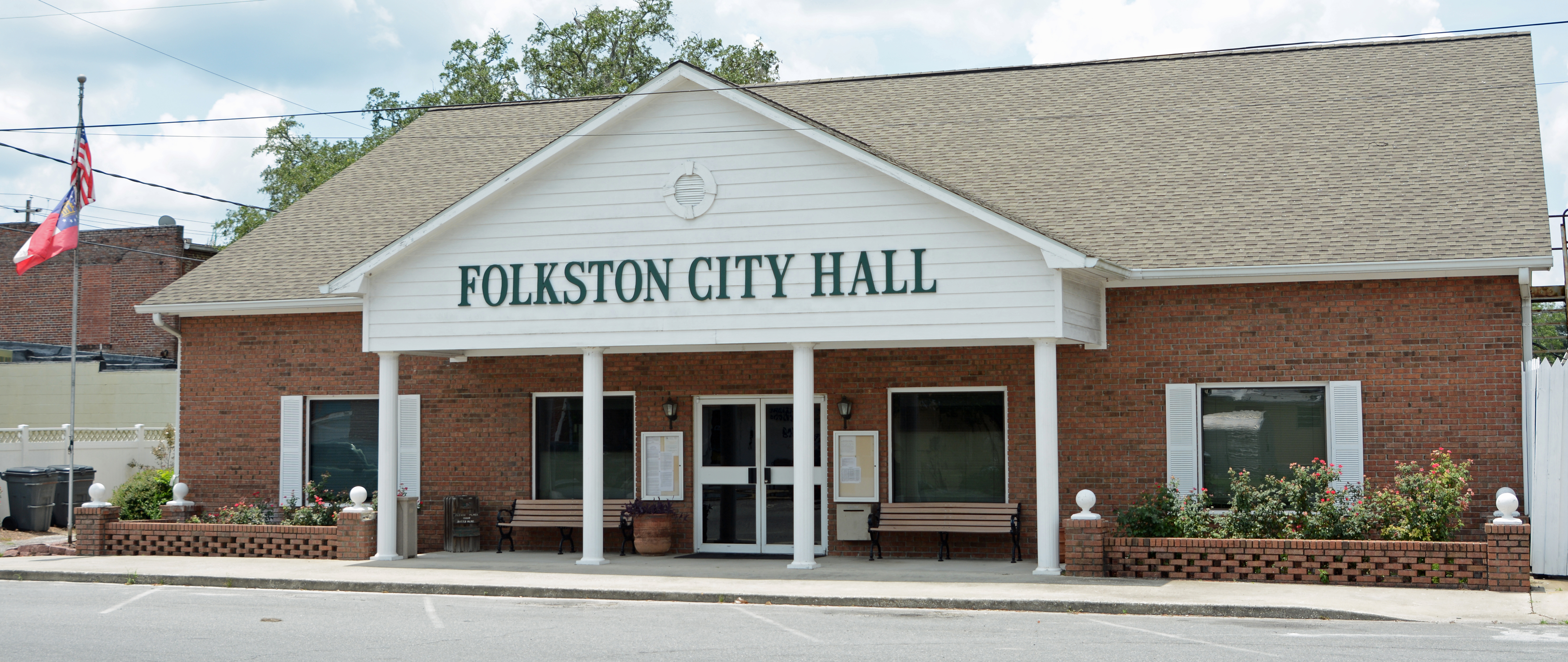
- Office: Folkston City Hall (physical address not provided in the documents; contact City Hall for directions and hours)
- Zoning inquiries: City Manager or Zoning Administrator (contact City Hall for the direct line/email)
- Notes: The City Clerk administers the hotel‑motel tax and issues the Certificate of Authority.
6) Source pages (links)
- Ordinance No. 1016‑00‑4 — Hotel‑Motel Excise Tax:
- City of Folkston Land Development Code (Definitions and administrative provisions):
- Charlton County and Cities of Folkston and Homeland 2025 Comprehensive Plan (context only; not STR‑specific):
Practical investor checklist:
- Confirm zoning allowance for STRs at your property address.
- Register as a lodging provider and obtain your Certificate of Authority.
- Collect 5% city lodging tax for transient stays ≤10 days; stop collecting for the same guest after 10 continuous days (permanent resident exemption).
- File monthly returns and remit tax by the 20th; deduct the 3% vendor credit if timely.
- Keep folios, receipts, exemption certificates for three years; be audit‑ready.
- Monitor penalties/interest rules and estimated return thresholds.
- If applicable, ensure compliance with state sales tax requirements and any platform obligations.
Next step
Found a property in Folkston?
Paste any address and get estimated revenue, cash-on-cash return, and comparable STR performance in under 5 minutes. 3 free analyses per day.
Free brief
Get the free Folkston STR Investment Brief
Revenue data, top neighborhoods, seasonal trends, and the key regulations for Folkston, Georgia in one email.
Folkston
Market Saturation Score
Photos of Folkston
Overview of Folkston
Folkston is a small town of roughly 2,500 residents in Charlton County, in the southeastern corner of Georgia, just a few miles north of the Florida state line. The town has a quiet, pine-forested Southern character, with a compact downtown and a relaxed pace that feels far removed from the busier coastal cities to the east. Folkston is best known as a gateway to the Okefenokee Swamp, one of the largest intact freshwater wetlands in the United States, and as the home of the Folkston Funnel, a celebrated railroad-watching spot where freight trains are staged before crossing into Florida. The nearest major city is Jacksonville, Florida, about 50 miles to the south, while Brunswick and the Georgia coast lie roughly 60 miles east.
The principal draw in the area is the Okefenokee National Wildlife Refuge, a vast peat bog wilderness of cypress forests, blackwater channels, and open prairies that covers more than 400,000 acres and spills across the Georgia–Florida line. The Suwannee Canal Recreation Area, the main eastern entrance to the swamp, sits about ten miles southwest of town and offers a network of boardwalks, an observation tower, boat tours, and canoe and kayak rentals during the cooler months. Birders, photographers, and paddlers come year-round for the chance to see alligators, sandhill cranes, and the still, mirror-like waters that have defined this landscape for thousands of years.
On the western side of the same swamp, Stephen C. Foster State Park offers a more remote base for exploring the Okefenokee, with overnight cabins and campsites, night-time boat tours, and access to some of the swamp's most photographed vistas. The drive from Folkston runs about 60 to 75 minutes through the forest, and the park is often paired with a stop at Fargo, the tiny Georgia community on the swamp's western edge.
Back in town, the Folkston Funnel is a destination in its own right. A former rail platform has been converted into a public viewing area where visitors can watch long lines of CSX freight trains assemble and pass through, sometimes more than fifty trains in a single day. The annual Folkston Funnel Railfan Festival draws rail enthusiasts from across the country, and the town also maintains a small railroad-themed museum in the historic depot. Together, these draws give the town an unusually varied appeal for such a small place.
For short-term rental owners, Folkston offers a compelling combination of easy access, distinctive attractions, and a setting that feels genuinely off the beaten path. With Jacksonville, the coast, and the Okefenokee all within an hour's reach, the town makes a natural base for travelers who want to combine swamp paddling, train watching, and small-town Georgia atmosphere in a single trip.
Want to know if a property in Folkston is a good investment?
Enter an address to get instant revenue potential and comps.