
Columbus, Georgia
Want to see how Columbus compares to other top cities in Georgia? Explore all city regulations in Georgia. →
Columbus, GA
Generally Investor Friendly
STR Regulations for Columbus, Georgia
Overview: Are Short-Term Rentals Allowed in Columbus, GA?
Yes, short-term rentals are explicitly allowed in Columbus, GA when operators obtain the proper permits and comply with all local regulations. Columbus Consolidated Government has established a comprehensive regulatory framework for short-term vacation rentals (STRs) through Chapter 4, Article 9 of the Unified Development Ordinance (UDO). The city defines short-term rental units (STRUs) as residential dwelling units provided for lodging to transient guests for periods not exceeding 30 consecutive days, in exchange for compensation.
Columbus operates under a decentralized regulatory approach typical of Georgia municipalities, with specific local requirements that must be met before an STR can legally operate. The city requires both a Certificate of Occupancy from the Inspections & Code Department and a business license from the Business License Office.
What do Airbnb hosts actually earn in Columbus?
Columbus hosts earn a median $29,200/year with $152 ADR and 62% occupancy.
Top performers pull in $39,977+ per year.
See the full Columbus market breakdownHow to Start a Short-Term Rental Business in Columbus, GA
Step-by-Step Process
1. Property Preparation and Compliance Verification
- Ensure your property meets all building and safety codes
- Verify zoning compliance with the Unified Development Ordinance
- Confirm no outstanding tax obligations or liens on the property
- Prepare the property with required safety equipment and signage
2. Certificate of Occupancy Application
- Submit all required documentation to the Inspections & Code Department
- Pay the $40 non-refundable application fee
- Schedule and pass the required property inspection
- Obtain approval for your Certificate of Occupancy
3. Business License Acquisition
- Visit the Business License Office with your approved Certificate of Occupancy
- Apply for a business license specific to short-term vacation rentals
- Pay applicable business license fees
4. Ongoing Compliance Setup
- Register for Georgia tax obligations (state sales tax and local hotel-motel tax)
- Establish procedures for guest screening and community relations
- Implement systems for maintaining continuous compliance with all regulations
Important Operational Notes
- Multi-Unit Properties: Each individual house/unit requires a separate permit and $40 fee
- Batch Processing: While each property needs its own permit, submitting multiple properties simultaneously requires only one background check
- Property Management: If leasing someone else's property, ensure your lease explicitly permits short-term rental use
Required Documents, Permits, Licenses, and Guidelines
Mandatory Documentation for Certificate of Occupancy
1. Short-Term Vacation Rental Application
- Complete official application form
- Property type classification (single-family, two-family, multi-family, condominium)
- Rental type designation (partial house or full house)
2. Insurance Requirements
- Valid homeowner's insurance policy
- Minimum $500,000 liability coverage
- Policy must be current and in effect
3. Safety and Property Documentation
- Digital floor plan of the property (city provides example format)
- Working smoke detectors in every bedroom, outside sleeping areas, and on all habitable floors
- Properly maintained and charged fire extinguisher
- Emergency contact information posting with floor plan showing fire exits and escape routes (must be prominently displayed)
4. Background Checks
- Background checks required for three parties: homeowner, applicant, and 24/7 contact person
- Fee: $20 each if obtained through Columbus Police Department
- Must be obtained less than 30 days prior to submission
- Disqualifying factors: felonies within last 10 years or misdemeanors involving moral turpitude within last 5 years
- Contact Columbus Police Department directly to obtain
5. Legal Documentation
- If leasing the property: signed lease stating STR use is permitted
- Proof of neighbor notification (per UDO Section 4.9.6 requirements)
- Certificate of Occupancy application form
6. Financial Obligations
- Proof of no outstanding unpaid obligations or local government assessments
- $40 non-refundable application fee
Additional Requirements
24/7 Contact Person Specifications
- Must be customarily present within 50 miles of the STR for business purposes
- Available to respond to issues at any time
- Must pass background check alongside owner and applicant
Property Standards Compliance
- City Minimum Property Maintenance Code
- Building Electrical Code
- Mechanical Code
- Plumbing Code
- All requirements of the Unified Development Ordinance
Specific Regulations for Short-Term Rentals in Columbus, GA
Occupancy and Capacity Regulations
Occupancy Limits: Columbus enforces a strict occupancy formula of two guests per bedroom plus one additional occupant. This regulation applies universally across all STR properties and must be enforced consistently.
Property Type Restrictions: STRs are permitted in all residential dwelling types, including:
- Single-family homes
- Multi-family properties
- Condominiums
- Approved accessory dwelling units
Exclusions: Motor vehicles as defined in Title 40 of the Official Code of Georgia Annotated are explicitly prohibited as STRs.
Zoning and Location Requirements
General Zoning Compliance: All STRs must comply with the Unified Development Ordinance and applicable zoning requirements. Columbus maintains designated areas where STRs are permitted, with particular attention to historic and residential preservation zones.
Historic District Considerations: Properties located in historic districts face additional restrictions, particularly for non-owner-occupied properties. Investors should verify specific requirements with the Planning Department before acquiring properties in designated historic areas.
Zoning Verification Process: The city's planning division maintains jurisdiction over zoning compliance, and property owners should confirm STR permissibility during the due diligence phase of property acquisition.
State-Level Regulations Applicable to Columbus
Georgia State Tax Obligations:
- State Sales Tax: 4% on all short-term rentals
- Hotel-Motel Tax: Columbus applies an 8% hotel-motel tax rate on overnight accommodations
- Tax Collection: Major platforms like Airbnb typically collect and remit these taxes automatically, but hosts should verify compliance with their specific situation
State Regulatory Framework: Georgia does not maintain statewide STR definitions or uniform regulations, delegating regulatory authority to individual municipalities. This creates a patchwork of local regulations that property owners must navigate according to their specific location.
Enforcement and Compliance Monitoring
Inspections: Properties undergo inspection prior to Certificate of Occupancy approval and may be subject to ongoing compliance monitoring.
Violation Penalties: Non-compliance constitutes a criminal offense punishable under Section 1-8 of the Columbus Code of Ordinances, with fines assessed per Section 4.9.8 of the Unified Development Ordinance.
Ongoing Obligations: STR operators must maintain continuous compliance with all safety, insurance, and operational requirements throughout the permit period.
Contact Information for Local Authority
Primary Contact: Inspections & Code Department
Phone: (706) 225-4126
Fax: (706) 225-4129
Email: inspections@columbusga.org
Physical Address:
420 East 10th Street
Columbus, GA 31901
Hours of Operation: Monday - Friday: 8:00 AM - 5:00 PM
Additional City Resources
Business License Office: Location and contact information should be obtained through the city's main contact system or website.
311 Citizen Services: For general questions and concerns about city services and regulations.
Columbus Police Department: For background check requirements and procedures.
Planning Department: For zoning verification and historic district questions.
Columbus Consolidated Government:
Government Center
100 10th Street
Columbus, Georgia 31901
Links to Source Pages
Primary Government Resources
Columbus STR Main Page: www.columbusga.gov/inspections-and-code-2/Short-Term-Vacation-Rentals
Primary resource for permits, applications, and regulatory guidance
Short-Term Rental Application Form: www.columbusga.gov/Portals/inspections-and-code/Forms/ShortTermVacationRental.pdf
Official permit application document
Certificate of Occupancy Application: www.columbusga.gov/inspections-and-code/Forms/CertificateofOccupancy.pdf
Required occupancy certificate application
Unified Development Ordinance - Article 9: library.municode.com/ga/columbus/codes/code_of_ordinances?nodeId=APXAUNDEOR_CH4GEDEST_ART9SHRMRE
Complete legal framework for STR regulations
STR Floor Plan Example: www.columbusga.gov/Portals/inspections-and-code/Resources/Short-Term-Rental-Example-Floor-Plan.pdf
Required floor plan format and example
Neighbor Notification Form: www.columbusga.gov/Portals/inspections-and-code/Resources/STVR_NeighorNotification.pdf
Required neighbor notification documentation
STR Permit Fees Schedule: www.columbusga.gov/LinkClick.aspx?fileticket=f_6iqHFHvrM%3d&tabid=2084&portalid=50
Complete fee structure and schedules
STR Interactive Map: experience.arcgis.com/experience/7b4ae64cb4c9426aa4bea3111976dae1
Current STR locations and status information
Additional Resources
Georgia Department of Revenue - Business Registration: georgia.gov/register-business-georgia-department-revenue
State tax registration for business operations
Self Service Portal: columbusga-energovpub.tylerhost.net/Apps/SelfService#/home
Online permitting and case management system
Code Case Information Portal: experience.arcgis.com/experience/2471869ab53841cab50e3fb75c916462
Property compliance and case tracking
Industry Reference Resources
Georgia STR Regulatory Overview: www.hostaway.com/blog/airbnb-rules-in-georgia/
Comprehensive guide to Georgia STR landscape and city comparisons
Georgia STR Tax and Legal Guide: www.steadily.com/blog/airbnb-short-term-rental-laws-and-regulations-in-georgia
State-level tax obligations and legal considerations
National STR Regulatory Context: touchstay.com/blog/airbnb-regulations-by-state
Comparative analysis across multiple states including Georgia
This guide provides essential information for STR investors and operators in Columbus, GA. However, regulations can change, and investors should verify current requirements with the city before making property acquisitions or operational decisions. Consult with local legal and tax professionals for complex compliance scenarios.
Next step
Found a property in Columbus?
Paste any address and get estimated revenue, cash-on-cash return, and comparable STR performance in under 5 minutes. 3 free analyses per day.
Free brief
Get the free Columbus STR Investment Brief
Revenue data, top neighborhoods, seasonal trends, and the key regulations for Columbus, Georgia in one email.
Columbus
Market Saturation Score
Photos of Columbus


Overview of Columbus
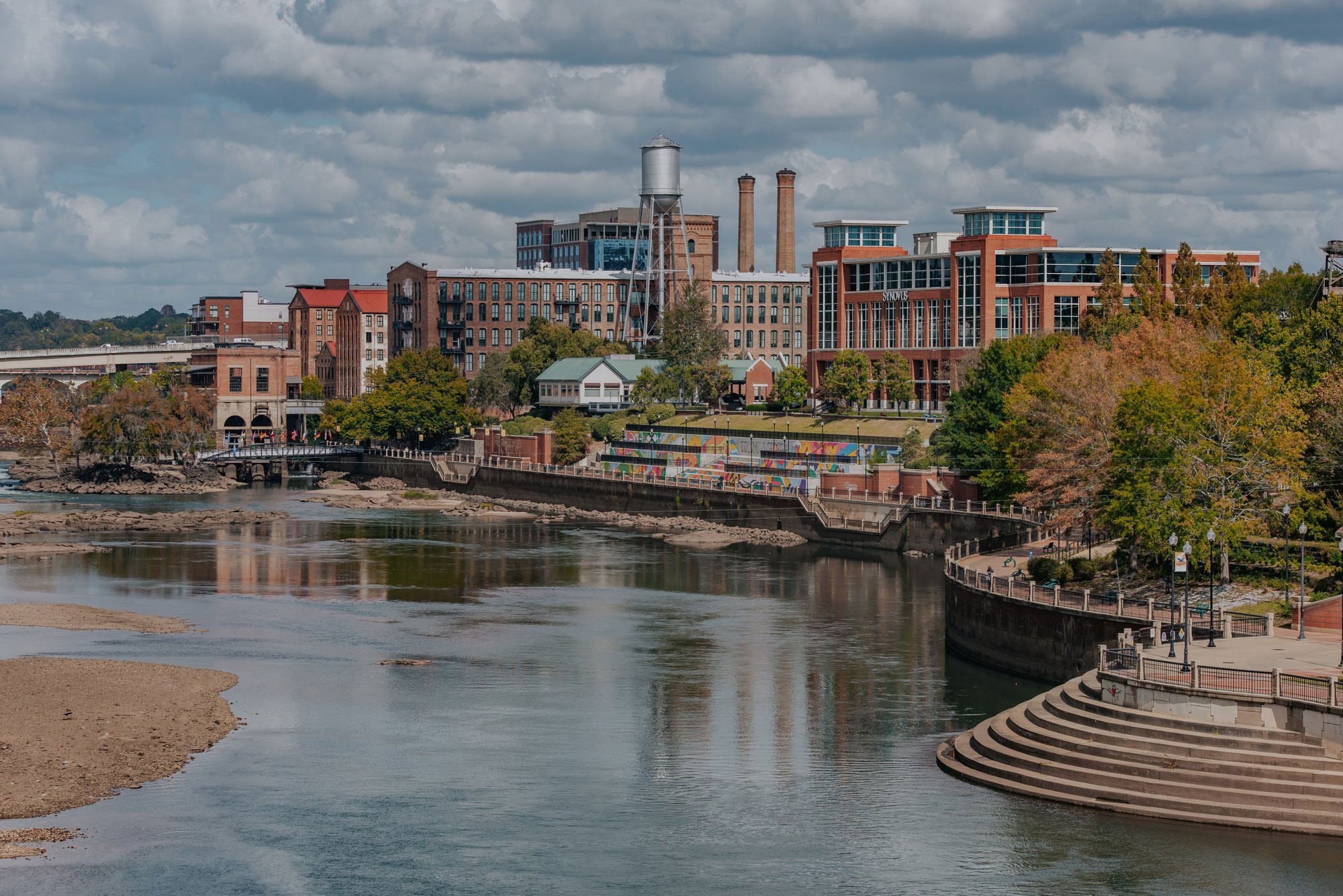
Columbus, Georgia sits in the western part of the state in Muscogee County, straddling the Alabama border along the Chattahoochee River. With a population of approximately 200,000, it is the third-largest city in Georgia and serves as the regional hub for the Chattahoochee Valley. The city has a deep military heritage as the home of Fort Moore, formerly known as Fort Benning, one of the largest U.S. Army installations in the country, and it functions as a gateway to the outdoor and historical attractions of west Georgia. Columbus lies roughly 100 miles southwest of Atlanta, making it accessible as both a standalone destination and a stopover on broader regional itineraries.
Downtown Columbus has been transformed in recent years by the Chattahoochee RiverWalk, a multi-use path that traces the river through the urban core. The walkway connects to whitewater rafting and kayaking features, restaurants, breweries, and a revitalized arts district, giving visitors a reason to linger along the waterway rather than simply pass through.
Just south of the city, Fort Moore anchors the local economy and identity. The post is home to the National Infantry Museum, a Smithsonian-affiliated institution that traces the history of the U.S. Army infantry from the Revolutionary War to the present. The museum is a significant draw for military families, history enthusiasts, and curious travelers, and it sits only about a 15-minute drive from downtown Columbus.
A short drive south of the city, near the town of Pine Mountain, Callaway Gardens offers several thousand acres of themed gardens, hiking trails, and recreational amenities. About 30 to 40 minutes from the city center, the resort destination is a popular day trip for guests who want to combine urban comforts with nature, and it features notable displays of azaleas, a beach and water park, and one of the area's few remaining public vegetable gardens.
For a different kind of outdoor adventure, Providence Canyon State Park lies roughly 30 miles south of Columbus. Often referred to as Georgia's "Little Grand Canyon," the park features dramatic gullies and sand-colored ridges carved into the soft soil, offering hiking, photography, and a glimpse of the state's distinctive geological past. Closer to home, the historic Springer Opera House, a beautifully preserved 19th-century theater in downtown Columbus, has hosted performers for more than 150 years and remains a cultural anchor for the city.
Columbus combines a walkable, riverfront downtown with easy access to the natural and historical highlights of west Georgia, making it a versatile base for short-term rental guests. Whether travelers arrive to visit family at Fort Moore, explore the gardens and canyons to the south, or simply enjoy a weekend along the Chattahoochee, the city offers a balance of urban amenities and outdoor escapes that appeals to a broad range of visitors throughout the year.
Want to know if a property in Columbus is a good investment?
Enter an address to get instant revenue potential and comps.