
Saint Cloud, Florida
Want to see how Saint Cloud compares to other top cities in Florida? Explore all city regulations in Florida. →
Saint Cloud, FL
Challenging To Investors
STR Regulations for Saint Cloud, Florida
Overview: Are short-term rentals allowed in Saint-Cloud, Florida?
- Allowed: Yes, but very limited.
- What the sources say: According to Osceola County STR guidance, short-term rentals in the City of St. Cloud are “only permitted in hotel/motel zones” and are subject to strict enforcement, with fines reported at $500/day for violations (mikechenrealtor.com).
- Practical implication: Outside of designated hotel/motel zoning, most residential properties cannot be legally operated as short-term rentals in St. Cloud. Investors must verify zoning first. If the parcel is not in an approved zone, do not proceed—operation will not be legal and will be subject to enforcement.
1) Starting a Short-Term Rental Business in St. Cloud: Step-by-Step
- Confirm zoning and land use before purchase
- Verify with St. Cloud Planning & Zoning and the St. Cloud zoning map. Short-term rentals are only legal in hotel/motel zones.
- Contact: Planning & Zoning at 407-957-7255 or email planning@stcloud.org. See source details below.
- Obtain Florida state-level vacation rental license (DBPR)
- All Florida short-term rentals require a Vacation Rental License from the Department of Business and Professional Regulation (DBPR). Required for any property rented more than three times per year for periods less than 30 days.
- Apply and manage via myfloridalicense.com (DBPR) as referenced in the Osceola County Tax Collector guidance. Keep your license current and post it as required. See “Links” below for references.
- Secure Osceola County STR license (if your property is in an approved zone)
- Contact: Osceola County Community Development at (407) 742-0200 or [email].
- Required items typically include: STR license application, deed/tax bill, government-issued ID, floor plan showing safety equipment, proof of $1,000,000 liability insurance, signed and notarized compliance affidavit.
- Fees: $160 initial inspection + $250 license fee; annual renewal $150 (mikechenrealtor.com). Plan for 2–4 weeks processing.
- Register for and collect taxes
- Florida State Sales Tax: 6% on total rent (including cleaning and other charges).
- Tourist Development Tax (TDT) in Osceola County: 6%.
- Discretionary Sales Surtax: 1.5% in Osceola County (applies to total rent).
- Total combined rate in Osceola County: 13.5% (mikechenrealtor.com).
- Register with:
- Florida Department of Revenue (sales tax).
- Osceola County Tax Collector for TDT and surtax.
- File monthly returns even if no rentals occurred. See contact info below.
- Obtain the required Local Business Tax Receipt (BTR)
- St. Cloud requires a Landlord BTR for any person or entity renting property within city limits. The fee is assessed per property owner.
- Apply: Download the Landlord BTR application and submit with required documents and fees (see “Required documents” section).
- Submit in person at City Hall (Planning & Zoning, Building A, 1st Floor) or by mail to: City of St. Cloud, Attn: Licensing, 1300 9th Street, St. Cloud, FL 34769 (see “Links” below for source application details).
- Comply with safety and operational requirements
- Maintain $1,000,000 liability insurance (commonly required for county licensing).
- Provide floor plans showing safety equipment locations.
- Maintain guest registers and meet safety standards (smoke detectors, fire extinguishers, clear emergency exits, pool barriers where applicable).
- Keep licenses available upon request and ready for inspection.
- Check HOA, condo, or neighborhood rules
- Even if legal under city/county rules, associations may prohibit or restrict short-term rentals. Obtain written approval before proceeding.
Important compliance note
- “Failure to maintain the short term rental Local Business Tax Receipt may result in loss of Zoning approval.” (Osceola County Tax Collector guidance).
What do Airbnb hosts actually earn in Saint Cloud?
Saint Cloud hosts earn a median $21,095/year with $129 ADR and 63% occupancy.
Top performers pull in $29,841+ per year.
See the full Saint Cloud market breakdown2) Required Documents, Permits, Licenses, and Guidelines
State of Florida
- DBPR Vacation Rental License (mandatory for any property rented <30 days more than 3x/year).
- Florida Department of Revenue sales tax registration (6% state sales tax).
- Human trafficking awareness training certification for applicable staff (state requirement).
- Balcony inspection certificate for buildings three stories or higher (state requirement).
Osceola County (unincorporated or in St. Cloud when zoning permits)
- Osceola County STR License Application:
- Proof of ownership (deed or tax bill).
- Government-issued ID.
- Detailed floor plan showing safety equipment locations.
- Proof of $1,000,000 liability insurance.
- Signed and notarized compliance affidavit.
- Initial inspection fee ($160) + license fee ($250); renewal $150/year.
- Local Business Tax Receipt (LBTR) through Osceola County Tax Collector:
- A copy of the State Hotel License or DBPR application must accompany the LBTR application.
- Provide SSN, Federal Tax ID (TIN), or W-7 if applicable.
- Provide State Sales Tax Number.
- For management companies using collective/group licenses, include documentation showing the addition of the new property to the group license.
- Failure to maintain LBTR may result in loss of zoning approval (see Osceola County guidance).
City of St. Cloud
- Landlord Business Tax Receipt (BTR) Application:
- Completed Landlord Business Tax Receipt Application.
- Submit in person or by mail (see “Contact information” below).
- Staff review for compliance; license issuance subject to inspection.
- Maintain availability of BTR upon request.
Safety and compliance documents (operational)
- Safety equipment documentation (smoke detectors, CO alarms, fire extinguishers).
- Pool safety compliance (if applicable).
- Guest register with names, addresses, dates, and contact information; maintain for 3 years.
- Insurance policy confirming $1,000,000 liability coverage (as commonly required for county licensing).
3) Specific Regulations: St. Cloud, Osceola County, and Florida
City of St. Cloud
- Zoning: STRs are “only permitted in hotel/motel zones.” Most residential zoning does not allow short-term rentals.
- Licensing: Landlord BTR required for renting property in city limits; the BTR must be available upon request and subject to inspection.
- Enforcement: Reported as very strict with fines of $500/day for violations in St. Cloud (mikechenrealtor.com).
- Zoning verification: Contact Planning & Zoning; zoning map and Land Development Code are available via the city site.
Osceola County
- STR license required in addition to state licensing (when zoning permits).
- Insurance: Minimum $1,000,000 liability coverage typically required.
- Occupancy limit: 3 guests per bedroom + 2 additional guests.
- Guest register: Maintain names, addresses, and dates for 3 years.
- Taxes: Combined rate is 13.5% (6% state sales tax + 6% TDT + 1.5% discretionary surtax) applied to total rental amount including fees.
- Renewals: County STR license annual renewal $150.
Florida (statewide)
- DBPR Vacation Rental License required for any unit rented more than three times per year for periods less than 30 days.
- Display licenses in a visible location; maintain clean, safe properties in good condition.
- Human trafficking awareness training required for applicable staff; balcony inspection certificates required for buildings 3+ stories.
- Life Safety Code compliance; smoke detectors in all required locations; fire extinguishers properly placed.
- State sales tax: 6% on transient rentals.
- Platform tax collection: Airbnb/VRBO may collect some state and local taxes in certain counties; hosts remain responsible for verifying and remitting all applicable taxes.
Important zoning note
- St. Cloud’s hotel/motel zoning constraint is the primary limiting factor. Even if county licensing is obtainable, city zoning must specifically allow the STR use.
4) Contact Information (STR Authorities)
City of St. Cloud
- City Hall: 1300 9th Street, St. Cloud, FL 34769
- Phone: 407-957-7300
- Planning & Zoning Department:
- Phone: 407-957-7255
- Email: planning@stcloud.org
- Landlord BTR Licensing:
- Submit in person: City Hall – Planning and Zoning, Building A, 1st Floor (Mon–Fri, 8 a.m.–4 p.m.)
- By mail: City of St. Cloud, Attn: Licensing, 1300 9th Street, St. Cloud, FL 34769
Osceola County Community Development (STR licensing)
- Address: 1 Courthouse Square, Suite 1400, Kissimmee, FL 34741
- Phone: (407) 742-0200
- Email: [email] (per source)
- Zoning questions: [email]
- Code enforcement: [email]
- Permitting: [email]
Osceola County Tax Collector (LBTR and Tourist Tax)
- Address: 2501 E. Irlo Bronson Memorial Hwy., P.O. Box 422105, Kissimmee, FL 34742-2105
- Phone: 407-742-4000
- Fax: 407-742-4008
- St. Cloud Branch Office:
- Address: 1300 9th Street / Ste. 101B, St. Cloud, FL 34769
- (Also Buenaventura Lakes and Campbell City offices listed in source PDF)
Florida Department of Revenue (DOR) – sales tax registration
- Register at floridarevenue.com (referenced in source blog and county guidance).
Florida DBPR (state vacation rental licensing)
- Apply/manage at myfloridalicense.com (referenced in county guidance and sources).
5) Links to Source Pages
- City of St. Cloud – Landlord BTR page: www.stcloudfl.gov/1210/Landlord-BTR
- City of St. Cloud – Landlord BTR application (PDF): www.stcloudfl.gov/DocumentCenter/View/32144/BTR-LANDLORD-PACKET-PDF
- City of St. Cloud – Planning & Zoning: www.stcloudfl.gov/906/Planning-and-Zoning
- Osceola County Tax Collector – STR LBTR application instructions (PDF): osceolataxcollector.org/wp-content/uploads/2021/03/Information-for-Completing-a-Short-Term-LBTR-application.pdf
- Mike Chen Realtor – Osceola County STR laws overview: mikechenrealtor.com/real-estate-blog/osceola-county-str-laws-airbnb-regulations/
- FunStay Florida – Orlando STR laws (2025): www.funstayflorida.com/blog/orlando-short-term-rental-laws-2025-rules-for-airbnb-vrbo-hosts/
- St. Cloud City Hall (main site) and general contact page: www.stcloudfl.gov/ (linked via Landlord BTR page)
Notes and caveats
- Zoning is the gating factor in St. Cloud. If the property is not in a hotel/motel zone, short-term rentals are not allowed.
- The Osceola County Tax Collector PDF references the State Hotel License (DBPR HR-7028) process for “Resort Condominium or Resort Dwelling” licenses; owners must confirm the correct state application for their property type and follow DBPR guidance.
- Platforms like Airbnb/VRBO may collect some taxes; hosts remain responsible for correct registration and filing for all applicable taxes.
- Always maintain current licenses and documentation on-site and available for inspection.
Next step
Found a property in Saint Cloud?
Paste any address and get estimated revenue, cash-on-cash return, and comparable STR performance in under 5 minutes. 3 free analyses per day.
Free brief
Get the free Saint Cloud STR Investment Brief
Revenue data, top neighborhoods, seasonal trends, and the key regulations for Saint Cloud, Florida in one email.
Saint Cloud
Market Saturation Score
Photos of Saint Cloud


Overview of Saint Cloud
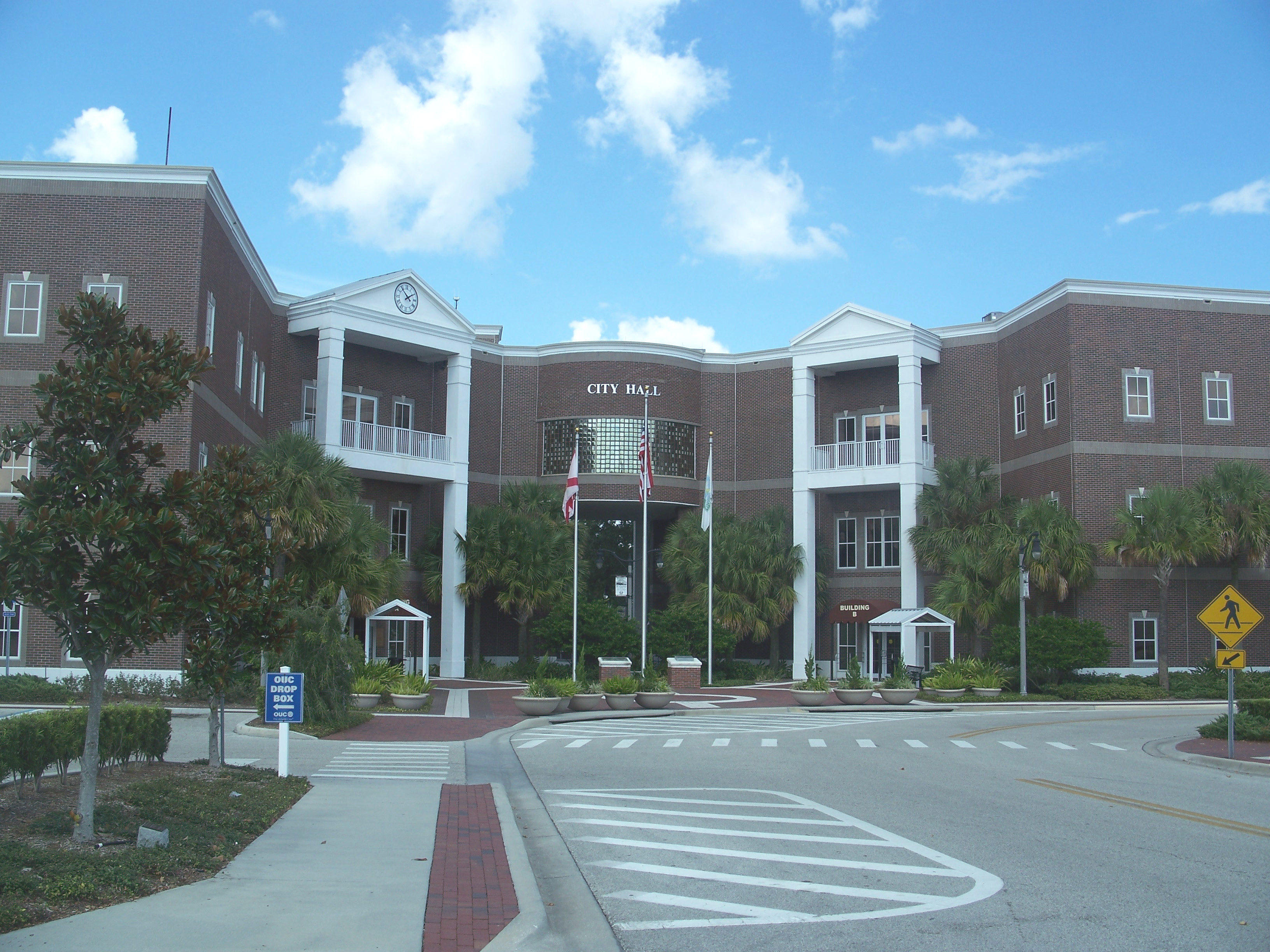
Saint Cloud sits in Osceola County in central Florida, roughly 30 miles southeast of Orlando and just south of Kissimmee. With an approximate population of around 55,000 residents, the city has retained a quiet, small-town character even as it has been absorbed into the broader Orlando metropolitan area. Founded in the early 1900s as a retirement colony for Union veterans, Saint Cloud still carries hints of that heritage in its tree-lined streets and historic core, and it serves today as a more laid-back, residential gateway to the theme-park region of central Florida.
One of the city's defining natural features is Lake Tohopekaliga, a vast freshwater lake that borders the community to the west. Locally known as Lake Toho, it is one of the most celebrated bass-fishing lakes in the United States and regularly hosts professional tournaments. Drive time from downtown Saint Cloud to public lake access points is generally just a few minutes, and the shoreline offers parks, boat ramps, and a chance to see wading birds and the lake's well-known alligators.
A short drive north brings guests to Walt Disney World, the largest concentration of theme parks in the world and one of the most-visited tourist destinations on the planet. The four theme parks, two water parks, and the dining and entertainment district of Disney Springs are typically reached from Saint Cloud in roughly 30 to 45 minutes by car, depending on traffic, making the city a practical home base for families who want to balance park days with quieter evenings.
Just up the road, Kissimmee functions as the commercial hub of Osceola County, with a wider range of restaurants, outlet shopping, and the Old Town entertainment district. The drive from Saint Cloud to central Kissimmee is about 10 to 15 minutes, and the corridor between the two cities has become a busy stretch of hotels, vacation rentals, and dining options catering to the steady flow of visitors heading north to the attractions.
For travelers who want theme-park access without theme-park prices, Saint Cloud offers a balance of small-town atmosphere, outdoor recreation on Lake Toho, and proximity to central Florida's biggest draws. Its growing population, expanding infrastructure, and continued development along the US-192 and Florida's Turnpike corridors make it a community with a steady stream of visitors and a rental market that benefits from year-round tourism.
Want to know if a property in Saint Cloud is a good investment?
Enter an address to get instant revenue potential and comps.