
Middletown, Connecticut
Want to see how Middletown compares to other top cities in Connecticut? Explore all city regulations in Connecticut. →
Middletown, CT
Generally Investor Friendly
STR Regulations for Middletown, Connecticut
I. Overview: Are Short-Term Rentals Allowed in Middletown, CT?
- Explicit Answer: Yes, short-term rentals are allowed in Middletown, CT. The provided sources do not contain any specific prohibitions against operating a short-term rental business. The Zoning Code allows "Accessory Apartments" (defined as a second dwelling unit) in single-family homes, which implies the zoning framework is compatible with rental housing. Furthermore, the Housing Code Enforcement division is responsible for licensing "rooming house and hotel licenses," demonstrating that transient lodging is recognized and regulated under the city's laws.
II. How to Start a Short-Term Rental Business in This Market
The process for starting an STR in Middletown involves several key steps:
-
Zoning Compliance: First and foremost, confirm that your property is in a zoning district where a short-term rental is a permitted use. As the zoning FAQ states, the allowed uses for a property can be determined by reviewing the Zoning Code (Section 60 for residential zones and Section 61 for business and industrial zones). You can also use the city's Web GIS Mapping System or consult the Department of Planning, Conservation, and Development to determine your property's zoning designation.
-
Housing Standards Compliance: Your property must meet the minimum standards outlined in the Middletown Housing Code (Chapter 178). This includes requirements for:
- Basic equipment and facilities for light, ventilation, heating, and cooling.
- Basic equipment and facilities for safety from fire and accidents.
- Appropriate use and amount of space for human occupancy.
- Safe and sanitary maintenance standards.
-
Licensing Application: The primary regulatory authority for STRs is the Middletown Health Department. You will need to contact them to determine if your STR operation requires a Rooming House and Hotel License (as referenced on their website) and to obtain the specific application and requirements. Expect that the licensing process will involve an inspection of your property to ensure it complies with the Housing Code.
III. Required Documents, Permits, Licenses, and Guidelines
- Zoning Confirmation: Documentation or verification of your property's zoning district and its compatibility with the intended STR use.
- Rooming House and Hotel License Application: This is the most critical document. The application and fee schedule would be obtained directly from the Health Department.
- Property Conformance with Housing Code: Proof that the property meets all minimum standards for safety, sanitation, and habitability as per Chapter 178 of the Middletown Code of Ordinances and Connecticut public health and housing codes and statutes. This will likely be demonstrated through a Health Department inspection.
IV. Specific Regulations (City, County, State)
Based on the available information, the key regulations are enforced at the city level by the Middletown Health Department:
-
City of Middletown (Local Level):
- Housing Code Enforcement: Properties used for STRs must comply with the Middletown Housing Code (Chapter 178). The city enforces this through inspections and the licensing process.
- Zoning Regulations: The use must be permitted in the property's specific zoning district. Accessory Apartment standards (Section 12.14) provide a helpful guide for integrating an additional dwelling unit on a property.
-
State of Connecticut (State Level):
- The provided sources do not detail state-level regulations for short-term rentals. You should consult with the Health Department for any applicable state statutes or requirements they are enforcing, particularly those related to public health, safety, and building standards.
-
Middlesex County: No county-specific regulations for STRs were found in the provided sources.
V. Contact Information for Local Authority
The primary point of contact for questions and licensing is the Middletown Health Department's Housing Code Enforcement Division.
- Housing Code Enforcement Officer: Dennis Murray
- Department Phone: (860) 638-4960
- Department Fax: (860) 638-1960
- Physical Address: 245 deKoven Drive, Middletown, CT 06457 (Get Directions)
- Website: Middletown Health Department - Housing Code Enforcement
For initial zoning confirmation or questions about permissible uses, also contact the Department of Planning, Conservation, and Development.
- Zoning Enforcement Phone: (860) 638-4840
VI. Links to Source Pages
- Housing Code Enforcement (with contact details): https://www.middletownct.gov/324/Housing-Code-Enforcement
- Middletown Housing Code (Chapter 178): https://ecode360.com/8364512#8364512
- Zoning FAQs (Residences): https://www.middletownct.gov/faq.aspx?TID=19
- Web GIS Mapping System (for zoning): http://gis.cityofmiddletown.com/middletownct/
What do Airbnb hosts actually earn in Middletown?
Middletown hosts earn a median $28,808/year with $162 ADR and 69% occupancy.
Top performers pull in $44,128+ per year.
See the full Middletown market breakdownNext step
Found a property in Middletown?
Paste any address and get estimated revenue, cash-on-cash return, and comparable STR performance in under 5 minutes. 3 free analyses per day.
Free brief
Get the free Middletown STR Investment Brief
Revenue data, top neighborhoods, seasonal trends, and the key regulations for Middletown, Connecticut in one email.
Middletown
Market Saturation Score
Photos of Middletown


Overview of Middletown
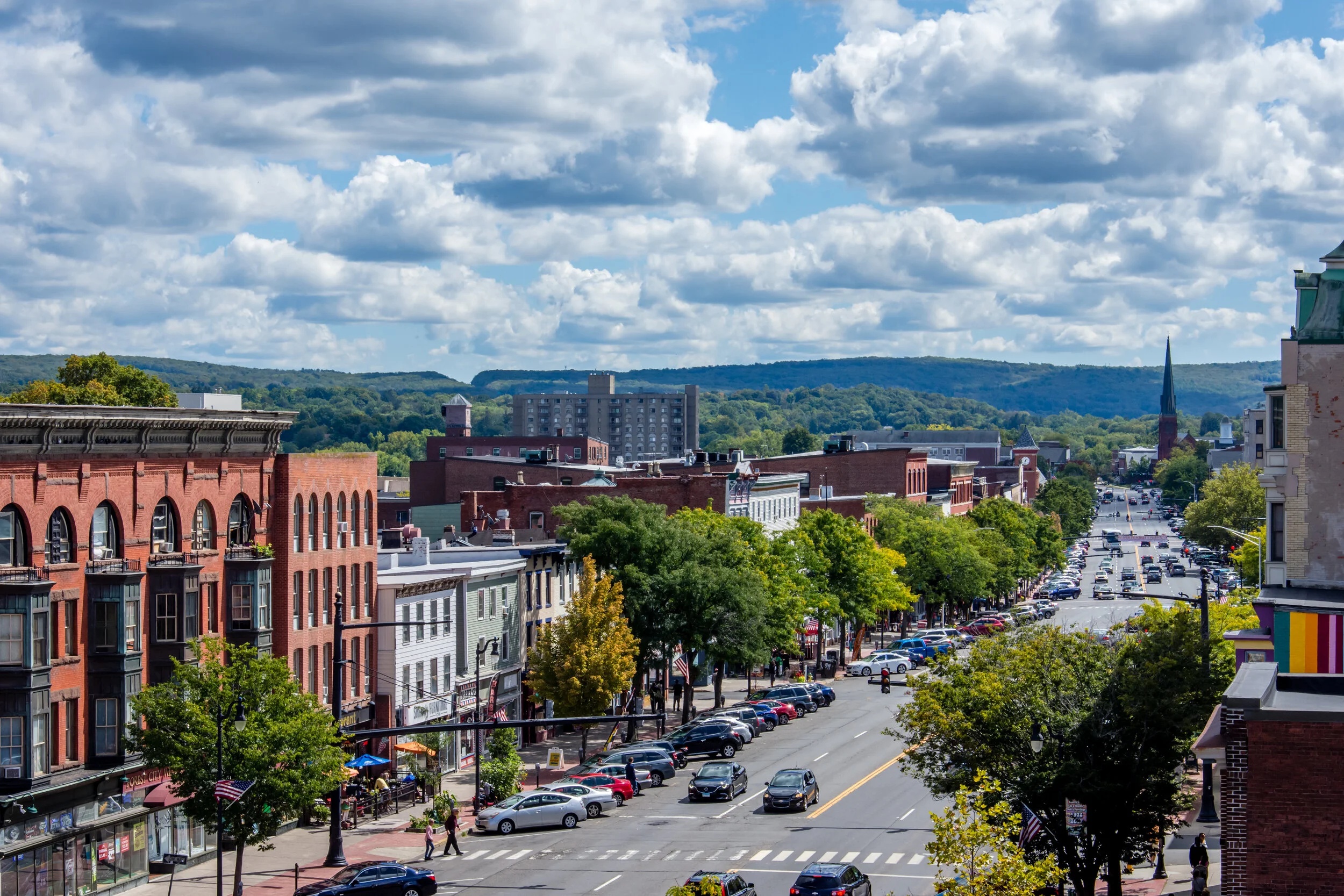
Middletown is a small city in Middlesex County, Connecticut, situated along the western bank of the Connecticut River. With a population of approximately 47,000 residents, it carries a distinct blend of New England character—historic brick buildings and tree-lined streets paired with a lively, walkable downtown and the cultural energy of Wesleyan University. The city is best known as a regional hub for dining, arts, and higher education, and it functions as a convenient gateway to both Hartford to the north and the Connecticut shoreline to the south. Middletown lies about 20 miles south of Hartford and roughly 30 miles northeast of New Haven, placing it squarely between the two.
Downtown Middletown centers on a stretch of Main Street that has been revitalized over the past two decades into a pedestrian-friendly district filled with independent restaurants, craft breweries, coffeehouses, and small shops. The riverfront Harbor Park, a short walk from Main Street, offers a paved path along the Connecticut River with views of the water and the Arrigoni Bridge, which connects Middletown to Portland. Visitors and locals gather here for summer concerts, festivals, and riverfront recreation in the warmer months.
Just north of downtown, Hubbard Park spans more than 1,800 acres of woodlands and rocky ridges that draw hikers and picnickers year-round. The park is anchored by a stone observation tower that offers sweeping views of the river valley. Nearby, Kidcity Children's Museum provides a hands-on play and learning environment geared toward younger children, making it a frequent stop for families staying in the area. The presence of Wesleyan University and its arts venues adds another layer of cultural programming throughout the year, drawing academic visitors and prospective students into the city.
The surrounding region adds substantially to Middletown's appeal as a base. To the south, the Mattabesett Trail system offers miles of wooded hiking, while the shoreline towns of the Connecticut coast—including Hammonasset Beach State Park—are reachable in roughly 30 to 45 minutes. To the north, the historic villages of the Connecticut River Valley, such as Essex and East Haddam, host the Essex Steam Train and Gillette Castle State Park, both popular day-trip destinations. Middletown's central location also makes it easy to reach Hartford, home to the Wadsworth Atheneum, in about a half hour by car.
Middletown's combination of small-city energy, riverfront access, cultural amenities, and proximity to both Hartford and the Connecticut shoreline gives it a quiet advantage for short-term-rental owners. Travelers who want a more relaxed, locally rooted experience than a major metropolitan stay—but with the option to reach beaches, hiking, and big-city museums within a short drive—find that Middletown threads the needle nicely, drawing academic visitors, families, and weekend explorers alike.
Want to know if a property in Middletown is a good investment?
Enter an address to get instant revenue potential and comps.