
Cornwall, Connecticut
Want to see how Cornwall compares to other top cities in Connecticut? Explore all city regulations in Connecticut. →
Cornwall, CT
Challenging To Investors
STR Regulations for Cornwall, Connecticut
Overview: Are Short-Term Rentals Allowed in Cornwall, CT?
Short-term rentals are allowed in Cornwall, CT. There is no explicit “short-term rental” use defined in the Town of Cornwall Zoning Regulations. However, the closest comparable lodging use is Bed & Breakfast, which is permitted by Special Permit in all residential zones (R-1, R-3, R-5). Cornwall does not appear to maintain a separate municipal STR registration or license; the primary regulatory pathway is through zoning and related local and state approvals (see specific regulations below).
Operational context: Connecticut generally treats most lodging platforms and hosts as “lodging providers” for sales and local hotel occupancy tax collection via the state’s Rooms Tax Program. Statewide landlord–tenant statutes also apply; rentals of fewer than 30 days are generally treated as a “lodging contract” rather than a tenancy and are not subject to the Connecticut Residential Lease Deposit Act (C.G.S. § 47a-21). However, confirm the current administrative guidance from the Connecticut Department of Revenue Services (DRS) for lodging providers.
What do Airbnb hosts actually earn in Cornwall?
Cornwall hosts earn a median $42,930/year with $280 ADR and 62% occupancy.
Top performers pull in $54,039+ per year.
See the full Cornwall market breakdownHow to Start a Short-Term Rental Business in Cornwall, CT
- Site Selection and Due Diligence
- Identify a property in a zone where lodging is feasible: R-1, R-3, R-5 residential zones allow Bed & Breakfast by Special Permit; the General Business (GB) zone allows hotels/motels by Special Permit (not typical for a small STR).
- Verify zoning, overlay constraints, wetlands (Cornwall Inland Wetlands & Watercourses Agency, IWWCA), flood hazard zones (FEMA), aquifer protection, and the Housatonic River Corridor overlay zones, as site plan and permitting may be impacted.
- Confirm access, parking, and safety standards; utilities, water supply, and onsite wastewater are regulatory touchpoints.
- Choose the Operating Model
- Bed & Breakfast model (with breakfast service, owner-occupied or limited non-owner lodging): requires a Special Permit in all residential zones (Sections 4.3i, 4.4c, 4.5c).
- Room-and-board model (Section 10.11): defined as lodging with no cooking facilities in guest rooms; allowed as a “Room & Board” use. This can be treated as a more traditional STR approach without serving breakfast. The regulations do not state a separate permit type for this, but it should be reviewed under Cornwall’s “all changes of use require a Special Permit” rule (Section 4.1) and Article 8 procedures.
- Permitting Pathway
- If operating a Bed & Breakfast or a room-and-board lodging use, prepare for a Special Permit approval (Article 8).
- If the STR is operated within an existing single-family dwelling (no change in use) as a short-term guest stay where no separate guest accommodation is established (for example, renting the entire single dwelling on a short-term basis without converting rooms), the operation may proceed without a zoning permit if there is no structural change. However, a change-of-use to a lodging business (e.g., adding guest rooms, advertising, or offering services such as breakfast) will require a Special Permit.
- For any structural changes, additions, or new site features (driveway changes, parking, signage, wastewater systems), a zoning permit and potentially Site Plan review may be required (Articles 7 and 8).
- State and Health Compliance
- Obtain a Certificate of Occupancy from the Town Building Official (ZEO-authorized) confirming the building and occupancy meet the Connecticut State Building Code.
- Coordinate with the Local Area Health District (e.g., Torrington Area Health District) for state health code compliance; confirm any transient lodging requirements.
- Register as a lodging provider and collect Connecticut sales tax and local hotel occupancy tax through the state Rooms Tax Program; consult DRS guidance.
- Tenant/Lodger and Business Practices
- Comply with Connecticut’s short-stay lodging frameworks under state law (typically treated as lodging contracts, not tenancies).
- Prepare clear house rules, rental agreements, and guest communications.
Required Documents, Permits, Licenses, and Guidelines
Core documents and approvals are typically:
- Certificate of Zoning Compliance: issued by the Zoning Enforcement Officer (ZEO) after approvals.
- Certificate of Occupancy: issued by the Town Building Official (with ZEO authorization), confirming Connecticut State Building Code compliance and suitability for the intended occupancy/use.
- Special Permit (Article 8): required for Bed & Breakfast (residential zones) and for any “changes of use” to lodging uses. If the STR involves structural work or site changes, prepare a Site Plan under Article 8.
- Zoning Permit (Article 7): required prior to construction, enlargement, or conversion to another use; verify compliance with dimensional standards (Article 6).
- Application package: application form (owner-signed), fee payment, Statement of Use, Site Plan (if required), Sanitation Report (Health Official), Erosion & Sedimentation Control Plan (if disturbance > ½ acre), and any other information required by the Commission (Article 8.3).
- Plot Plan vs. Site Plan: Plot Plan acceptable for minor improvements; Site Plan required for lodging changes of use or significant improvements; the ZEO may require an A‑2 quality survey when necessary (Sections 7.2–7.3, 8.3).
- IWWCA Permits: for any regulated activities near wetlands or watercourses; the Planning & Zoning Commission decision cannot be rendered until IWWCA issues its final decision (Sections 8.2b, 8.3).
- Health approvals: sanitation certification from the Local Area Health District confirming sewage disposal and water supply compliance consistent with the state health code (Section 8.3d).
- State filings: lodging provider registration, sales tax, and hotel occupancy tax via Connecticut DRS Rooms Tax Program.
- Dimensional and design compliance: General Standards (Article 5) and Dimensional Requirements (Article 6), including setbacks, building coverage, parking, and signage standards.
- Notice to abutters and public hearing: Special Permit requires published notice and certified mail notice to abutters (Section 8.9h–8.9i).
Note: Cornwall does not appear to have a dedicated municipal STR registration/license beyond zoning and building requirements. Confirm with the ZEO for any updates.
Specific Regulations for Short-Term Rentals in Cornwall, CT (Town/County/State)
Town (Cornwall) Zoning:
- Use: Bed & Breakfast (Article 10.12) is permitted by Special Permit in residential zones (R-1, R-3, R-5). A “Room & Board” use is defined (Article 10.11); operating a room-and-board lodging model may be viable without breakfast but requires careful use classification and permit review. Cornwall requires a Special Permit for all changes of use (Section 4.1).
- Zones:
- R-1, R-3, R-5: Bed & Breakfast allowed by Special Permit; hotel/motel uses are not listed in R zones.
- GB (General Business): Hotels/motels allowed by Special Permit (Section 4.7c.2).
- Dimensional Standards (Article 6): minimum lot sizes (R-1: 1 acre; R-3: 3 acres; R-5: 5 acres), setbacks, building coverage, and buildable area requirements.
- Overlay Zones (Article 9): Housatonic River (inner/outer corridor), Aquifer Protection, Flood Hazard, Cornwall Plains, and Planned Conservation overlays may impose additional constraints on site plan design, grading, stormwater, and setbacks.
- General Standards (Article 5): conformity, non-conformities, uniformity, community standards, adverse impacts, and compliance with state/federal requirements.
- Permitting Process (Articles 7 and 8): administrative permitting via ZEO; Special Permit with public hearing; timelines, notice requirements, potential bonds for site improvements, and coordination with IWWCA.
Local Wetlands and Watercourses:
- The Cornwall Inland Wetlands and Watercourses Agency (IWWCA) regulates activities in and near wetlands and watercourses; decisions must be filed with the Planning & Zoning Commission prior to final action (Sections 8.2b, 8.3).
County:
- Cornwall is in Litchfield County. County-level short-term rental licensing is not indicated in the provided materials. The dominant regulations are town-level zoning and state agencies (DRS, DEEP, DOH).
State of Connecticut:
- Sales and Hotel Occupancy Taxes: most lodging providers must register and collect sales tax and local hotel occupancy tax through the Connecticut DRS Rooms Tax Program. Hosts typically remit state sales tax (6.35% as of 2025) and any local hotel occupancy tax; verify current rates and registration requirements on the DRS website.
- Building and Safety: must meet the Connecticut State Building Code; Certificate of Occupancy required before operation (ZEO/Building Official).
- Health Code: transient lodging must comply with applicable state health code requirements administered by the Local Area Health District (e.g., sanitation, water, wastewater).
- Landlord–Tenant: short-stay lodging is generally treated as a lodging contract rather than a tenancy under Connecticut statutes, and is not subject to the Residential Lease Deposit Act. Verify with counsel and current DRS guidance for lodging providers.
Contact Information (Local Authority in Charge of STRs)
Town of Cornwall – Planning & Zoning Commission and Zoning Enforcement Officer (ZEO)
- Phone: (860) 672-2709
- Address: 262 Cornwall Bridge Road, Cornwall, CT 06754
- Hours: Typically posted on the town website; contact the Town Clerk or Land Use Office for current meeting schedules.
- Notes: The ZEO administers zoning permits and Certificates of Zoning Compliance. The Planning & Zoning Commission conducts Special Permit reviews and Site Plan approvals.
Cornwall Inland Wetlands & Watercourses Agency (IWWCA)
- Phone: (860) 672-2709 (same Town Offices)
- Notes: Submit any wetland activity applications concurrently with Planning & Zoning submissions. The IWWCA decision must be received prior to Commission action.
Local Area Health District
- Likely Servicer: Torrington Area Health District (confirm the current Local Health Official assignment for Cornwall with the Town Clerk or ZEO).
- Purpose: Sanitation certification for sewage disposal and water supply (Article 8.3d).
Connecticut Department of Revenue Services (DRS) – Rooms Tax Program
- Website: portal.ct.gov/DRS (Look up “Rooms Tax Program” or “Lodging Provider” guidance)
- Notes: Registration for sales tax and hotel occupancy tax as a lodging provider.
Links to Source Pages
- Town of Cornwall Zoning Regulations (as revised to July 1, 2023): cornwallct.org/wp-content/uploads/2023/06/Town-of-Cornwall-Zoning-Regulations.pdf
Investor note: Before listing, confirm the precise classification of your intended STR model (e.g., room-and-board vs. Bed & Breakfast vs. entire-dwelling transient stays) with the ZEO to determine whether a Special Permit is required, and coordinate site plan and health approvals early to avoid delays.
Next step
Found a property in Cornwall?
Paste any address and get estimated revenue, cash-on-cash return, and comparable STR performance in under 5 minutes. 3 free analyses per day.
Free brief
Get the free Cornwall STR Investment Brief
Revenue data, top neighborhoods, seasonal trends, and the key regulations for Cornwall, Connecticut in one email.
Cornwall
Market Saturation Score
Photos of Cornwall

Overview of Cornwall
Nestled in the rolling hills of northwestern Connecticut, Cornwall is a small, rural town in Litchfield County with a population of roughly 1,400 residents. Known for its quiet, pastoral character, historic village greens, and sweeping vistas of the Litchfield Hills, the town feels worlds away from the bustle of metropolitan life despite being relatively accessible. Cornwall is a gateway to some of Connecticut's most scenic outdoor landscapes, including the upper Housatonic River valley and the foothills of the Berkshire-Taconic range. The nearest major city is Hartford, the state capital, located about 45 miles to the southeast, while New York City sits roughly 90 miles to the southwest, making Cornwall a convenient escape for weekenders and leaf-peepers from the metropolitan Northeast.
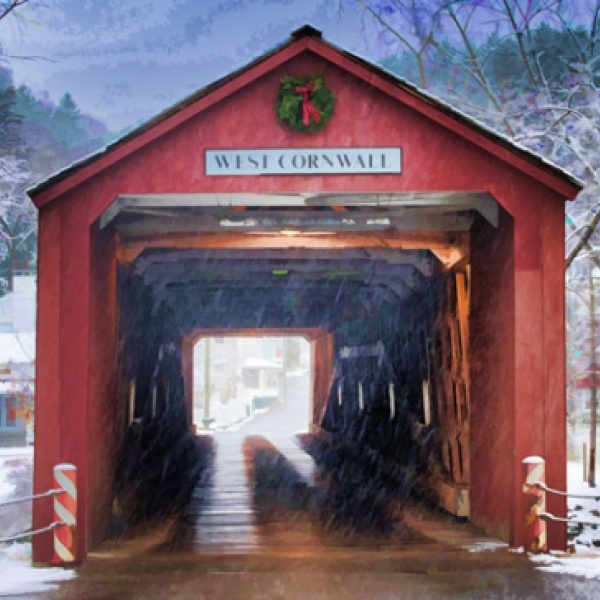
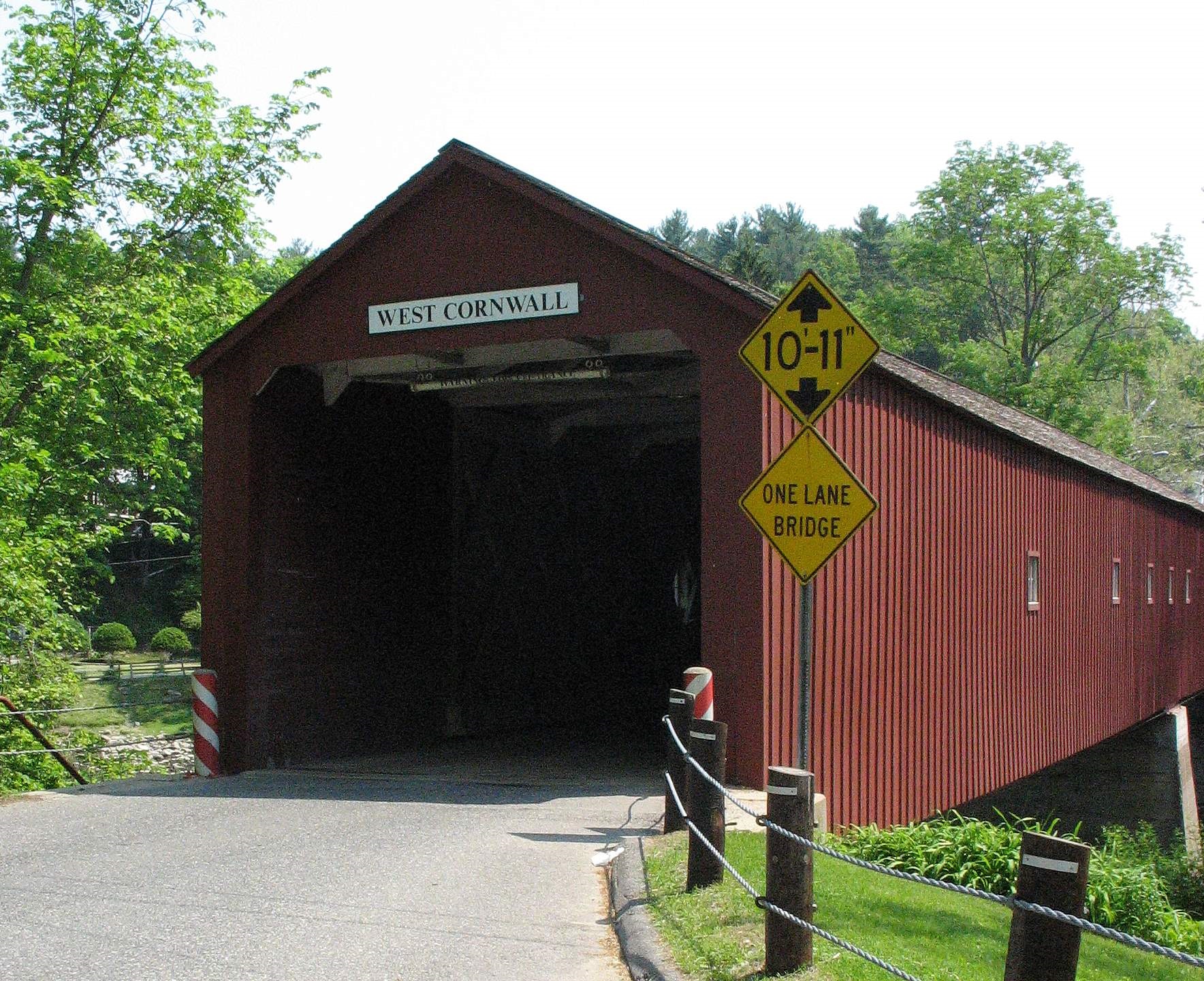
One of the town's most photographed landmarks is the West Cornwall Covered Bridge, a wooden lattice-truss structure spanning the Housatonic River just a few minutes from the town center. Built in the 1860s and listed on the National Register of Historic Places, it remains one of the few covered bridges still in active vehicular use in Connecticut and is a favorite stop for photographers and history enthusiasts exploring the Litchfield Hills.
Outdoor recreation draws many visitors to nearby Mohawk State Forest, which wraps around much of Cornwall and offers miles of hiking trails, picnic areas, and a portion of the Appalachian Trail. From the central village, the forest's trailheads are typically only a short drive away, and the park is especially popular in autumn for its fiery foliage displays. In winter, the area is closely associated with Mohawk Mountain Ski Area, one of New England's oldest operating ski areas, located just outside Cornwall's borders and serving as a major seasonal draw for the region.
A short drive southwest of Cornwall brings visitors to Kent Falls State Park, where a scenic cascade tumbles through a rocky gorge, and to Lake Waramaug, a glacial lake prized for swimming, kayaking, and lakeside dining. To the south, the historic town of Litchfield, with its white-steepled churches, boutique shops, and preserved colonial architecture, makes for an easy day trip. Together, these surrounding attractions give Cornwall visitors a mix of outdoor adventure, small-town charm, and refined country leisure within easy reach.
Cornwall's blend of genuine rural tranquility, recognizable New England scenery, and proximity to a strong roster of year-round attractions makes it an appealing base for short-term rentals. Visitors come for the covered bridge, the hiking, the skiing, and the foliage, and they stay for the unhurried pace and the postcard views — a combination that gives the town a steady appeal across all four seasons.
Want to know if a property in Cornwall is a good investment?
Enter an address to get instant revenue potential and comps.