
Durango, Colorado
Want to see how Durango compares to other top cities in Colorado? Explore all city regulations in Colorado. →
Durango, CO
Challenging To Investors

STR Regulations for Durango, Colorado
Overview: Are Short-Term Rentals Allowed in Durango, CO?
Yes—short-term rentals (also called vacation rentals or “Tourist Homes”) are allowed in Durango, Colorado, but only in specific zones and under strict conditions. Durango has regulated STRs since 1989. Today, an STR is defined as a dwelling unit rented for lodging between 1 and 29 consecutive days. Operating an STR is a commercial use of a residential property and requires prior approval through a Limited Use Permit (LUP) issued by the Community Development Department. Rentals of 30 days or longer are not regulated as STRs.
Permitted zones include Central Business (CB), Mixed-Use zones, select Planned Development (PD) zones, and Established Neighborhoods zones EN‑1 and EN‑2. In EN‑1 and EN‑2, there are hard caps on the total number of STR permits (EN‑1: 22; EN‑2: 17). Most other zones apply caps at the development level. In many cases caps are reached, and properties must be placed on a waitlist before they are eligible to apply.
Durango takes enforcement seriously and requires STR operators to meet safety, occupancy, parking, trash/recycling, and noise standards, and to display permit and business license numbers in advertisements. STR permits are non-transferable and are automatically invalidated upon sale or change of ownership.
Citations: City of Durango Vacation Rental Information and Permit Guidebook; LUDC Section 2‑2‑3‑4.
Sources:
- www.durangoco.gov/800/Vacation-Rental-Information
- www.durangoco.gov/830/Vacation-Rental-Permit-Guidebook-PDF
What do Airbnb hosts actually earn in Durango?
Durango hosts earn a median $36,384/year with $281 ADR and 52% occupancy.
Top performers pull in $55,308+ per year.
See the full Durango market breakdownMarket Entry: How to Start a Short-Term Rental Business in Durango
- Confirm zoning eligibility
- Determine whether the subject property is in a zone that permits STRs: Central Business (CB), Mixed-Use, select Planned Development (PD), or Established Neighborhoods EN‑1 and EN‑2.
- Review the city’s Vacation Rentals Map and zoning GIS to validate location.
- If the property is in a PD or Mixed-Use development, confirm that STRs are listed as an allowed use in the development’s governing documents or prior approvals. If not, an amendment may be required.
- Check caps and waitlists
- EN‑1 and EN‑2 have fixed caps (22 and 17 total STRs, respectively). Most other zones apply development-specific caps.
- If caps are reached, request placement on the relevant waitlist. Your position on the waitlist will determine eligibility to apply when openings occur.
- Obtain approvals and licensing
- Limited Use Permit (LUP) through the Community Development Department (application via the city’s online portal).
- City business license and lodger’s tax license through the City Clerk; comply with sales tax requirements.
- Comply with building code requirements; inspections may be required.
- Prepare for operations
- Plan for on-site parking (typically one space per bedroom; with special rules in CB and in commercial zones).
- Establish occupancy limits and demonstrate compliance with noise, trash, and recycling standards.
- Prepare for advertisement compliance (display permit and business license numbers).
- Operate and maintain compliance
- Maintain current licenses and remit lodger’s and sales taxes on schedule.
- Monitor renewal timelines and city code updates.
- If the property sells, the LUP terminates; the new owner must apply for a new permit.
Citations: City of Durango Vacation Rental Information and Permit Guidebook; LUDC Section 2‑2‑3‑4.
Sources:
- www.durangoco.gov/800/Vacation-Rental-Information
- www.durangoco.gov/830/Vacation-Rental-Permit-Guidebook-PDF
Required Documents, Permits, Licenses, and Operational Guidelines
Limited Use Permit (LUP) application materials
- Completed Land Use Application (through city portal).
- Application fee: $750.
- List of property owners and mailing addresses within 300 feet of the property.
- Written narrative describing:
- The STR use and how it complies with the LUDC.
- Local contact person or property manager and contact information.
- Desired occupancy limits.
- On-site parking details.
- Advertising plan.
- Site plan showing on-site parking spaces, trash/recycling facilities, access to the unit, and other relevant information.
- Floor plan showing layout, bedroom dimensions, fire extinguisher location, and other relevant details.
- Any additional materials requested by City staff.
Operational standards and requirements
- On-site parking: typically one off-street space per bedroom; in commercial zones, off-site parking can be leased within 1/4 mile; in the CB zone, the number of required spaces is reduced by one for units with three or more bedrooms.
- Occupancy: determined by the unit’s size and layout; commonly two guests per bedroom plus two additional guests (actual limits are set during review).
- Trash and recycling: procedures must be specified and adhered to.
- Noise: comply with city noise ordinance.
- Building code: demonstrate compliance and pass any required inspections.
- Advertisement display: all advertisements must clearly display the STR permit number and the business license number; failure to display can result in permit revocation.
- Permit transferability: STR permits are non-transferable; permits terminate automatically upon sale or change of ownership.
Licensing and tax obligations
- City business license (City Clerk).
- Lodger’s tax license and monthly remittance to the City.
- Sales tax license and remittance (state and local).
- Keep all licenses current; maintain records for renewals and audits.
Citations: City of Durango Permit Guidebook; City of Durango Vacation Rental Information.
Sources:
- www.durangoco.gov/830/Vacation-Rental-Permit-Guidebook-PDF
- www.durangoco.gov/800/Vacation-Rental-Information
Specific Regulations by City, County, and State
City of Durango (municipal rules)
- Definition: STRs are dwellings rented for 1–29 days; longer rentals are not regulated as STRs.
- Zoning: Permitted in Central Business (CB), Mixed-Use zones, select Planned Development (PD) zones, and Established Neighborhoods EN‑1 and EN‑2.
- Caps:
- EN‑1: 22 total STR permits.
- EN‑2: 17 total STR permits.
- Other zones: caps applied at the development level (mixed-use and PD must have caps written into governing approvals).
- Density in EN zones: a second STR on the same street segment requires Planning Commission approval; a third is prohibited on the same segment.
- Prohibited communities: Twin Buttes, Three Springs, Rock Ridge, and Sky Ridge do not allow STRs.
- HOA/governing documents: STRs are only permitted if the HOA or development documents specifically allow them; otherwise permits are denied.
- Enforcement: City prioritizes discovery of illegal STRs and requires advertisement display of permit and business license numbers.
La Plata County (county-level STR rules)
- The provided sources do not include county-level STR regulations. If your property is outside city limits, consult La Plata County directly for county requirements.
State of Colorado
- The provided sources do not include state-level statutes. Contact the Colorado Department of Revenue and local tax authorities for state tax obligations, and monitor state legislation for any future STR statutes.
Citations: City of Durango Vacation Rental Information; LUDC Section 2‑2‑3‑4.
Sources:
- www.durangoco.gov/800/Vacation-Rental-Information
- online.encodeplus.com/regs/durango-co/doc-viewer.aspx#secid-273
Permit Process Timeline and Decision Path
- Pre-application: Validate zoning eligibility and whether caps or waitlists apply.
- Application submission: File a complete LUP application with all required materials and the $750 fee.
- Public notice:
- City staff posts a notice on the property for 14 days.
- Staff mails notices to property owners within 300 feet and solicits comments.
- Staff may conduct a site visit to verify proposed conditions.
- Staff review and decision:
- After the public comment period, staff provides comments to the applicant and completes a final review.
- Within 30 calendar days of application filing, staff will approve, refer to the Planning Commission, or deny the permit.
- Appeals:
- Applicants aggrieved by the City’s decision may file an appeal within 5 business days.
- Post-approval:
- Obtain business license and lodger’s tax license, set up sales tax compliance, and prepare for operations.
- Display permit and business license numbers in all advertisements.
Citations: City of Durango Permit Guidebook.
Source:
Contacts and Official Resources
City of Durango—Community Development Department (STR permits)
- Phone: (970) 375-4850
- Address (primary office): River City Hall, 1235 Camino del Rio, Durango, CO 81301
- STR information page: Vacation Rental Information (see “Official Links” below)
- Land Use & Development Code (LUDC) Section 2‑2‑3‑4 (see “Official Links” below)
City of Durango—General Contact
- City Hall: 949 E 2nd Avenue, Durango, CO 81301
- Phone: (970) 375-5000
Code Enforcement (complaints or concerns)
- SeeClickFix portal: see link under “Official Links” below
Official Links
- Vacation Rental Information (City of Durango): www.durangoco.gov/800/Vacation-Rental-Information
- Vacation Rental Permit—Online Application Portal: durangoco.portal.opengov.com/categories/1076/record-types/6479
- Vacation Rental Permit—Guidebook (PDF): www.durangoco.gov/830/Vacation-Rental-Permit-Guidebook-PDF
- Vacation Rental Permit—Guidebook (PDF alt host): www.durangoco.gov/DocumentCenter/View/131
- Land Use & Development Code (LUDC) Section 2-2-3-4 (STR standards): online.encodeplus.com/regs/durango-co/doc-viewer.aspx#secid-273
- Vacation Rentals Map (City of Durango): www.durangoco.gov/797/Vacation-Rentals-Map
- City of Durango Zoning GIS: gis.durangoco.gov/DurangoTS/
- Permitted Vacation Rentals Table (Google Sheets): docs.google.com/spreadsheets/d/1a6xGTTsSJPV-mqDTFTghqAaY9AYq5Y7OoXLbkJn-_uM/edit#gid=0
- VR Permit Waitlist (Google Sheets): docs.google.com/spreadsheets/d/1OwsGPKexGXETfmEFWXqSwVzKVfVlwduIjumcoA88xVs/edit#gid=0
- City of Durango Code Enforcement (SeeClickFix): seeclickfix.com/web_portal/CeP5cTxgq3DTPLKdnQXHuDge/issues/map?lat=37.27366999999816&lng=-107.87929999999447&max_lat=37.29523261424607&max_lng=-107.8329514282172&min_lat=37.25210120801732&min_lng=-107.92564857177175&zoom=14
Summary Table: Permit Caps and Waitlists
| Zone Type | Permit Cap (Total Allowed) | Current Active (Approx.) | Waitlist Status (if cap reached) | |-----------------------------------|----------------------------|---------------------------|-----------------------------------| | EN‑1 (Established Neighborhood 1) | 22 | 21 | Yes | | EN‑2 (Established Neighborhood 2) | 17 | 17 | Yes | | Other Permitted Zones (CB, Mixed-Use, select PD) | Development-specific | 87 | Yes (development-specific) | | Citywide Total | N/A | ~125 | N/A |
Notes: EN‑1 and EN‑2 are the only zones with fixed, citywide caps. Other zones rely on development-specific caps written into approvals. Caps are commonly reached, prompting waitlists.
Practical Notes for Investors
- Due diligence is essential: Confirm that the HOA or development documents specifically allow STRs; absence of permission will block permit issuance.
- Expect competition for permits: With fixed caps in EN zones and development-specific caps elsewhere, waitlists are common.
- Budget for compliance: Application fees ($750), licensing, potential inspection costs, and ongoing tax remittance.
- Prepare high-quality application materials: Accurate site and floor plans, clear operating narrative, and robust parking/trash plans facilitate approval.
- Consider local management: A local contact or manager can streamline guest communications, compliance checks, and issue resolution.
- Monitor regulatory changes: Subscribe to city notifications and review the LUDC periodically for updates.
Tax Remittance (High-Level Overview)
- Operators must collect and remit lodger’s tax to the City and comply with sales tax obligations.
- Obtain a lodger’s tax license and a sales tax license through the City Clerk.
- Set up remittance cadence and maintain records; exact rates and filing frequency should be confirmed with the City Clerk.
Citations: City of Durango Vacation Rental Information and Permit Guidebook.
Sources:
- www.durangoco.gov/800/Vacation-Rental-Information
- www.durangoco.gov/830/Vacation-Rental-Permit-Guidebook-PDF
This guide is based solely on the provided source content. For definitive compliance advice, consult the City of Durango Community Development Department and the official LUDC, and verify tax rates with the City Clerk.
Next step
Found a property in Durango?
Paste any address and get estimated revenue, cash-on-cash return, and comparable STR performance in under 5 minutes. 3 free analyses per day.
Free brief
Get the free Durango STR Investment Brief
Revenue data, top neighborhoods, seasonal trends, and the key regulations for Durango, Colorado in one email.
Durango
Market Saturation Score
Photos of Durango

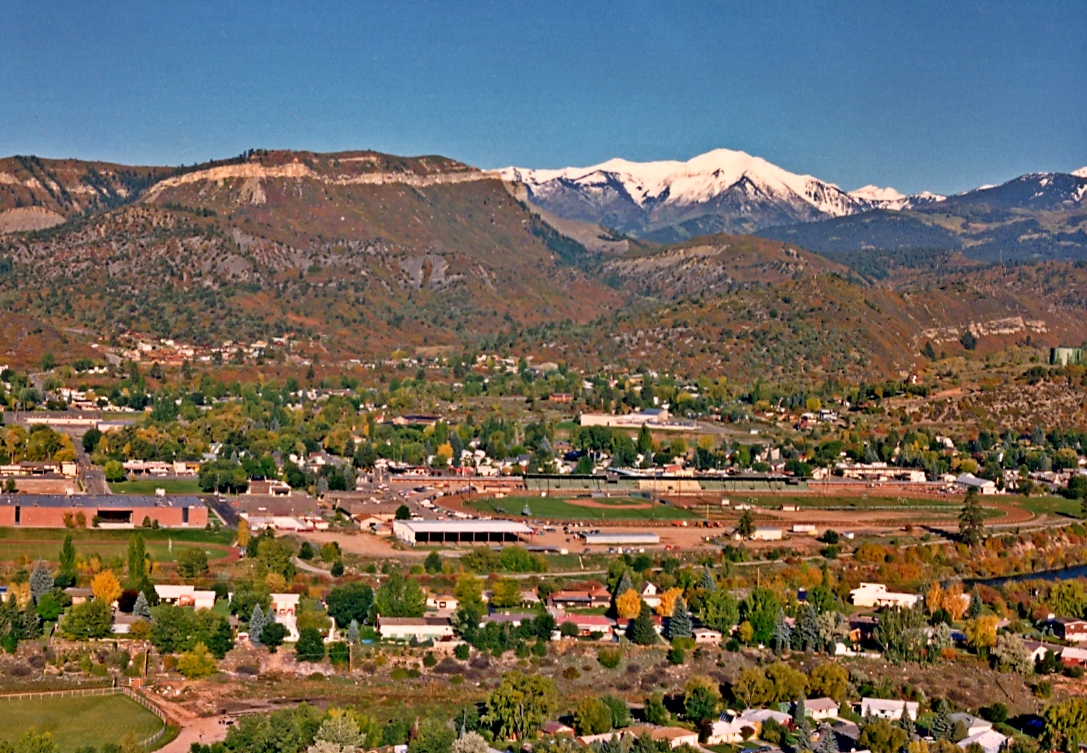

Overview of Durango
Durango is a small mountain city in La Plata County in southwestern Colorado, with a city population of roughly 19,000 residents. It sits in the Animas River Valley at about 6,500 feet elevation and has a character shaped by its Victorian-era mining roots, its outdoor-recreation culture, and its role as a basecamp for exploring the broader San Juan region. The town is best known as the eastern gateway to Mesa Verde National Park and as the southern terminus of the historic narrow-gauge railroad that runs to Silverton. It lies approximately 330 miles southwest of Denver, the nearest major metropolitan area, and is reached via a roughly six-hour drive north on US highways.
Just west of the city, Mesa Verde National Park preserves the cliff dwellings and mesa-top villages of the Ancestral Puebloan people and is one of the most significant archaeological landscapes in the United States. The park entrance is about 35 miles from downtown Durango, an approximate 45-minute drive along US 160, and visitors typically spend at least half a day exploring the Chapin Mesa Archeological Museum, the Cliff Palace overlook, and the scenic Mesa Top Loop Road.
In the heart of the city, the Durango & Silverton Narrow Gauge Railroad is a heritage steam train that traces the Animas River corridor through the San Juan Mountains, climbing to roughly 9,300 feet before reaching the former mining town of Silverton. The depot is steps from Main Avenue in downtown Durango, and the full-day round trip is a defining experience of the region in both summer and winter.
North of town, Purgatory Resort operates as the area's primary ski and snowboard mountain in winter and a hiking and mountain-biking destination in summer, with a base area roughly 25 miles from Durango along US 550. The surrounding San Juan National Forest adds hundreds of miles of additional trails, alpine lakes, and four-wheel-drive roads within an hour or so of the city, while the Animas River itself runs a walkable greenway right through downtown for rafting, kayaking, or simply strolling along the River Trail.
For short-term-rental investors and operators, Durango offers a compelling mix of year-round demand drivers: a walkable historic downtown, a recognizable national park within an hour, a famous heritage railroad, a nearby ski resort, and access to a vast surrounding wilderness. Its small size keeps supply relatively limited, while its strong identity as a four-season mountain destination supports consistent visitation from outdoor travelers, families, and history-focused tourists alike.
Want to know if a property in Durango is a good investment?
Enter an address to get instant revenue potential and comps.