
Crestone, Colorado
Want to see how Crestone compares to other top cities in Colorado? Explore all city regulations in Colorado. →
Crestone, CO
Challenging To Investors
STR Regulations for Crestone, Colorado
Overview: Are Short‑Term Rentals Allowed in Crestone?
Yes—short‑term rentals (STRs) are permitted in Crestone and throughout Saguache County, but they are regulated at the municipal and county levels. The Town of Crestone requires a business license for STR operations ($150 annual fee). Saguache County requires a “home occupation” permit for short‑term rental activity ($50 annual fee). Both are currently required for lawful operation.
Compliance is an issue in practice: local reporting indicates that out of 165 active STR listings in the 81131 zip code, only five homeowners had obtained the required home occupation permits as of the most recent reporting period. Investors should plan to obtain both the town business license and the county permit from the outset and maintain them annually.
A significant tax policy change is under consideration at the state level that could materially affect STR economics. Proposed legislation would reclassify STRs rented more than 90 days per year as “commercial lodging properties,” increasing property tax from 6.765% to 27.9%. If enacted, this would elevate STR property taxes to the level applied to hotels and motels.
Sources: The Crestone Eagle; AirROI Market Report; general Colorado STR framework.
What do Airbnb hosts actually earn in Crestone?
Crestone hosts earn a median $25,466/year with $150 ADR and 57% occupancy.
Top performers pull in $35,848+ per year.
See the full Crestone market breakdownMarket Snapshot: Crestone STR Demand and Performance
Investors evaluating Crestone should expect a niche, seasonal market with moderate occupancy and solid average daily rates (ADR). The market data below is current as of September 2025.
- Active listings (81131): 141
- Average daily rate (ADR): $162
- Occupancy rate: 43.4%
- Median annual revenue (per listing): $24,137
- Revenue growth (year‑over‑year): 17.5%
- Peak month for revenue: August
- Lowest month for revenue: February
- Local context: Average nightly rate across listings cited at $167, indicating strong premium in certain listings
- Regulation level (operational flexibility): Low (relative to more restrictive Colorado mountain towns)
Interpretation: The market supports healthy per‑listing revenue for owner‑operators who deliver a differentiated guest experience and maintain high occupancy during peak season (summer and early fall). Operating within a low‑regulation environment confers flexibility, but it does not eliminate the need to comply with the Town and County requirements.
Source: AirROI; The Crestone Eagle.
How to Start a Short‑Term Rental Business in Crestone
Investors should approach STR launch as a structured compliance and operations process. Given the dual licensing requirement and evolving tax policy, diligence upfront will protect revenue and reduce enforcement risk.
Step‑by‑step process:
- Confirm zoning and land use eligibility. Verify that STRs are a permitted use on the subject parcel within Town of Crestone limits or Saguache County (for properties outside town limits). If the property is part of an HOA or a planned community with additional restrictions (e.g., Baca Grande), secure written approval before listing.
- Obtain Town of Crestone business license ($150/year). This is required to operate a short‑term rental within municipal boundaries.
- Obtain Saguache County home occupation permit ($50/year). This is required for STR activity countywide, including within Town limits if operating a home‑based business.
- Register for Colorado sales tax (2.9% state rate) and any local sales or lodging taxes applicable to STRs in the jurisdiction. Even if a platform collects some taxes, hosts are responsible for ensuring full compliance and remittance.
- Secure STR‑specific insurance. Standard homeowners’ policies often exclude short‑term rental activity. Carry at least $1 million in liability coverage to satisfy most Colorado municipal requirements and mitigate risk.
- Install required safety equipment per Colorado norms: smoke detectors (bedrooms and outside sleeping areas, every level), carbon monoxide detectors (near/in sleeping areas and each level), clearly marked exit routes, posted emergency contact information, and accessible fire extinguishers.
- Establish professional operations: define a local contact who can respond within one hour, set occupancy limits, create a garbage/trash plan, and prepare house rules to limit noise, outdoor fire risks, and other nuisance factors.
- List and collect taxes: comply with ad‑placement rules (e.g., posting license numbers in listings) and tax collection/remittance. Monitor local tax changes and state‑level property tax proposals.
Action plan tip: Sequence the licensing and insurance steps before listing. Late or missing renewals are a common enforcement trigger, especially as local authorities seek to improve compliance rates.
Sources: The Crestone Eagle; general Colorado STR regulatory practice.
Required Documents, Permits, Licenses, and Operational Guidelines
Licensing:
- Town of Crestone business license: $150 per year. Required for STR operations within town limits.
- Saguache County home occupation permit: $50 per year. Required countywide, including for STR activities performed in a residential dwelling.
Tax registration:
- Colorado sales tax license: 2.9% state rate. Register with the Colorado Department of Revenue.
- Local lodging/sales taxes: Applies per municipality/county. Confirm current rates and remittance procedures with the local finance or tax authority. Note that Airbnb/Vrbo may collect some taxes, but hosts remain responsible for full compliance.
Insurance:
- Liability coverage: $1,000,000 minimum is typical in Colorado jurisdictions and strongly recommended in Crestone/Saguache County operations.
- Property and business interruption coverage: Consider STR‑specific policies to cover guest damage, theft by guests, and lost income.
Safety equipment and documentation:
- Smoke detectors: each bedroom and outside sleeping areas, plus every level.
- Carbon monoxide detectors: each level and in/near sleeping areas.
- Fire extinguishers: accessible on each floor; clearly marked.
- Emergency information: posted evacuation routes, utility shutoff locations, and local emergency contacts.
- Occupancy and parking limits: align occupancy with sleeping capacity (commonly two per bedroom plus two), and define parking availability.
- Garbage plan: specify pickup schedule and receptacles. Outline guest handling for recycling and trash to minimize nuisance.
- Local contact: identify a responsible person who can respond to issues within one hour.
Operational best practices:
- Noise/nuisance controls: set quiet hours, specify indoor voice levels, and discourage late‑night gatherings.
- Outdoor fire restrictions: align with county fire bans and safety protocols.
- Posted rules and ad compliance: include license number(s) in listings as required and provide house rules in guest materials.
Source: The Crestone Eagle; general Colorado STR practice.
Specific Regulations: City (Crestone), County (Saguache), and State (Colorado)
Town of Crestone:
- Business license required: $150/year for STRs.
- Ad placement: include license number in online listings where required.
- Safety and occupancy: adhere to posted occupancy limits and safety equipment requirements.
- Tax collection: comply with local sales/lodging tax collection and remittance.
Saguache County:
- Home occupation permit required: $50/year for STRs (applies both inside and outside municipal boundaries).
- Enforcement: despite the requirement, only five of 165 active listings had applied for the permit at last report—indicating significant non‑compliance risk. New enforcement actions are likely as awareness increases.
State of Colorado (applies across jurisdictions):
- No single statewide STR law. Cities and counties set their own rules. As a result, investors must verify local requirements for each property location.
- State sales tax: 2.9% applies to STRs. Local lodging/sales taxes vary and may be added on top of state tax.
- Safety standards: While cities/-counties adopt their own codes, Colorado norms include smoke/CO detectors, fire extinguishers, and emergency information.
- Property tax classification proposal: If a property is rented as an STR for more than 90 days in a year, it may be reclassified as “commercial lodging property,” raising property tax from 6.765% to 27.9% (from residential to hotel/motel rates). This would materially change the cost basis and profitability of STR operations. The outcome is pending legislation; investors should monitor the bill’s progress and plan contingencies.
Sources: The Crestone Eagle; general Colorado STR regulatory environment.
Contact Information (Phone, Email, Website)
Town of Crestone:
- Mailing address: 180 W. Galena Ave, PO Box 101, Crestone, CO 81131
- Phone: (719) 256‑4956
- Email: info@crestoneeagle.org
- Notes: For licensing, contact Town Hall or the Planning/Code Enforcement department for the current STR business license process and renewal schedule.
Saguache County:
- Contact the Saguache County Planning and Zoning Department for the Home Occupation Permit application and renewal process, including fee payment and compliance guidelines. Verify the phone/email via the county website or county offices.
Notes:
- If the property lies within the Baca Grande Property Owners Association (POA), additional community rules may apply. Investors should obtain written approval from the POA before listing.
- Property tax questions and assessment matters fall under the Saguache County Assessor’s Office.
Links to Source Pages
- The Crestone Eagle – “Huge tax increase looms over short‑terms”: crestoneeagle.org/huge-tax-increase-looms-over-short-terms/
- AirROI – Crestone Airbnb Market Analysis (2025): www.airroi.com/report/world/united-states/colorado/crestone
Investors entering Crestone’s STR market should build a compliance‑first operating model—secure both the Town business license and the County home occupation permit, register for all applicable taxes, carry adequate insurance, and implement safety and nuisance controls. Given the pending property tax reclassification proposal and current non‑compliance levels, proactive adherence to local requirements will protect both operations and profitability.
Next step
Found a property in Crestone?
Paste any address and get estimated revenue, cash-on-cash return, and comparable STR performance in under 5 minutes. 3 free analyses per day.
Free brief
Get the free Crestone STR Investment Brief
Revenue data, top neighborhoods, seasonal trends, and the key regulations for Crestone, Colorado in one email.
Crestone
Market Saturation Score
Photos of Crestone


Overview of Crestone
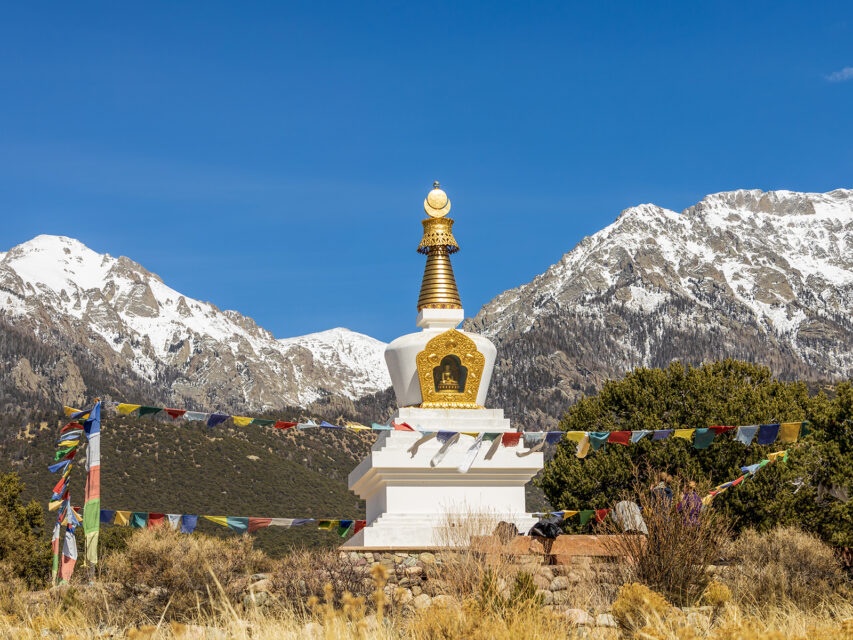
Crestone is a small unincorporated community tucked into the northern end of the San Luis Valley in Saguache County, southern Colorado. With a population of roughly 130 residents, it carries the feel of a remote mountain retreat rather than a conventional town, set against the dramatic backdrop of the Sangre de Cristo Range. Crestone is widely recognized as a spiritual and contemplative destination, hosting an unusual concentration of monasteries, temples, meditation centers, and retreat houses representing multiple world faiths. It also serves as a gateway to some of Colorado's most striking high-alpine and desert landscapes. The nearest larger town is Alamosa, about 50 miles to the south, while Colorado Springs, the closest major city, lies approximately 130 miles to the north.
The marquee attraction within easy reach of Crestone is Great Sand Dunes National Park and Preserve, home to North America's tallest sand dunes rising against the snow-capped Sangre de Cristo peaks. Visitors come to hike, sled, and sandboard the dunes, wade in Medano Creek at its seasonal peak, or explore the backcountry forests, wetlands, and alpine tundra of the preserve. The main park entrance sits roughly a 45-minute drive southeast of Crestone, which makes the community a popular base for travelers who want to experience the dunes at sunrise, after dark, or before day-trippers arrive.
Just east of town, the Sangre de Cristo Wilderness offers immediate access to high-country hiking, backpacking, and mountaineering. The wilderness encompasses several Colorado "fourteeners," including Crestone Peak and Crestone Needle, which tower above the community and gave it its name. Trailheads for routes such as the South Colony Lakes approach begin a short drive from Crestone, and the area's creeks, aspen groves, and alpine basins draw outdoor enthusiasts throughout the summer and into early fall.
About an hour south of Crestone lies San Luis, the oldest continuously inhabited town in Colorado, founded in 1851. The town is known for its traditional adobe architecture, the Stations of the Cross shrine climbing a nearby mesa, and its quiet Hispanic heritage, offering a cultural counterpoint to Crestone's spiritual and wilderness character.
Crestone's appeal as a short-term rental base lies in the way it pairs solitude and contemplative character with proximity to some of Colorado's most distinctive landscapes. Guests can spend a day climbing a fourteener, sledding the dunes, or walking among centuries-old adobe streets and return to a quiet community where stupa, temple, and chapel sit alongside humble homes. The relative remoteness, dark night skies, and towering mountain backdrop give the area a sense of place that is hard to replicate elsewhere in the state, drawing travelers looking for something well beyond a typical mountain-town stay.
Want to know if a property in Crestone is a good investment?
Enter an address to get instant revenue potential and comps.