
Thousand Oaks, California
Want to see how Thousand Oaks compares to other top cities in California? Explore all city regulations in California. →
Thousand Oaks, CA
Challenging To Investors

STR Regulations for Thousand Oaks, California
Overview: Are Short-Term Rentals Allowed in Thousand Oaks, CA?
YES, short-term rentals are allowed in Thousand Oaks, California, but with important restrictions and requirements. Thousand Oaks operates under a dual regulatory framework: city-level transient occupancy tax requirements and county-level short-term rental regulations through Ventura County. Both jurisdictions have established comprehensive rules that investors must follow to legally operate short-term rentals in this market.
The city requires registration, permits, and collects a 10% transient occupancy tax, while Ventura County governs the operational aspects through its Temporary Rental Unit (TRU) ordinance, which distinguishes between traditional short-term rentals and homeshare arrangements.
What do Airbnb hosts actually earn in Thousand Oaks?
Thousand Oaks hosts earn a median $53,343/year with $298 ADR and 72% occupancy.
Top performers pull in $78,596+ per year.
See the full Thousand Oaks market breakdownHow to Start a Short-Term Rental Business in Thousand Oaks
Step-by-Step Setup Process
1. Jurisdiction Confirmation First, confirm whether your property is within Thousand Oaks city limits or unincorporated Ventura County, as this determines which regulatory framework applies.
2. Obtain Required Permits and Licenses
- Apply for a Short-Term Rental Permit through Thousand Oaks city systems
- Obtain a Ventura County Business License Tax Certificate
- Secure a Transient Occupancy Registration Certificate for tax collection
3. Complete Pre-Permitting Inspection Ventura County requires a mandatory inspection to verify bedroom count, parking compliance, fire safety, and adherence to zoning regulations.
4. Business Setup
- Establish business tax compliance
- Obtain required insurance coverage ($500,000 minimum liability)
- Set up transient occupancy tax collection and remittance systems
5. Marketing Compliance Setup Ensure all advertisements and listings include required disclosures, permit numbers, and operational information.
Required Documents, Permits, Licenses, and Guidelines
City of Thousand Oaks Requirements
Transient Occupancy Tax Registration
- Transient Occupancy Registration Certificate
- Monthly TOT remittance (10% of rental fees)
- Business License Tax Certificate
Ventura County TRU Permit Requirements
Core Application Documents:
- Completed TRU Permit Application
- Property site plan (hand-drawn acceptable)
- Owner identification and contact information
- Property manager contact details (if applicable)
- Proof of business tax compliance
- Transient occupancy tax compliance documentation
- Insurance certificate ($500,000 minimum liability coverage)
- Homeowner's exemption verification (for homeshares only)
Inspection Requirements:
- Pre-permitting inspection to verify bedroom count and compliance
- Site plan review for parking and access standards
- Fire safety and health standard verification
Annual Renewals:
- All permits must be renewed annually
- Updated insurance and tax compliance verification
- Compliance deposit renewal
Specific Documents by Use Type
Short-Term Rental (STR) Documents:
- Standard TRU application
- $500 compliance monitoring deposit
- Commercial liability insurance
- Business license verification
Homeshare Documents:
- Homeowner's exemption verification
- Proof of primary residence status
- $100 compliance monitoring deposit
- Owner presence commitment documentation
Specific Regulations: City, County, and State
Thousand Oaks City Regulations
Tax Requirements:
- 10% Transient Occupancy Tax on all rentals
- Monthly remittance due by last day of following month
- Quarterly payment schedule mentioned in some sources
- Delinquency penalties: 10% of tax amount, plus additional 10% after 30 days
- Interest charges at 0.5% per month on delinquent amounts
Registration and Permits:
- Short-Term Rental Permit required
- Annual permit renewal mandatory
- City business license requirements
Ventura County TRU Regulations
Operating Standards:
Occupancy Limits:
- Short-term rentals: Maximum 2 persons per bedroom (up to 5 bedrooms) + 2 additional persons, maximum 10 persons
- Homeshares: Maximum 2 bedrooms for rental, maximum 5 overnight guests
- Event restrictions: No events exceeding occupancy or noise standards allowed
Homeshare Specific Requirements:
- Must be owner's primary residence
- Owner must be physically present during all rental periods
- Maximum 2 bedrooms available for rental
- Annual zoning clearance permit required
- Only permitted on historic landmark properties in certain overlay zones
Parking Requirements:
- On-site parking spaces must be provided
- Garages and driveways must be unobstructed and available for guest parking
- Notification discouraging on-street parking required
Noise and Quiet Hours:
- Quiet hours: 10:00 PM to 7:00 AM
- No outdoor amplified music during quiet hours
- Reasonable noise standards enforced at all times
Management Requirements:
- Homeshare owners must be present between 10 PM and 7 AM
- Owner must remain within 40 miles of property during rental periods
- Property manager option available for STRs (up to 2 managers)
- 30-minute response time for complaints (15 minutes during quiet hours)
Prohibited Uses:
- Events exceeding occupancy limits
- Renting accessory dwelling units or second dwelling units
- More than one TRU per owner in the county
- Advertisement postings on property exterior
Insurance Requirements:
- Commercial/general liability coverage minimum $500,000 per occurrence
- Coverage for personal injury and property damage claims
California State-Level Regulations
General Business Requirements:
- California business licensing through county treasurer-tax collector
- Standard insurance requirements for commercial operations
- Fair housing compliance
- Environmental and safety standard adherence
Tax Implications:
- State transient occupancy tax framework
- Local tax collection authority delegation
- Standard business tax obligations
Contact Information for Local Authority
City of Thousand Oaks
Finance Department (TOT Management)
- Address: 2100 Thousand Oaks Boulevard, Thousand Oaks, CA 91362
- Phone: (805) 449-2100
- Email: city@toaks.gov
- Hours: Monday-Thursday 7:30 AM to 5:00 PM, Closed alternating Fridays
Ventura County Resource Management Agency
Code Compliance Division (TRU Permits)
- Address: 800 S Victoria Ave, Ventura, CA 93009
- Phone: (805) 654-2494 (General), (805) 654-3506 (TRU Violations)
- Phone: (805) 654-3727 (Treasurer-Tax Collector for business licenses)
- Business Hours: 8:00 AM to 5:00 PM
TRU Violation Reporting:
- Phone: (805) 654-3506
- Online complaint form available
- 30-minute response requirement for complaints (15 minutes during quiet hours)
Links to Source Pages
City of Thousand Oaks:
- Transient Occupancy Tax Information: toaks.gov/tot
Ventura County:
- TRU Ordinance FAQ: rma.venturacounty.gov/divisions/planning/temporary-rental-unit-ordinance-frequently-asked-questions/
- TRU Program Information: rma.venturacounty.gov/divisions/code-compliance/temporary-rental-units/
- Coastal Zoning Ordinance: rmadocs.venturacounty.gov/planning/ordinances/coastal-zoning/ventura-county-coastal-zoning-ordinance.pdf
- Non-Coastal Zoning Ordinance: rmadocs.venturacounty.gov/planning/ordinances/non-coastal-zoning/ventura-county-non-coastal-zoning-ordinance.pdf
- TRU Application Form: rmadocs.venturacounty.gov/code-compliance/forms/code-compliance-temporary-rental-unit-application.pdf
- Good Neighbor Guidelines: rma.venturacounty.gov/wp-content/uploads/2024/04/temporary-rental-unit-program-good-neighbor-guidelines.pdf
- Code Compliance Fee Schedule: rma.venturacounty.gov/wp-content/uploads/2024/07/2024-code-compliance-fee-schedule.pdf
Important Notes for Investors:
-
Dual Compliance Required: Properties within Thousand Oaks city limits must comply with both city tax requirements and county operational regulations.
-
Active Enforcement: Both jurisdictions actively enforce regulations with significant penalties for non-compliance.
-
Annual Renewals: All permits require annual renewal with updated documentation and compliance verification.
-
Investment Implications: Homeshare restrictions may limit investment opportunities, as the owner's primary residence requirement restricts non-owner-operated rentals in certain areas.
-
Insurance Costs: Higher insurance requirements may increase operating costs compared to standard residential rental properties.
This regulatory framework creates a structured but workable environment for short-term rental investment in Thousand Oaks, with clear pathways to compliance and substantial penalties for non-compliance that help maintain neighborhood quality and guest safety standards.
Next step
Found a property in Thousand Oaks?
Paste any address and get estimated revenue, cash-on-cash return, and comparable STR performance in under 5 minutes. 3 free analyses per day.
Free brief
Get the free Thousand Oaks STR Investment Brief
Revenue data, top neighborhoods, seasonal trends, and the key regulations for Thousand Oaks, California in one email.
Thousand Oaks
Market Saturation Score
Photos of Thousand Oaks


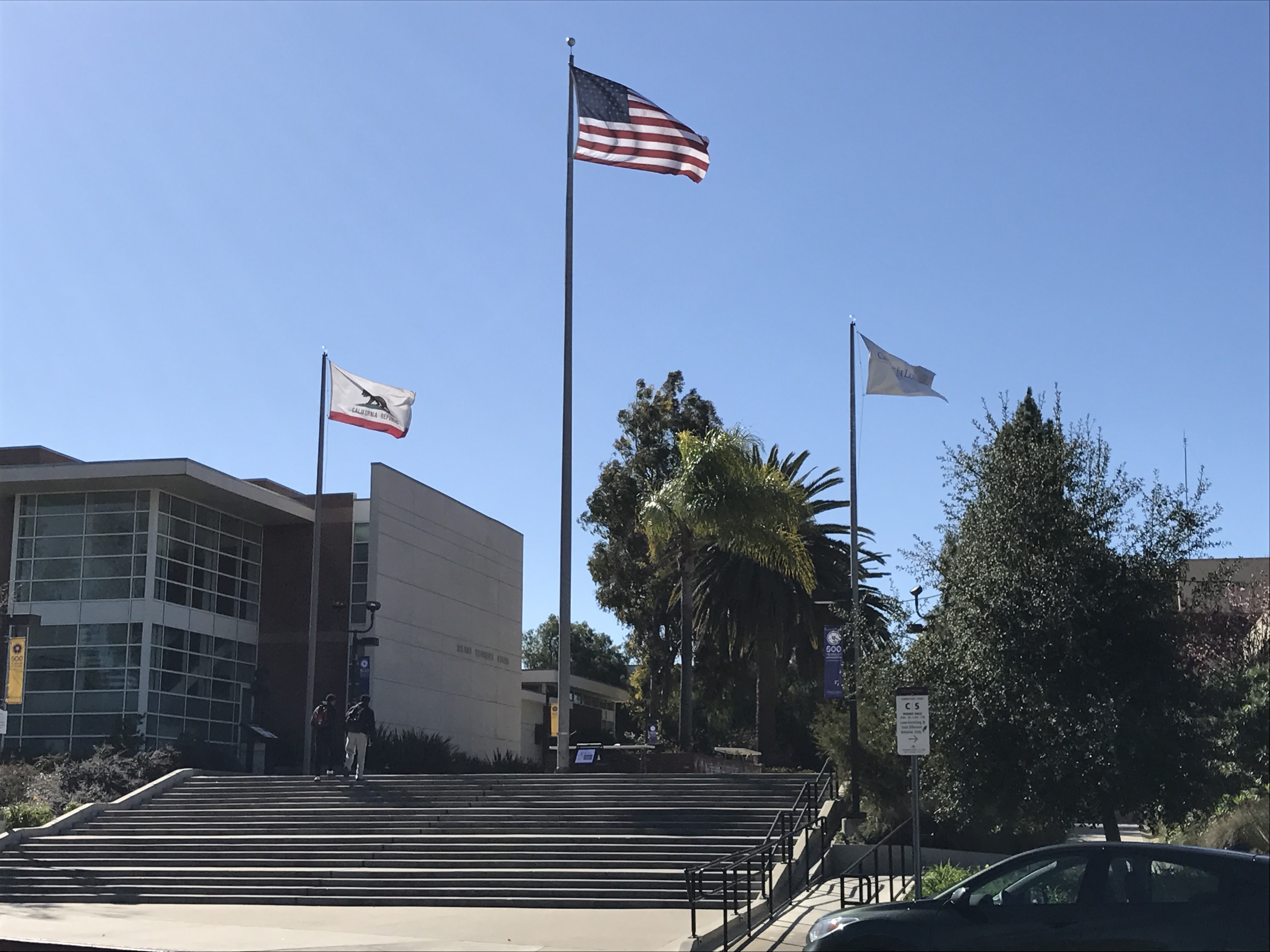
Overview of Thousand Oaks
Thousand Oaks sits in the southeastern corner of Ventura County in southern California, roughly forty miles northwest of downtown Los Angeles. With a population of approximately 130,000, it is one of the larger cities in the Conejo Valley and a master-planned community that grew rapidly after the 1960s. Often ranked among the safest cities in the United States, it carries a polished suburban character, shaded by the live oaks that gave the city its name and ringed by the rolling chaparral of the Santa Monica Mountains. The city functions as a comfortable gateway to the beaches of Malibu, the ranches and small towns of Ventura County, and the wider Los Angeles metropolitan area, offering visitors a quieter, family-oriented base for exploring the region.
For outdoor recreation right at the city's edge, Wildwood Regional Park preserves more than 1,700 acres of canyon and ridgeline laced with hiking and biking trails that lead to seasonal waterfalls, wildflower meadows, and panoramic overlooks of the Conejo Valley. It is a short drive from almost anywhere in town, usually no more than ten minutes from the central neighborhoods, and serves as a sort of backyard for residents and visitors who want a quick morning hike or a longer ridge walk.
A more cultivated experience can be found at the Gardens of the World, a compact botanical garden in the heart of the city that gathers plants from several continents, including a Japanese strolling garden, a formal French garden, and sections devoted to California natives and Mediterranean species. Roughly five minutes from most of the city, the gardens offer a calm, easily walkable stop that pairs naturally with the wild terrain just up the road.
History-minded visitors often make the short trip east to the Ronald Reagan Presidential Library in neighboring Simi Valley. Set on a hilltop overlooking the region, the site combines the former president's burial place with a piece of the Berlin Wall, a recreated Oval Office, and the hangar housing the Air Force One Pavilion. The drive from Thousand Oaks typically takes around twenty minutes and draws a steady stream of school groups, political-history enthusiasts, and casual sightseers.
For those willing to drive a little farther, the Pacific coast is within easy reach via the winding roads that drop through the Santa Monica Mountains toward Malibu, where sandy beaches, oceanfront dining, and the scenic stretch of the Pacific Coast Highway await. Most travelers can reach the coast in roughly thirty to forty-five minutes, making a morning surf session or a sunset seaside dinner entirely feasible from a Thousand Oaks base.
Thousand Oaks appeals to short-term rental investors because it occupies a rare middle ground: close enough to Los Angeles and the coast to draw leisure travelers, yet far enough inland to feel like a peaceful, well-kept retreat. The combination of safe streets, walkable amenities, and quick access to beaches, mountains, and major Southern California attractions gives the city a broad year-round draw, supported by a steady mix of family visitors, business travelers heading to corporate offices in the Conejo Valley, and tourists using it as a quieter launchpad for exploring both Ventura and Los Angeles counties.
Want to know if a property in Thousand Oaks is a good investment?
Enter an address to get instant revenue potential and comps.