
South El Monte, California
Want to see how South El Monte compares to other top cities in California? Explore all city regulations in California. →
South El Monte, CA
Unfriendly To Investors
STR Regulations for South El Monte, California
Overview: Whether short-term rentals are allowed in South El Monte, CA
- Allowed in most cases. Based on the provided municipal code excerpts, short-term rentals of a primary dwelling appear to be allowed; there is no citywide prohibition identified for such uses in the provided content.
- Explicitly prohibited for certain housing types:
- Accessory Dwelling Units (ADUs) and Junior ADUs: “Short‑term rentals shall be prohibited” for ADUs/Junior ADUs and are limited to “a duration longer than 30 consecutive calendar days” (17.110.030.M.3).
- Urban Dwellings: “The urban dwelling shall not be rented for any duration less than 30 consecutive calendar days” (17.110.100.K.5).
- Practical implication for investors: Treat ADUs/Junior ADUs and Urban Dwellings as long‑term rental‑only products. Treat the primary dwelling (e.g., single‑family home) as the only unit that can be operated as an STR.
Notes
- The provided excerpts are from a draft (May 10, 2022) chapter of Division 11. Always confirm the current, adopted version of the City’s municipal code before proceeding.
- The excerpts include no standalone “Short‑Term Rental” chapter or licensing/registration program. If the City has since adopted an STR registration or tax program, it was not present in the provided material and should be confirmed with the City.
How to start a short-term rental business in this market
- Confirm zoning and use eligibility
- Use the Matrix of Permitted Uses (Chapter 17.A) referenced in the code to confirm that transient lodging is an allowed use in the subject property’s zoning district, or obtain a Conditional/Minor Use Permit if required by that matrix.
- Structure eligibility:
- Primary dwelling: Potential STR candidate.
- ADU/Junior ADU: Not permitted for STRs.
- Urban Dwelling: Not permitted for STRs (< 30 days).
- Determine the appropriate permit pathway
- Use Permits: If Chapter 17.A lists transient lodging as a permitted use, proceed to Building/Safety plan review.
- Conditional/Minor Use Permit: If transient lodging is not a permitted use in the zone but is conditionally permitted, apply for the necessary approval.
- Zoning Clearance: Often required to confirm use and development standards before building permits.
- Building Permits: For any interior remodel, change of use, egress, fire/life safety, and ADA compliance. Minimum dwelling size and livability standards will apply (see “Nonresidential and Development Standards” in the excerpts).
- Meet building and fire code requirements
- All applicable building, fire, health, and safety code provisions apply. Confirm:
- Minimum unit sizes and habitability standards.
- Egress, smoke/CO detectors, fire extinguishers, and any fire sprinkler requirements if triggered by scope of work.
- Emergency access and signage.
- For multi‑story conversions or substantial alterations, a Certificate of Occupancy may be required.
- Ensure utility capacity and public services
- Utilities: The City may require confirmation of adequate water, sewer, electrical, and drainage capacity. For new/separate connections, fees shall not exceed the reasonable cost of providing service. The City may not require new or separate utility connections for certain ADUs—though ADUs are not eligible for STRs in any case.
- Impact Fees: Confirm applicable impact fees for any additions or conversions that create or alter dwelling units.
- Design and operational readiness
- Exterior features: Follow any applicable design guidelines, compatibility standards, and entrance location requirements.
- Parking and access: Provide compliant parking and maintain emergency access.
- Neighbor‑friendly operations: Establish quiet hours, occupancy controls, and a house rules packet for guests.
- Launch and compliance
- Schedule inspections and obtain final approvals (Certificate of Occupancy as applicable).
- Implement guest screening, safety procedures, and compliance monitoring.
- Maintain records demonstrating compliance with City codes.
Required documents, permits, licenses, and guidelines
- Zoning Clearance: To confirm permitted use and standards.
- Conditional/Minor Use Permit: If transient lodging is not a permitted use or requires special conditions.
- Building Permits: For interior/exterior work tied to use change, egress, or life safety.
- Certificate of Occupancy: If a change of use or new unit is created.
- California State Requirements (assume typical): State tax registration for transient occupancy taxes (TOT) and transient occupancy registration where applicable; lodging provider registration for local emergency access; insurance coverage; and Airbnb/HomeAway platform compliance. Note: TOT registration details were not included in the provided content and must be confirmed with the City or State.
Specific regulations applicable to South El Monte, county, and state City-level restrictions
- Prohibited short-term rentals:
- ADUs and Junior ADUs: “Short-term rentals shall be prohibited.” Rentals must be for longer than 30 consecutive days (17.110.030.M.3).
- Urban Dwellings: Not permitted for rental periods less than 30 consecutive days (17.110.100.K.5).
- Allowed rentals:
- Primary dwellings: The excerpts do not include an STR prohibition for primary dwellings; however, confirm any adopted STR registration/tax requirements not present in the draft material.
Development standards relevant to rental conversions
- Mixed-Use and Live/Work sections (17.110.050–060) set design, entrances, and safety standards that can indirectly apply if an STR is within mixed‑use or live‑work contexts (noise disclosure, master sign program, design compatibility).
- SRO facilities (17.110.080) outline a separate category with 30-day minimum stays—useful as a design analogue but distinct from an STR home-share model.
County-level (Los Angeles County)
- Not addressed in the provided content. Confirm any county health, fire, or TOT requirements with the County.
State-level (California)
- ADUs/Junior ADUs state statutes: 17.110.030 is written to comply with Gov’t Code §§ 65852.2 & 65852.22. Local limits on sale, conveyance, and rental duration must be consistent with State law; the City has prohibited STRs for ADUs/Junior ADUs.
- Urban Dwellings state statute reference: 17.110.100 cites Gov’t Code § 65852.21 for compatibility with State law.
- Building and Life Safety: ADUs are not required to have sprinklers if the primary dwelling does not require them (17.110.030.Q).
- ADUs & UTILITIES: No new or separate utility connection (and related fees) is required for specified ADUs unless constructed with a new single‑family dwelling; otherwise, new connections may be required proportionate to burden (17.110.030.U).
- Builder’s Remedy: For ADUs on lots where the City cannot meet minimum FAR/coverage/open space/height standards due to property constraints, objective relief may be provided without a variance (17.110.030.W and 17.110.100.M).
- Efficiency Unit baseline: Minimum 150 sf for up to 2 persons, with partial kitchen/bath permitted (17.110.030.E.4; Health & Safety Code § 17958.1).
Contact information for the local authority in charge of STRs
- Primary municipal website: elmonteca.gov/
- Planning Division: For zoning, permits, and use confirmation. Email/phone not present in the provided content; contact via the City’s main line or the Planning Division’s webpage on the City’s site.
- Building & Safety Division: For building permits and inspections. Contact via the City’s main line or the Building/Safety Division’s webpage.
- Code Enforcement: For noise, parking, and nuisance concerns; confirm operational compliance. Contact via the City’s main line or Code Enforcement webpage.
- Recommended step: Request a Zoning Clearance and confirm whether transient lodging is a permitted use in the subject district, and whether a Conditional/Minor Use Permit is required.
Links to source pages (as provided in your instruction set)
- El Monte Municipal Code, Division 11, Chapter 17.110 (Standards for Specific Residential Uses) and Chapter 17.112 (Standards for Specific Nonresidential Uses): elmonteca.gov/DocumentCenter/View/5392
Disclaimer and verification notes
- The source is a draft (May 10, 2022). Verify the current, adopted language for all sections above before submitting permits.
- No standalone STR chapter or registration program appears in the provided material. If South El Monte has adopted a municipal STR registration, tax, or operating ordinance since, the City’s Planning Division or City Clerk should be consulted directly.
- County-level and State-level STR programs vary by jurisdiction and may include tax/registration or local emergency access standards. Confirm with the appropriate agencies.
This guide focuses solely on the information contained in your provided excerpts, cross-referencing the City’s Division 11 standards and explicitly noting prohibitions where they are stated in the code. Where details are absent (e.g., STR tax registration or enforcement contacts), contact the City directly to obtain the current adopted requirements.
What do Airbnb hosts actually earn in South El Monte?
South El Monte hosts earn a median $27,910/year with $141 ADR and 77% occupancy.
Top performers pull in $43,929+ per year.
See the full South El Monte market breakdownNext step
Found a property in South El Monte?
Paste any address and get estimated revenue, cash-on-cash return, and comparable STR performance in under 5 minutes. 3 free analyses per day.
Free brief
Get the free South El Monte STR Investment Brief
Revenue data, top neighborhoods, seasonal trends, and the key regulations for South El Monte, California in one email.
South El Monte
Market Saturation Score
Photos of South El Monte


Overview of South El Monte
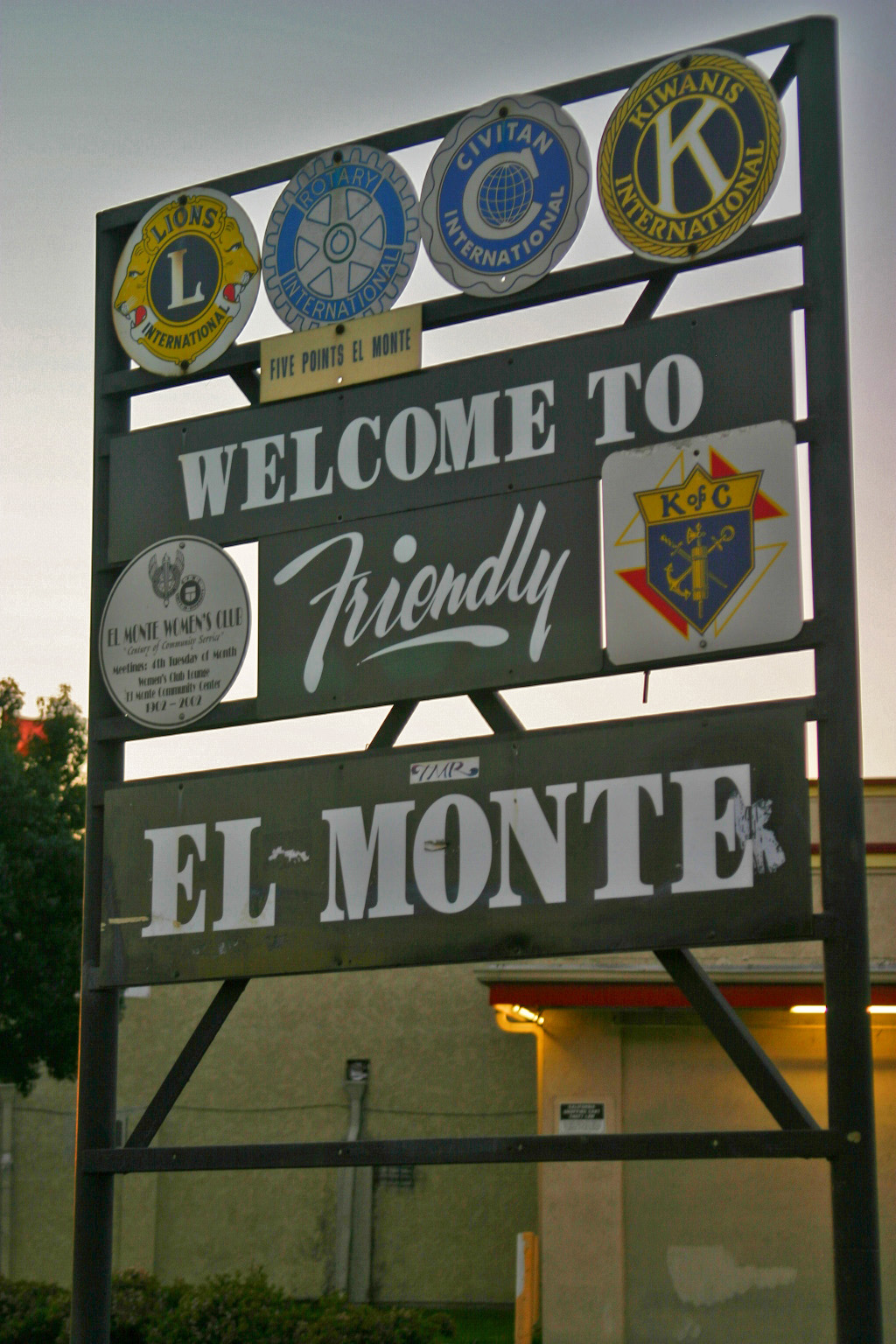
El Monte is a diverse, working-class city of roughly 110,000 residents nestled in the western San Gabriel Valley in Los Angeles County, California. Long nicknamed "The End of the Santa Fe Trail" for its role as the historic western terminus of the 19th-century wagon route, the city carries a multicultural character shaped by generations of Latino, Asian, and immigrant communities. It sits about twelve miles east of downtown Los Angeles, placing it firmly within the greater L.A. metro area while retaining its own identity as a commercial and cultural hub for the eastern Valley.
Just south of the city, the Whittier Narrows Recreation Area spreads across more than a thousand acres of former flood basin converted into green space, offering soccer fields, a swim complex, a shooting range, and miles of bike paths along the Rio Hondo. The recreation area sits essentially in El Monte's backyard, usually a five- to ten-minute drive, making it a convenient stop for active travelers or families looking to stretch out without leaving the Valley.
North of the city, the San Gabriel Mountains rise sharply above the Valley floor, with the surrounding Angeles National Forest offering hiking, picnicking, and even winter snow play within roughly a thirty- to forty-five-minute drive. Trailheads at places like Mount Wilson and along the Angeles Crest Highway give outdoor visitors a surprisingly wild escape from the urban basin below, with cooler temperatures and a chance to see the kind of pine-forested terrain most travelers never associate with greater Los Angeles.
For local history, the El Monte Historical Museum preserves artifacts from the city's pioneer and ranching days, including pieces tied to its Santa Fe Trail heritage. Within a thirty-minute drive to the west, depending on traffic, the museums, concert halls, and sports venues of downtown Los Angeles — from the Broad to Dodger Stadium — offer a full slate of marquee Southern California experiences for short-term guests.
El Monte's appeal for short-term rental investors comes down to location and value. The city offers a more affordable entry point than Pasadena or the urban core while keeping visitors within easy reach of major Southern California draws, from the beaches of Long Beach and Santa Monica to the alpine forests above the Valley. Combined with its central position near multiple freeways, its proximity to parks, dining, and cultural destinations, and its commuter-friendly distance to downtown L.A., El Monte functions as a practical, well-connected base for travelers who want to explore the breadth of the region without paying the premium of staying in the heart of the city.
Want to know if a property in South El Monte is a good investment?
Enter an address to get instant revenue potential and comps.