
San Bruno, California
Want to see how San Bruno compares to other top cities in California? Explore all city regulations in California. →
San Bruno, CA
Challenging To Investors
STR Regulations for San Bruno, California
Overview
Short-term rentals are explicitly allowed in San Bruno, CA. The City of San Bruno permits short-term residential rentals (STRRs) under Chapter 12.270 of the San Bruno Municipal Code. STRs are defined as the transient occupancy use of entire dwelling units or portions thereof (such as individual bedrooms) to guests for rental periods of less than thirty consecutive calendar days. However, these rentals are subject to strict regulatory requirements, occupancy limitations, and permit obligations designed to preserve residential neighborhood character while providing a regulated framework for this business model.
What do Airbnb hosts actually earn in San Bruno?
San Bruno hosts earn a median $46,767/year with $207 ADR and 88% occupancy.
Top performers pull in $62,440+ per year.
See the full San Bruno market breakdownHow to Start a Short-Term Rental Business in San Bruno
Starting a STR business in San Bruno requires following a comprehensive three-step process:
Step 1: Meet Host Requirements
- Establish owner occupancy: Applicants must provide evidence of owner occupancy for the primary dwelling unit
- Secure liability insurance: Property owners must obtain and maintain liability insurance for the STR unit
- Obtain zoning permit: Apply for a short-term residential rental zoning permit with a $1,375 application fee
- Acquire business license: Apply for and maintain a valid city-issued business license
Step 2: Ensure Compliant Dwelling Unit
- Verify appropriate unit type: The STR must be located in permitted dwelling types (single-family, two-family/duplex, or multiple-family dwelling units)
- Pass safety inspections: Complete building and fire inspections before permit issuance, with inspections required every two years thereafter
- Resolve code violations: Address any building code violations identified during inspection before receiving STR permit
Step 3: Maintain Ongoing Compliance
- Adhere to usage limits: Comply with annual rental duration limits and bedroom restrictions
- Follow operational standards: Maintain compliance with all STR operational requirements
- Remit applicable taxes: Collect and pay all required transient occupancy taxes (TOT) and business license taxes
- Renew permits: Complete bi-annual renewal of the STR zoning permit and annual renewal of the business license
Required Documents, Permits, Licenses, and Guidelines
Mandatory Permits and Licenses
Short-Term Residential Rental Zoning Permit
- Application Fee: $1,375
- Application Process: Submit completed application form with proof of owner occupancy and insurance to Planning@sanbruno.ca.gov
- Validity: Permit valid until December 31st of the year issued
- Renewal: Bi-annual renewal required with renewal fee and application form
Business License
- Application Method: Online at sanbruno.hdlgov.com or by phone at 650-273-4371
- Renewal: Annual renewal required
Required Documentation
Owner Occupancy Verification
- Evidence demonstrating owner occupancy of primary dwelling unit in form satisfactory to the city
- Required for hosted units and applicable ADU situations
Liability Insurance
- Property owner must obtain required insurance policy in amount determined by the city
- Must be maintained throughout STR operation
Inspection Documentation
- Building and Fire inspection approval required before permit issuance
- Re-inspection required for failed items
- Building permits may be required to resolve identified code violations
Operational Guidelines
Local Contact Requirements
- Designate local contact person available 24/7 during non-hosted stays
- Contact information must be filed with city and posted conspicuously within and outside rental unit
- Must respond to complaints within 60 minutes and have authority to take remedial action
Advertising Requirements
- All advertising (print or digital) must include permit number
- Advertising platform compliance with tax collection obligations
Safety Compliance Standards
- Post approved fire safety and evacuation plan information inside front door
- Comply with California Building Standards Code requirements
- Maintain required smoke detectors, carbon monoxide detectors, and heating systems
Specific Regulations for Short-Term Rentals
Permitted Unit Types and Usage Limits
Hosted Units
- Eligibility: Owner-occupied single-family, two-family/duplex, or multiple-family dwelling units
- Occupancy Requirement: At least one property owner must physically occupy unit as sole primary residence
- Room Limit: Maximum of three individual bedrooms may be rented simultaneously
- Annual Limit: No maximum annual usage limit
Non-Hosted Units
- Eligibility: Entire single-family, two-family/duplex, or multiple-family dwelling units
- Annual Limit: Maximum of 120 calendar days per calendar year
- Owner Occupancy: Not required
Accessory Dwelling Units (ADUs)
- Pre-September 25, 2020 ADUs: Permitted for STR use if primary single-family dwelling is owner-occupied
- Annual Limit: Maximum of 120 calendar days per calendar year for pre-2020 ADUs
- Post-September 25, 2020 ADUs: Prohibited from STR use with stays less than 30 consecutive days
Prohibited Activities and Uses
Commercial Restrictions
- For-profit commercial uses, corporate events, and party hosts are strictly prohibited
- STR operations in vehicles, trailers, tents, tree houses, yurts, storage sheds, or garages are banned
Compliance Requirements
- Must comply with city noise ordinances
- No additional parking requirements; existing on-site parking must be made available to guests
- All applicable city taxes, including TOT and business license taxes, must be collected and remitted
Permit Administration and Enforcement
Permit Revocation Grounds
- Fraud, misrepresentation, or false statements in application
- Violations of municipal code provisions
- Violations of federal, state, or local laws
Enforcement Mechanism
- City may enforce regulations through any legally permitted means
- Reapplication prohibited within one year after permit revocation
Appeals Process
Permit Approval Appeals
- Written appeals to City Manager, who may decide de novo
- City Manager's decision is final
Denial or Revocation Appeals
- Written appeal to City Manager (de novo review)
- City Manager decision may be appealed to City Council
- City Council decision is final
- Appeals must be filed within 10 business days of written decision
Inspection Requirements
Initial Inspection
- Building and Fire Marshal inspection required before permit issuance
- Inspections conducted only on Thursdays, 1:30-4:30 PM
- Schedule by calling 650-616-7038 by Tuesday, 1 PM of desired inspection week
Ongoing Compliance
- Inspections required every two years for permit renewals
- Failed inspections require separate building permit for violation resolution
- STRR permit issuance contingent upon passing all inspections
Contact Information for Local Authority
Planning Division (Primary Contact)
- Email: Planning@sanbruno.ca.gov
- Phone: 650-616-7074
- Address: City of San Bruno, 567 El Camino Real, San Bruno, CA 94066
Business License Information
- Phone: 650-273-4371
- Online Application: sanbruno.hdlgov.com
Safety Regulation Inquiries
- Phone: 650-616-7074
- Inspection Scheduling: 650-616-7038
General City Contact
- Phone: 650-616-7058
Source Pages
- Main STRR Information Page: www.sanbruno.ca.gov/940/Short-Term-Residential-Rental-STRR
- Municipal Code Chapter 12.270: www.sanbruno.ca.gov/DocumentCenter/View/5073/Chapter-12270-Short-Term-Residential-Rentals
- STRR Application Forms: Available through Planning Division
- Business License Application: sanbruno.hdlgov.com/
This guide provides a comprehensive framework for understanding and navigating San Bruno's STR regulatory environment. Investors should carefully review all requirements and maintain ongoing compliance to ensure successful operation within this highly regulated market.
Next step
Found a property in San Bruno?
Paste any address and get estimated revenue, cash-on-cash return, and comparable STR performance in under 5 minutes. 3 free analyses per day.
Free brief
Get the free San Bruno STR Investment Brief
Revenue data, top neighborhoods, seasonal trends, and the key regulations for San Bruno, California in one email.
San Bruno
Market Saturation Score
Photos of San Bruno


Overview of San Bruno
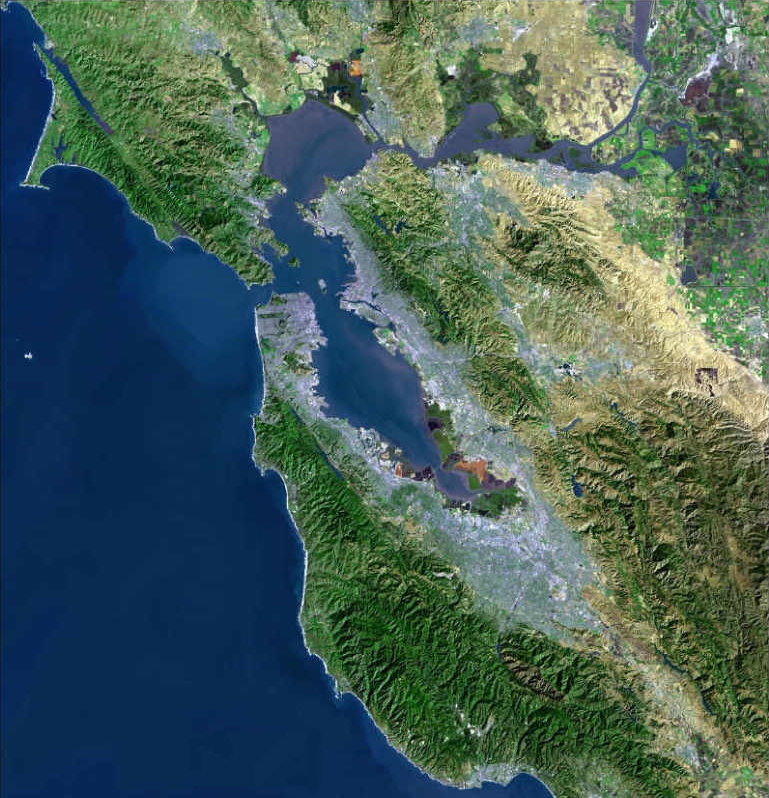
San Bruno is a small city in San Mateo County, California, situated on the San Francisco Peninsula in the heart of the Bay Area. With a population of roughly 45,000 residents, it has a quiet, suburban character while sitting at the doorstep of major metropolitan attractions. The city is best known as the home of San Francisco International Airport, one of the busiest travel hubs in the country, and it serves as a convenient gateway for visitors exploring the region. San Bruno lies about 12 miles south of downtown San Francisco, easily reached by car, BART, or Caltrain, and offers a practical base for travelers who want a calmer stay with quick access to the wider Bay Area.
San Bruno Mountain State Park rises just east of the city and provides roughly 2,300 acres of preserved open space with hiking trails, native wildflower meadows, and panoramic views over the bay and surrounding valleys. The park can be reached from most parts of San Bruno in about 10 to 15 minutes by car, and its ridgeline paths are popular with local hikers and visitors looking to stretch their legs between flights or city outings. The mountain is also a designated ecological reserve, hosting several rare plant and butterfly species that draw nature enthusiasts from across the region.
Closer to the heart of town, Sign Hill is a small city park topped with the large, white "San Bruno" letters that have become an unofficial symbol of the community. A short uphill walk leads to clear views of the airport runways, San Francisco Bay, and the surrounding neighborhoods, making it a favorite spot for a quick morning or evening visit. The hillside, often draped in yellow mustard blooms in early spring, also reflects the city's working-class aviation history.
Just beyond the city limits, the headlands and beaches of the Golden Gate National Recreation Area open up roughly 15 to 20 miles north, offering coastal trails, historic military forts, and dramatic Pacific overlooks. San Francisco itself, with the Golden Gate Bridge, Fisherman's Wharf, and neighborhoods like Chinatown and the Mission District, is a quick BART ride or short drive away, while the beaches, pumpkin farms, and Highway 1 scenery of Half Moon Bay lie about 20 miles to the southwest.
San Bruno's appeal as a short-term rental base comes from this combination of convenience and variety. Travelers arriving at SFO or those planning a wider Bay Area itinerary find a calmer, more affordable place to stay than downtown San Francisco, while still being within easy reach of the region's most celebrated attractions. The blend of suburban comfort, transit access, and proximity to both urban highlights and natural escapes makes it a practical and well-rounded choice for visitors putting together a multi-stop Bay Area trip.
Want to know if a property in San Bruno is a good investment?
Enter an address to get instant revenue potential and comps.