
Rancho Santa Fe, California
Want to see how Rancho Santa Fe compares to other top cities in California? Explore all city regulations in California. →
Rancho Santa Fe, CA
Challenging To Investors
STR Regulations for Rancho Santa Fe, California
Executive overview: Short-term rentals are allowed in Rancho Santa Fe, California. Rancho Santa Fe is primarily an unincorporated community within San Diego County, and short-term rentals in unincorporated areas are governed by San Diego County regulations. There is no Rancho Santa Fe–specific municipal short‑term rental ordinance. Homeowners’ association (HOA) covenants commonly apply and can impose stricter rules or outright prohibit STR activity; such HOA restrictions supersede county rules and may block operations.
Table of contents
- How to start a short‑term rental business in Rancho Santa Fe
- Required documents, permits, and guidelines
- Specific regulations: county and state
- Contact information for the local authority in charge of STRs
- Source links
How to start a short‑term rental business in Rancho Santa Fe
- Confirm zoning and HOA permissions
- Verify that your property is in Rancho Santa Fe’s unincorporated San Diego County area (most of the community).
- Check your HOA’s governing documents (CC&Rs, bylaws, rules) for short‑term rental restrictions, guest limits, or bans. HOA rules can override county/state allowances.
- Obtain San Diego County Transient Occupancy Tax (TOT) registration
- Register and obtain a TOT Certificate through the County of San Diego’s online portal. This is the primary permit/license requirement for operating a short‑term rental in unincorporated areas of the County.
- County TOT registration enables you to collect and remit the TOT from guests.
- Set up tax collection and remittance
- Implement a reliable process for collecting TOT from guests at booking and remitting to the County on schedule. Maintain clear records for County reviews.
- Establish operations in compliance with state and local requirements
- Prepare the unit with California Fire Code–required safety equipment (smoke alarms, carbon monoxide detectors, and a fire extinguisher). Review the California Civil Code requirements for rental agreements and ensure you use compliant short‑term rental agreements.
- Adopt written house rules (quiet hours, occupancy limits, parking, etc.) and designate or be prepared to name a local contact person if required by evolving County regulations.
- List the property and advertise in compliance
- When listing (Airbnb, VRBO, etc.), ensure the listing reflects accurate occupancy, contact details, and any permit or registration numbers that may be required by County rules. Avoid advertising before you have completed TOT registration.
- Monitor evolving county rules and HOA communications
- The County has signaled additional STR regulations may be adopted (e.g., guest caps, quiet hours, local contact requirements). Stay current with County notices and HOA changes.
What do Airbnb hosts actually earn in Rancho Santa Fe?
Rancho Santa Fe hosts earn a median $48,872/year with $527 ADR and 49% occupancy.
Top performers pull in $138,273+ per year.
See the full Rancho Santa Fe market breakdownRequired documents, permits, and guidelines
Core local requirements (San Diego County – unincorporated)
- Transient Occupancy Tax (TOT) Certificate
- Issued by the County of San Diego through the County’s TOT portal. Upload a copy of the property deed showing the current owner’s name during the application.
- Required for all STR operators in unincorporated San Diego County, including Rancho Santa Fe.
- Must be used to collect and remit TOT from guests staying fewer than 30 days.
- Business license
- Not required in unincorporated San Diego County, unlike the City of San Diego proper.
Association/HOA and private agreements
- HOA approvals or letters of compliance, where applicable. HOA covenants can be determinative; many Rancho Santa Fe HOAs restrict or prohibit short‑term rentals.
State-level requirements (California)
- Necessary licenses/permits for operating a business as applicable to your business structure.
- Written rental agreement terms compliant with California Civil Code for short‑term stays.
- Fire safety compliance per California Fire Code (smoke alarms, CO detectors, fire extinguisher).
- Fair Housing and non‑discrimination obligations under California law.
- If a platform (e.g., Airbnb, VRBO) is used, follow platform registration and compliance processes.
Tax and financial documentation
- TOT remittance records and reports to the County.
- General records of reservations, guest counts, and revenues for tax compliance.
Specific regulations: county and state
County (San Diego County – unincorporated, including most of Rancho Santa Fe)
- Transient Occupancy Tax (TOT)
- All STR operators must register for a TOT Certificate and collect/remit TOT from guests staying less than 30 days.
- Operating requirements
- County regulations govern STR operations in unincorporated areas. Although the County is considering or phasing in additional requirements (e.g., guest limits, quiet hours, and designating a local contact person), investors should confirm the current status of any such requirements with the County before listing.
- Enforcement
- San Diego County has increased enforcement of STR regulations, including new licensing measures. Non‑compliance can result in significant fines. Maintain full compliance with TOT and any applicable operational rules.
- Business license
- Not required in unincorporated County areas.
State (California)
- Licenses and permits
- As a business, ensure all applicable licenses and permits are in place. STR hosts must provide a written rental agreement that satisfies California Civil Code requirements.
- Safety
- California Fire Code requires working smoke alarms, carbon monoxide detectors, and a fire extinguisher on the property.
- Non‑discrimination
- Hosts must comply with California fair housing laws and cannot discriminate on protected characteristics.
- Other taxes
- In addition to TOT, investors should consider potential Tourism Marketing District (TMD) assessments and personal income tax obligations. Keep detailed records to support deductions and accurate reporting.
Key private constraints
- HOA covenants and rules can be more restrictive than county or state rules, and can prohibit short‑term rentals entirely. Confirm HOA policy prior to purchase or listing.
Contact information for the local authority in charge of STRs
San Diego County – Transient Occupancy Tax (TOT) Registration and STR Compliance
- TOT portal: San Diego County TOT registration portal
- Application link: tot.sdttc.com
- County support
- For TOT support, consult the TOT portal or contact San Diego County Department of Finance/Treasurer‑Tax Collector. If phone/email details are not provided by the County’s public portal, obtain them through the TOT portal or County websites.
Note: Rancho Santa Fe is an unincorporated community; there is no city‑specific STR authority. The County of San Diego is the relevant local authority for STR operations in Rancho Santa Fe.
Source links
- San Diego County TOT registration portal: tot.sdttc.com
- Allura Homes – Rancho Santa Fe STR regulations overview (local/County guidance, HOA cautions, safety/tax notes): www.allurahomes.com/shortterm-rental-regulations/comprehensive-guide-to-operating-an-airbnb-or-short-term-rental-in-rancho-santa-fe-caliornia
- Checkmate Rentals – Rancho Santa Fe context and requirements summary (TOT registration, TOT rate mention, HOA considerations): www.checkmaterentals.com/airbnb-management/rancho-santa-fe-california
If you need, I can add a one‑page compliance checklist tailored to Rancho Santa Fe investors.
Next step
Found a property in Rancho Santa Fe?
Paste any address and get estimated revenue, cash-on-cash return, and comparable STR performance in under 5 minutes. 3 free analyses per day.
Free brief
Get the free Rancho Santa Fe STR Investment Brief
Revenue data, top neighborhoods, seasonal trends, and the key regulations for Rancho Santa Fe, California in one email.
Rancho Santa Fe
Market Saturation Score
Photos of Rancho Santa Fe

Overview of Rancho Santa Fe
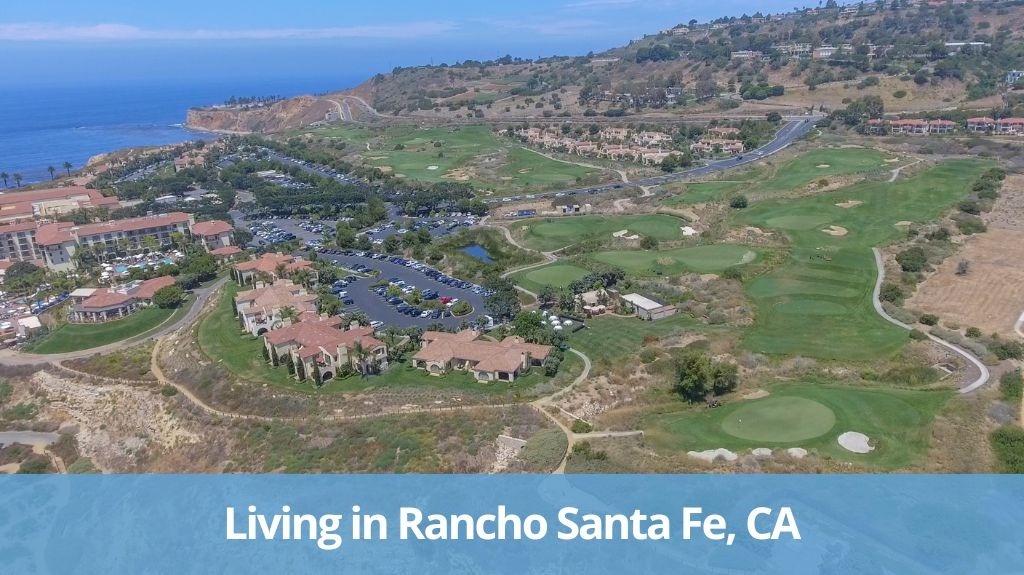
Rancho Santa Fe is a small, affluent census-designated community in San Diego County, California, with a population of roughly 3,000 residents. Tucked into the coastal foothills of the Rancho Santa Fe planning area, it has long been regarded as one of the most prestigious addresses in Southern California, known for its wide estate lots, citrus-grove heritage, and strict architectural covenants that preserve a low-density, rural-residential character. The community functions as a quiet, scenic inland alternative to the busier coastal towns nearby, while also serving as a convenient base for exploring the beaches, trails, and family attractions of the greater San Diego region. It lies about 25 miles north of downtown San Diego, connected to the coast via the I-5 corridor through Del Mar and Solana Beach.
At the heart of the community sits the historic Village of Rancho Santa Fe, a compact cluster of boutiques, restaurants, and gathering spots arranged around a graceful oval park originally designed by architect Lilian Rice in the 1920s. The tree-shaded lanes, Spanish Revival façades, and small-scale shopping give the area a distinctly genteel feel, and the nearby Rancho Santa Fe Golf Club — one of the oldest private courses in the region — anchors a network of walking paths and equestrian trails that wind through the surrounding neighborhoods.
Just a short drive west, roughly 15 minutes down the coast, Torrey Pines State Natural Reserve rises above the Pacific on sandstone bluffs, drawing visitors for its rare pine groves, cliffside overlooks, and roughly eight miles of trails that link the beach to the mesa top. A few miles north, the San Diego Botanic Garden in Encinitas offers 37 acres of themed gardens ranging from a tropical rainforest canopy to a water-wise desert collection, making it a popular stop for travelers interested in horticulture or simply a leisurely afternoon stroll.
To the northeast, roughly 20 minutes from Rancho Santa Fe, the San Diego Zoo Safari Park in the San Pasqual Valley is a marquee draw for families, featuring expansive open-range enclosures, an aerial tram, and rotating seasonal safaris. Closer to home, the neighboring town of Del Mar offers a walkable beach town atmosphere, with a historic racetrack, bluff-top parks, and a compact downtown that complements the more reserved tone of Rancho Santa Fe just inland.
Taken together, Rancho Santa Fe's combination of privacy, architectural heritage, and proximity to both the Pacific coast and inland North County attractions makes it a compelling base for short-term rentals. Visitors can spend mornings on equestrian trails or in quiet garden courtyards, afternoons exploring nearby reserves and beaches, and evenings returning to spacious, secluded properties that feel worlds away from the bustle of central San Diego.
Want to know if a property in Rancho Santa Fe is a good investment?
Enter an address to get instant revenue potential and comps.