
Mountain Ranch, California
Want to see how Mountain Ranch compares to other top cities in California? Explore all city regulations in California. →
Mountain Ranch, CA
Challenging To Investors
STR Regulations for Mountain Ranch, California
Overview: Are STRs allowed?
- Mountain Ranch is an unincorporated community within Calaveras County. No city-level STR ordinance is identified for Mountain Ranch or Calaveras County in the provided materials.
- In practice, STRs are typically treated as residential uses subject to zoning and county permits, and they are allowed in most single‑family residential zones. The sample Butte County ordinance (a California county of comparable size) indicates STRs are allowed with an Administrative Permit in most residential zones, with notable exceptions (e.g., high-density residential) and distinct rules for hosted versus unhosted stays. While your county’s exact rules may differ, this pattern is common in California counties.
- Therefore, unless Calaveras County has adopted an STR ordinance for Mountain Ranch (not evidenced here), STRs are likely permitted in Mountain Ranch as a residential use, subject to zoning compliance and a county permitting pathway. You should verify locally before acquiring or listing a property.
- Compliance is non-negotiable: California state registration and tax obligations apply to all STRs (see State section).
How to start an STR business in this market
- Confirm zoning and feasibility:
- Check whether your parcel is zoned for single‑family residential use and whether STRs are allowed. In similar counties, the pattern is “most residential zones allow STRs, with exceptions and conditions.”
- Verify lot size, utility type (public sewer vs. septic), and any overlay constraints (e.g., airport compatibility, fire‑safe access).
- Determine permit type and residency rules:
- Assume an Administrative Permit is required ( Butte County’s model requires one). If you cannot comply with standard rules, a Minor Use Permit may be possible on larger parcels (e.g., 5 acres and larger minimum‑size zones).
- Clarify whether the property can qualify as your primary residence; if not, confirm whether exceptions apply (e.g., larger parcels in zones with larger minimum parcel sizes, or designated vacation‑home areas; Butte County allows several such exceptions).
- Prepare applications:
- Submit an STR Administrative Permit application and pay the fee (fees are updated periodically by the Board of Supervisors).
- Schedule inspections or complete a verifiable self‑certification as required.
- Submit the Transient Occupancy Tax (TOT) Questionnaire to the County Treasurer‑Tax Collector within 10 days of commencing business (see Tax section).
- Compile required disclosures and postings:
- Assemble all permit standards, quiet hours, occupancy limits, and manager contact details for posting inside the unit.
- Prepare Right‑to‑Farm disclosure for properties near agricultural operations (common in Mountain Ranch’s rural context).
- Prepare disaster preparedness information and evacuation maps for posting.
- Secure on‑site compliance:
- Install/maintain working smoke detectors, carbon monoxide detectors, and fire extinguishers; provide emergency exit information.
- Ensure adequate water, sewage, and on‑site parking per occupancy tables; trash service weekly; no overnight camping.
- Designate a local property manager available 24/7 during rentals; implement a reliable complaint‑response protocol (30‑minute response target).
- Launch and manage:
- Draft listings and rental agreements that include all required disclosures: maximum occupancy and parking, quiet hours, prohibition of commercial activities and special events (e.g., weddings/parties), permit number, and tax certificate number.
- Implement quiet hours (e.g., 10:00 pm–7:00 am weekdays; 10:00 pm–9:00 am weekends/holidays in the Butte County model) and enforce noise control; monitor guest behavior and address complaints promptly.
- Maintain records demonstrating compliance in case of inspections or enforcement.
- Annual renewals and audits:
- Renew the Administrative Permit annually; maintain a clean record (no more than two violations in the prior 24 months); verify that you remain current on TOT payments.
Required documents, permits, licenses, and guidelines
- Administrative Permit application:
- Application form (available on the County Planning/Development Services website).
- Site plan showing on‑site parking delineation; verification of adequate potable water and sewage (public sewer or septic).
- Proof of primary residency if required, or documentation to qualify for exceptions (e.g., 5‑acre minimum parcel size, adjacent primary residence, designated vacation‑home communities).
- Designation of a local property manager with full contact details (address, text‑enabled phone number, email).
- List of posted permit standards and all required disclosures.
- Payment of application and renewal fees (per the current fee schedule).
- Inspection/self‑certification:
- On‑site inspection or verifiable self‑certification to confirm compliance with building, fire, health, safety, and zoning standards.
- Transient Occupancy Tax (TOT) requirements:
- TOT Questionnaire submitted to the County Treasurer‑Tax Collector within 10 days of commencing business.
- TOT Certificate number for use in listings and advertisements.
- State registration (California):
- Registration with the California Department of Housing and Community Development (HCD) if applicable to your STR (effective 2024; see State section).
- Fire Safety Certificate if your STR is in a very high fire hazard severity zone (VHHSZ); maintain currency and post certificate details as required.
- Posting requirements (inside the unit, within 6 feet of the front door):
- Copy of the permit listing standards and limitations.
- Name, text‑enabled phone number, and email of the property manager.
- Maximum occupancy (excluding children under 3) and maximum on‑site parking spaces.
- Quiet hours and prohibition of outdoor amplified sound during quiet hours.
- Prohibition of commercial activities and special events.
- Right‑to‑Farm disclosure (where applicable).
- Disaster preparedness and evacuation information/maps.
- Advertising and listing standards:
- Include permit number and TOT certificate number.
- Include maximum occupancy, parking, quiet hours, prohibition of commercial activities, outdoor amplified sound restrictions, and all other standards specified on the permit.
Specific regulations (city, county, and state)
- City: No city‑level STR ordinance is identified for Mountain Ranch. As an unincorporated community, Mountain Ranch is governed by Calaveras County land use and zoning rules.
- County (sample Butte County model for comparative insight):
- Zoning allowances: STRs are permitted in most residential zones with an Administrative Permit; prohibited in HDR, VHDR, VLDCR; allowed in certain mixed‑use, agricultural, and timber zones as indicated in Use Regulation Tables.
- Primary residence requirement:
- Generally, STRs must be the owner’s primary residence, except:
- Parcels 5 acres or larger located in a zone that requires 5‑acre minimum parcel size (e.g., RR‑5).
- Properties where the owner resides on an adjacent parcel sharing a common property line.
- Designated vacation‑home communities where STRs need not be primary residences (e.g., Butte Meadows, Jonesville, Lake Madrone, Philbrook Reservoir).
- Generally, STRs must be the owner’s primary residence, except:
- Hosted vs. unhosted stays:
- Hosted stay: Property remains the owner’s primary residence; resident host on‑site (except daytime/work hours).
- Unhosted stay: Property is primary residence but the resident is off‑site during guest stays.
- Night caps:
- Hosted stays: No maximum nights limitation.
- Unhosted stays: 90 nights per calendar year; up to 180 nights if on a 5‑acre parcel in a zone with 5‑acre minimum parcel size.
- Occupancy limits:
- Public sewer: 4 (1 bedroom), 8 (2), 10 (3), 12 (4), 14 (5+).
- On‑site septic: 2 (1), 4 (2), 6 (3), 8 (4), 10 (5+).
- Maximum of five rented bedrooms; daytime visitors limited (generally up to 10 daytime visitors, with parking ratios).
- Parking:
- On‑site parking spaces required per occupancy tables (1–5 spaces depending on bedrooms); tandem parking allowed if parallel cannot be accommodated; spaces must be delineated on the site plan.
- Standards and restrictions:
- Building, fire, and health compliance; working smoke/CO detectors and fire extinguishers; emergency exit information posted inside the unit.
- Trash and recycling stored out of public view; weekly service; bins returned within 8 hours of pickup.
- Noise control: comply with the County Noise Control Ordinance; quiet hours as noted; outdoor amplified sound prohibited during quiet hours; outdoor amplified sound during non‑quiet hours must remain compliant with the Noise Ordinance.
- Commercial activities and special events (weddings, receptions, parties) are prohibited; require disclosure in contracts and listings.
- Right‑to‑Farm disclosure required for properties near agricultural operations.
- No overnight camping, tents, travel trailers, or RVs as accommodations; RVs may be present only if used as primary transportation.
- Advertising must include permit number, TOT certificate, occupancy, parking, quiet hours, commercial activity prohibition, and outdoor amplified sound rules.
- Accessory Dwelling Units (≤1,200 sq ft) are not permitted as STRs; second units may be permitted as STRs; overall, no more than two STR units per parcel, with at least one operated as a hosted stay.
- Properties under Williamson Act contracts and structures not intended for residential occupancy are prohibited for STR use.
- Neighbor notification:
- The County will mail notices to property owners within 300 feet (and along private non‑county roads) at permit issuance, listing standards and the registry details.
- Management:
- Local property manager required 24/7 during rental periods; must respond to complaints within 30 minutes and ensure compliance; contact details must be posted inside and provided to the County registry.
- Enforcement:
- Three strikes in a 24‑month period (verified administrative citations, violations, or hearing officer determinations) results in cease and desist and permit revocation; reapplication barred for 24 months after revocation.
- Non‑compliance fee penalties (e.g., 10× regular application fee for properties advertised without a permit); citations and cease and desist orders possible.
- State (California — baseline requirements for all STRs):
- Registration:
- HCD STR registration effective January 1, 2024; hosts must obtain a registration number and provide platform and property details to the state.
- Transient Occupancy Tax (TOT):
- County levy applies to lodging facilities; short‑term rental hosts must register, collect, and remit TOT, file returns, and maintain records. In most California counties, the TOT rate is 12% of the rent; Calaveras County’s rate should be confirmed locally.
- Fire Safety:
- For STRs in very high fire hazard severity zones (VHHSZ), a Fire Safety Certificate is required; keep current and post or disclose as required. Non‑compliant listings are subject to penalties.
- Registration:
Contact information
- Local authority (Calaveras County Development Services / Planning) for STR permits and zoning:
- Phone: confirm current phone number with the County (e.g., 209‑754‑6390 commonly routes to Planning; verify).
- Email: confirm current email address with the County.
- Website: Calaveras County Planning and Development Services — Planning Department (look for “Short‑Term Rentals” and application portals).
- Address: 891 Mountain Ranch Road, San Andreas, CA 95249 (verify current location and hours).
- County Treasurer‑Tax Collector for Transient Occupancy Tax:
- Phone: confirm current phone number.
- Email: confirm current email address.
- Website: Calaveras County Treasurer‑Tax Collector — Transient Occupancy Tax (TOT) information.
- California Department of Housing and Community Development (HCD):
- Website: HCD Short‑Term Rentals — registration and program guidance.
- Phone/Email: see HCD contact portal.
Links to source pages (as provided)
- Butte County STR FAQ and Ordinance (used here as a representative county model for guidance; verify against Calaveras County rules):
- Example of county‑level STR ordinance amendments (for context on evolving practices and enforcement):
Notes for investors
- Treat the Butte County ordinance as an analytical proxy only; verify all local rules with Calaveras County before acquisition, permitting, or listing.
- Document compliance in a centralized file (permit, renewals, inspections/self‑certification, TOT filings, manager contact updates, complaint logs, postings).
- Build a compliance‑first listing playbook: transparent occupancy/parking, quiet hours, commercial‑activity prohibitions, and rapid response to neighbor concerns.
- Monitor legislative/regulatory changes at both the county and state levels to avoid permit or registration lapses.
This guide is provided for informational purposes and does not constitute legal advice. Regulations change; consult Calaveras County and qualified counsel before proceeding.
What do Airbnb hosts actually earn in Mountain Ranch?
Mountain Ranch hosts earn a median $8,711/year with $181 ADR and 22% occupancy.
Top performers pull in $23,853+ per year.
See the full Mountain Ranch market breakdownNext step
Found a property in Mountain Ranch?
Paste any address and get estimated revenue, cash-on-cash return, and comparable STR performance in under 5 minutes. 3 free analyses per day.
Free brief
Get the free Mountain Ranch STR Investment Brief
Revenue data, top neighborhoods, seasonal trends, and the key regulations for Mountain Ranch, California in one email.
Mountain Ranch
Market Saturation Score
Photos of Mountain Ranch
Overview of Mountain Ranch
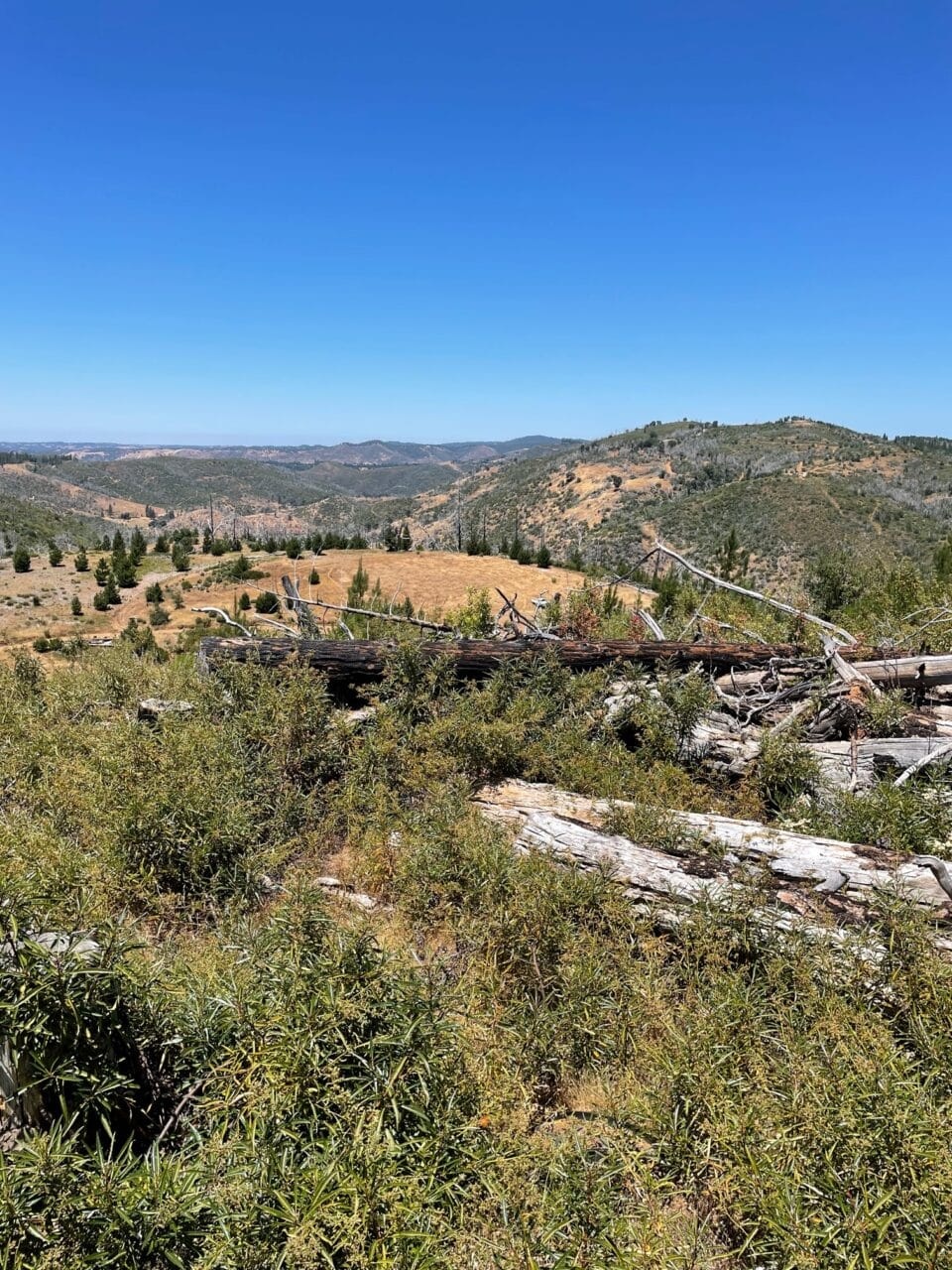
Mountain Ranch is a small, unincorporated foothill community in Calaveras County, California, tucked into the western Sierra Nevada at roughly 2,000 feet of elevation. With a population of only about 1,500 residents spread across a wide rural footprint, it has a quiet, ranch-country character defined by oak-studded hills, seasonal creeks, and a long Gold Rush past. The community sits in the heart of California's Gold Country, an area long associated with the 1848–1855 gold boom, and serves as a low-key gateway to a cluster of historic mining towns, foothill wineries, and outdoor destinations. The nearest major city is Sacramento, which lies roughly 60 miles to the northwest across the lower foothills and the Central Valley.
One of the region's marquee draws is Calaveras Big Trees State Park, home to two groves of massive giant sequoias along the Stanislaus River. About a 25- to 30-minute drive northeast of Mountain Ranch, the park offers shaded self-guided walks through the North and South Groves, picnic areas, the Beaver Creek swimming hole in warmer months, and a popular grove of fall-coloring dogwoods. It is widely credited as one of the first places where giant sequoias were ever publicly protected, and it remains a favorite family stop for travelers exploring the Sierra foothills.
A short drive west brings visitors to San Andreas, the Calaveras County seat, located roughly 15 to 20 minutes from Mountain Ranch. The town preserves a handsome downtown of Gold Rush-era brick buildings and serves as the cultural and administrative hub of the county, with the Calaveras County Museum complex on Main Street, local tasting rooms, and the kind of small-town dining and antique browsing that defines a Gold Country afternoon. The town is also famous as the setting, in spirit, of Mark Twain's celebrated "Celebrated Jumping Frog of Calaveras County," and the county still hosts an annual Jumping Frog Jubilee each spring.
A bit farther afield, the historic Mother Lode town of Murphys lies about 30 to 35 minutes to the east, offering a walkable main street lined with tasting rooms, galleries, and limestone storefronts that now house restaurants and boutiques. Wine touring through the Calaveras and adjoining Shenandoah Valley appellations is a common day trip for visitors based in Mountain Ranch, and the surrounding national forest land provides ample opportunity for hiking, off-roading, and fall-color drives. Together, these nearby offerings give the small community an outsized appeal for travelers who want a quiet, scenic base from which to explore a deeply historic stretch of the Sierra Nevada foothills.
Want to know if a property in Mountain Ranch is a good investment?
Enter an address to get instant revenue potential and comps.