
Mendocino, California
Want to see how Mendocino compares to other top cities in California? Explore all city regulations in California. →
Mendocino, CA
Challenging To Investors

STR Regulations for Mendocino, California
Short-Term Rental Investment Guide: Mendocino County, California
Executive Overview
Short-term rentals are allowed in Mendocino County, CA, but with significant regulatory caveats. As of 2025, comprehensive regulations are in place for coastal regions and the Town of Mendocino, while inland areas are currently governed by interim restrictions with a new comprehensive ordinance in development. Investors must carefully navigate county zoning distinctions between inland areas (Division I of Zoning Code) and coastal areas (Divisions II & III) to ensure compliance.
What do Airbnb hosts actually earn in Mendocino?
Mendocino hosts earn a median $57,880/year with $313 ADR and 62% occupancy.
Top performers pull in $92,275+ per year.
See the full Mendocino market breakdownHow to Start a Short-Term Rental Business in Mendocino County
Step 1: Determine Your Property Zone
Mendocino County has a unique regulatory structure where zoning determines applicable STR regulations:
Coastal Zones (regulated under existing ordinances):
- Division II: Coastal Zoning Code
- Division III: Mendocino Town Zoning Code
Inland Zone (under development):
- Division I: Inland Zoning Code
Critical Note: The inland zone begins at varying distances inland from the shore. Use the county's interactive map at mendocinocounty.gov to determine your exact zone classification.
Step 2: For Existing Operations (Pre-August 1, 2017)
If you operated a STR before the moratorium date of August 1, 2017:
- Document Prior Operation: Provide evidence of legal operation to the Department of Planning and Building Services
- Business License Application: Submit application after review and concurrence by Planning & Building Services
- Zoning Compliance Review: Your property's zoning will be evaluated
- Tax Compliance: Make payments to the Treasurer-Tax Collector if you hadn't been paying required taxes
- Use Permit: May be required under existing zoning code
Step 3: For New Operations (Post-Moratorium)
Currently, new STR establishments are prohibited in both inland and coastal zones pending finalization of comprehensive regulations. This moratorium was established through Ordinance 4391 in August 2017.
Required Documents, Permits, Licenses, and Guidelines
Current Requirements (Varies by Zone)
For Pre-existing Coastal STRs:
- Business License (after confirming existing operation)
- Zoning compliance verification
- Tax registration and payments
For Pre-existing Inland STRs:
- Business License (after confirming existing operation)
- Zoning compliance verification
- Use Permit (if required by existing zoning code)
- Tax compliance verification
For All STR Operators:
- Local Contact Requirement: Some attendees at county meetings have suggested requiring a local contact for each rental
- Emergency Access Compliance: Properties must ensure emergency services can access rentals, including proper road width and turnouts
- Safety Compliance: Adherence to local safety regulations
Pending Requirements (Under Development)
The new Inland Short-Term Rental Ordinance (expected 2025) will likely include:
- Permit application process
- Operating standards
- Safety requirements
- Local contact provisions
- Noise control measures
- Parking regulations
Specific Regulations by Jurisdiction
County-Level Regulations (Inland Areas - Division I)
Current Status (2025):
- Moratorium in Effect: No new STR establishments permitted
- Existing Operations: May continue with proper documentation and compliance
- Emergency Services: Improved access requirements expected
- Safety Standards: Enhanced safety requirements anticipated
Key Concerns from County Stakeholder Meetings:
- Housing stock conversion to STRs reducing long-term rental availability
- Infrastructure strain from increased tourist traffic
- Noise control (no current county noise ordinance exists)
- Emergency services access, especially in areas with poor cell service
- Enforcement challenges for illegal operations
Coastal Zone Regulations (Divisions II & III)
Existing STR Frameworks Apply:
- Town of Mendocino: Division III Zoning Code
- Other Coastal Areas: Division II Zoning Code
- Permit requirements in place for coastal properties
- Different standards than inland areas
Proposed Inland Regulations (2025)
The county is developing comprehensive regulations expected to address:
- Definition Clarification: Including non-traditional housing (tent cabins, trailers)
- Operating Standards: Nature and ongoing operations requirements
- Community Compatibility: Maintenance of functional, safe communities
- Infrastructure Considerations: Environmental, safety, and economic constraints
State-Level Considerations
As part of California's Coastal Zone management under the Coastal Act, some coastal areas fall under state jurisdiction. Property owners should verify whether state coastal regulations apply to their specific location.
Contact Information for Local Authority
Primary Contact:
- Mendocino County Department of Planning and Building Services
- Address: 860 N Bush Street, Ukiah, CA 95482
- Phone: (707) 223-6650
- Email: pbs@mendocinocounty.gov
For Short-Term Rental Specific Inquiries:
- Email: pbs@mendocinocounty.gov
- Include "Short-Term Rentals" in subject line
For Ordinance Updates Information:
- Website: Ordinance Updates Page
- Contact via general Planning & Building Services
Public Meeting Information (During Active Engagement Periods):
- Hybrid meetings conducted at 501 Low Gap Road, Ukiah, CA 95482
- Digital participation available via Zoom
Sources and Additional Resources
Primary Source Documents:
- Mendocino County Zoning Code - Division I (Clean Version) - Inland Zoning Code
- Mendocino County Zoning Code - Division I (Redline Version) - Inland Zoning Code (showing changes)
- Ordinance 4391 - STR Moratorium - Current regulatory framework
- Coastal Zoning Code - Division II - Coastal regulations
- Mendocino Town Zoning Code - Division III - Town of Mendocino regulations
Community Engagement Resources:
- County STR Survey - Public input portal (when active)
- Interactive Zoning Map - Property zone determination
- Meeting Archive & Records - Updates and engagement opportunities
News & Analysis Sources:
- Mendocino Voice STR Coverage - Community perspective and meeting coverage
- Local News Matters STR Reporting - Additional community engagement coverage
Important Notes for Investors:
- Timeline Uncertainty: Final inland STR regulations expected in 2025, but no specific adoption date confirmed
- Community Opposition: Significant resident concern about housing stock conversion and enforcement challenges
- Existing Rights: Pre-2017 operators have established pathways for continuing operations
- Future Restrictions: Expect comprehensive regulations including caps, safety requirements, and local contact mandates
- Enforcement Challenges: County acknowledges difficulty in matching issued permits with platform listings (Airbnb, Vrbo, etc.)
Recommendation: Contact the Planning and Building Services department directly before any property acquisition or STR operation to verify current status and compliance requirements for your specific property.
Next step
Found a property in Mendocino?
Paste any address and get estimated revenue, cash-on-cash return, and comparable STR performance in under 5 minutes. 3 free analyses per day.
Free brief
Get the free Mendocino STR Investment Brief
Revenue data, top neighborhoods, seasonal trends, and the key regulations for Mendocino, California in one email.
Mendocino
Market Saturation Score
Photos of Mendocino


Overview of Mendocino
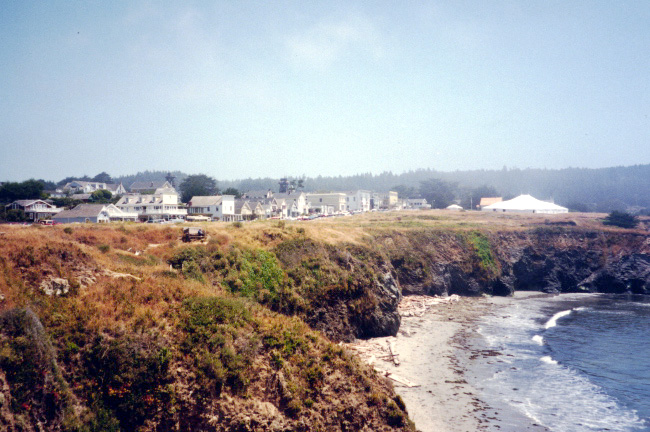
Mendocino is a small coastal village perched on the bluffs of California's north coast in Mendocino County, with a year-round population of roughly 800 residents. The town carries the air of a 19th-century New England fishing hamlet, a holdover from the wooden saltboxes, water towers, and churches built by shipwrights and mill workers in the 1850s and 1860s. Today it is best known for its artists' community, its headland setting above the Pacific, and its role as a gateway to the Mendocino Coast and the towering redwood groves of Northern California. It sits roughly 150 miles north of San Francisco, a drive of about three hours along US-101 and Highway 1.
The Mendocino Headlands State Park wraps around the village on three sides, providing several miles of cliff-side trails with views of sea stacks, the Pacific, and the Big River estuary. The park is a short walk from anywhere in town and effectively serves as the village's front yard.
Just north of town, Russian Gulch State Park draws visitors to a fern-lined canyon, a waterfall, and a rocky headland coastline. The park entrance is only about a five-minute drive from the village center, making it an easy morning trip for guests.
A short drive further north brings travelers to Fort Bragg, California, a working coastal community of roughly 7,000 people and the largest town on the Mendocino Coast. Fort Bragg is home to the famously colorful Glass Beach, the dunes and tidepools of MacKerricher State Park, and the California Western Railroad's historic "Skunk Train," which runs into the redwoods. Fort Bragg sits about ten miles north of Mendocino along Highway 1.
Between the two towns, the Point Cabrillo Light Station preserves a restored 1909 lighthouse and a small complex of keeper's buildings set on a windswept headland. The lighthouse grounds are open daily and lie roughly three miles north of Mendocino.
Together, this cluster of bluffside village, headland parks, working harbor town, and surrounding redwood country makes Mendocino a natural base for short-term rental guests. The village's walkability, its Victorian streetscape, and its proximity to several of Northern California's most photogenic coastal landscapes give visitors plenty to do in every season, while the limited supply of accommodations keeps demand for well-located rentals consistent year-round.
Want to know if a property in Mendocino is a good investment?
Enter an address to get instant revenue potential and comps.