
Blythe, California
Want to see how Blythe compares to other top cities in California? Explore all city regulations in California. →
Blythe, CA
Challenging To Investors
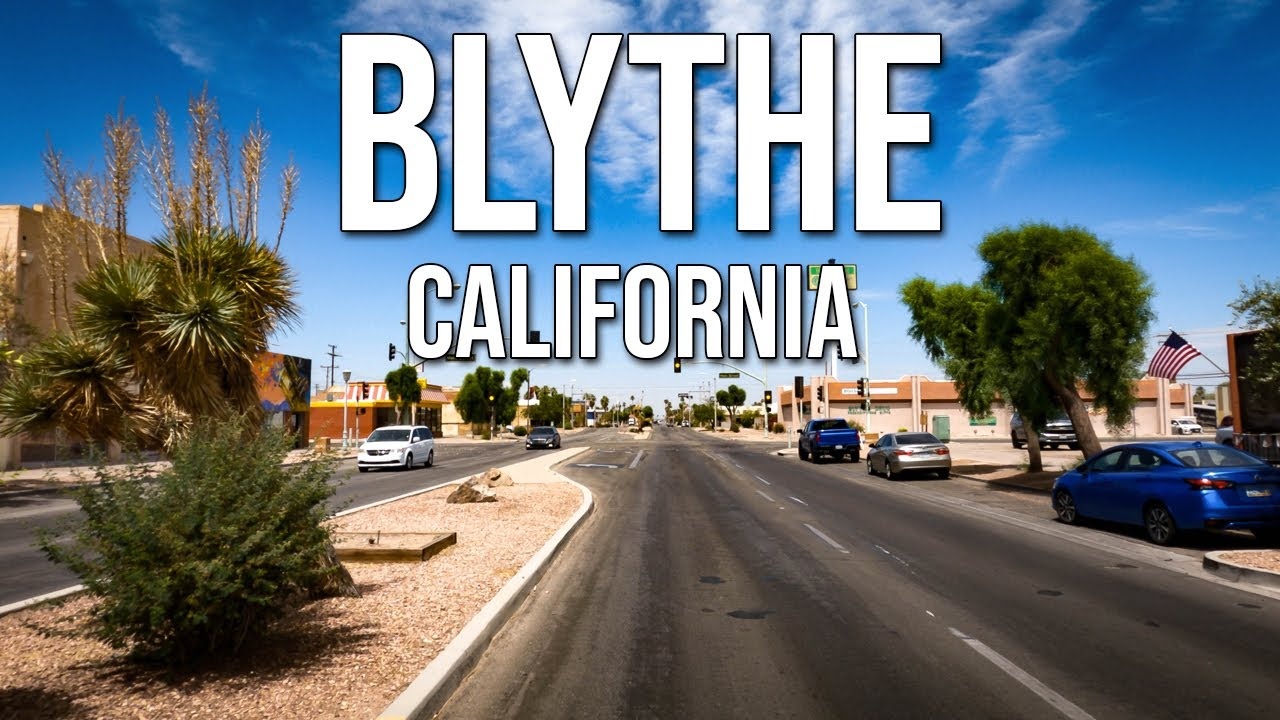
STR Regulations for Blythe, California
Overview: Are Short-Term Rentals Allowed in Blythe?
Explicit answer: The search content provided does not include any city of Blythe–specific ordinance or code that bans short-term rentals. Based on the sources supplied, there is no documented local ban or prohibition on STRs. In California, cities and counties may choose to regulate or prohibit STRs; however, in the absence of a published prohibition in the provided materials, STR operations appear to be permitted subject to state and county rules. If a local prohibition existed, it would typically be located in the city’s municipal code, zoning chapter, or in a dedicated STR ordinance. The absence of such material here suggests no local prohibition is identified in the current sources, but it does not substitute for confirming the city’s current municipal code.
Action for investors: Confirm current status with the City of Blythe (see “Contact Information” section) and with Riverside County (for county-level transient occupancy tax and rules if applicable). California law limits short-term rental hosting (typically fewer than 30 consecutive days) to 90 days per calendar year unless a local registration is obtained; compliance with state and local requirements is required regardless of whether a local registration program exists.
What do Airbnb hosts actually earn in Blythe?
Blythe hosts earn a median $16,970/year with $122 ADR and 62% occupancy.
Top performers pull in $31,605+ per year.
See the full Blythe market breakdownHow to Start a Short-Term Rental Business in Blythe
- Market and property selection
- Confirm the subject property’s zoning and whether a STR would be considered a permitted use in that zone (single-family, multifamily, mixed-use, etc.). If the property is in a residential zone and not subject to an STR ban, STR use typically requires the same considerations as any residential rental (parking, occupancy limits, and neighborhood compatibility).
- If your STR strategy involves an Accessory Dwelling Unit (ADU) or Junior ADU (JADU), be aware of owner-occupancy caveats for the ADU/JADU under state ADU rules. If the property owner does not live on the lot, the ADU/JADU must be vacated. If you intend to operate an STR in an ADU/JADU, ensure full compliance with AB 68 (and related state ADU laws) as summarized in the “State-Level Requirements” section below.
- Pre-approval due diligence
- Business license and tax account: Register any new business with the City of Blythe. Because the content provided does not list a dedicated city STR registration, you should verify whether a city business license alone suffices or if the county (Riverside) requires a separate license for STRs. The City’s contact information is included below for confirmation.
- Transient occupancy tax (TOT) registration: Confirm who collects TOT (the city or Riverside County) and register to collect and remit the tax. The State of California allows cities and counties to impose TOT; many jurisdictions have separate TOT ordinances for STRs, managed directly by the city or county tax collector.
- Product readiness and safety
- Apply for any required building permits and safety clearances (e.g., fire safety, smoke/CO detectors) for any STR-specific construction or conversions.
- Meet life-safety obligations required under state and local law (see “Required Documents, Permits, Licenses, and Guidelines”).
- Hosting setup and compliance
- Establish a compliant booking workflow that screens guests for maximum occupancy and ensures quiet hours and neighborhood rules are observed.
- Implement transparent house rules and manage parking/occupancy consistent with local parking limits (if any are established by the city).
- Ongoing compliance
- Maintain records of booking transactions and TOT remittances.
- Respond promptly to any code enforcement or community concerns.
Required Documents, Permits, Licenses, and Guidelines
Given the absence of city-specific STR ordinance documentation in the provided content, the list below reflects probable baseline requirements at the local, county, and state level, to be verified directly with the City of Blythe and Riverside County.
- City of Blythe business license or equivalent business registration (to be verified)
- Riverside County registration or license, if the county is the STR enforcement authority
- Transient Occupancy Tax (TOT) registration and compliance (TOT rates, reporting forms, timelines)
- Building permits (as applicable) and proof of life-safety compliance (smoke detectors, CO detectors, fire safety measures)
- Zoning use confirmation for STR operations in the parcel’s current zoning
- Any applicable county health permits or fire clearances (as applicable)
- Insurance coverage appropriate for transient rentals
- Posting and compliance with any local posting requirements (e.g., emergency contact, house rules)
Investor note: The City’s Building Department is the right first stop for permits, and the City Manager or City Clerk can confirm licensing and whether a local STR registration exists. The Building Department office details (address and hours) are provided below.
Specific Regulations
City of Blythe
- No city-specific STR regulation is provided in the search content. Therefore, no enumerated city-level restrictions (e.g., caps on number of units, occupancy limits, parking requirements, or rental duration limits) can be verified from these sources.
- ADU/JADU law: State ADU rules summarized by the City recognize ADUs and JADUs as viable housing options but explicitly prohibit local governments from imposing certain requirements and require certain approvals, as detailed below. However, if an ADU/JADU is used as an STR and the property owner does not live on the lot, the ADU/JADU must be vacated (see state section).
Riverside County
- The search content does not provide county-specific STR rules. Investors should confirm whether Riverside County regulates STRs in unincorporated areas and whether TOT registration is required with the County Treasurer-Tax Collector or the City if a city-administered TOT program applies to Blythe.
State of California (AB 1309 and related frameworks)
- Short-term rental definition: A STR is generally a rental of residential property for fewer than 30 consecutive days. Under AB 1309, hosting is limited to 90 days per calendar year unless a local registration is obtained from the jurisdiction where the property is located.
- Registration requirement: Hosts must register with the local jurisdiction or with a hosting platform consistent with AB 1309.
- Transient Occupancy Tax (TOT): California authorizes cities and counties to collect a transient occupancy tax; many jurisdictions impose a TOT on STR bookings (often 12% or similar). Hosts should verify the rate and remittance procedures that apply in Blythe or Riverside County.
- Hosting platform obligations: Hosting platforms are required to collect and remit TOT and to report the number of nights booked to the California Department of Tax and Fee Administration (CDTFA) as required.
- Safety standards: AB 1309 requires compliance with applicable health and safety standards (e.g., working smoke and carbon monoxide alarms).
- Municipal authority: Local jurisdictions can adopt stricter rules (including bans) than state minimums; investors must verify whether Blythe has adopted any local STR requirements not captured in these sources.
State ADU/JADU Rules (relevant if your STR involves an ADU or JADU)
- Single-family homes: One ADU (up to 1,200 sq ft) and one JADU (no more than 500 sq ft, contained entirely within an existing single-family structure) are permitted per lot.
- Multiple ADUs on multi-family lots: Up to two detached ADUs can be created on multi-family lots; and certain non-habitable spaces (e.g., attics, basements, garages) can be converted into ADUs within existing multifamily structures.
- Parking: No additional off-street parking is required for ADUs created by conversion of a garage, carport, or covered parking structure, and ADUs under 750 sq ft are exempt from impact fees.
- Setbacks and process: At least a four-foot side and rear setback is required; local agencies must approve complete ADU/JADU plan submittals within 60 days.
- Size and coverage: Local rules cannot prohibit ADUs under 800 sq ft or 16 feet in height; lot coverage/minimum lot size restrictions cannot be used to prevent ADUs.
- Owner-occupancy caveats: If the property owner does not live on the lot, the ADU and JADU must be vacated. This is critical if you plan to operate an STR in an ADU/JADU without living on-site.
- Prohibited local requirements: Local governments may not require replacing parking when a garage/carport is converted; may not impose excessive setbacks; may not impose nonconforming correction conditions as a prerequisite for ADU approval; and may not restrict HOA from banning ADUs. Also, local agencies may not impose impact fees on ADUs under 750 sq ft.
Contact Information (local authority for STRs)
-
City of Blythe – Building Department
- Address: 235 N. Broadway, Blythe, CA 92225
- Phone: (760) 922-6130
- Hours: Monday–Friday, 7:00 a.m. to 4:00 p.m.
- Purpose: Building permits, safety compliance, and ADU/JADU guidance. Confirm whether a city STR registration exists and whether TOT is collected by the City.
-
City of Blythe – City Hall / Main
- Address: 235 N. Broadway, Blythe, CA 92225
- Phone: (760) 922-6161
- Fax: (760) 922-4938
- Purpose: General business licensing, confirmation of STR registration needs, and routing to the City Manager or City Clerk.
-
City of Blythe – Development Services
- Purpose: Zoning and development standards. Confirm whether the STR use is permitted in the subject property’s zoning.
-
State-Level STR/TOT Oversight (for context and compliance guidance)
- California Department of Tax and Fee Administration (CDTFA): Handling of TOT reporting and collections by hosting platforms (context only; actual local tax remittance is likely to a city or county tax collector).
- Department of Housing and Community Development (HCD): State housing policy and ADU guidance.
- Contact person named in HCD correspondence for technical assistance: Mashal Ayobi (Mashal.Ayobi@hcd.ca.gov)
Source Links
- www.cityofblythe.ca.gov/184/Accessory-and-Junior-Accessory-Dwelling- Units (ADU/JADU rules and contact details)
- www.hcd.ca.gov/sites/default/files/docs/planning-and-community/housing-element/RivBlytheDraftOut103122.pdf (HCD feedback letter noting lack of local STR ordinance and related issues)
- www.narf.org/nill/bulletins/federal/documents/us_v_stevens.pdf (U.S. v. Stevens case; unrelated to STRs but shows federal jurisdiction over Colorado River Indian Reservation lands near Blythe; relevant context only, not an STR rule)
Investor Checklist (Condensed)
- Verify zoning and STR permissibility with Blythe Development Services and the Building Department.
- Register a business license as required; determine whether Blythe or Riverside County administers STR licensing and TOT.
- Confirm TOT obligations and rates with the applicable tax collector; set up reliable tax remittance procedures.
- Obtain any required building and safety permits; ensure smoke/CO detectors and fire safety compliance.
- If operating an ADU/JADU as an STR, confirm you live on the lot; if not, vacate the ADU/JADU per state law.
- Publish house rules, manage occupancy and parking, and maintain guest records for tax and enforcement purposes.
Important Note
The provided materials do not include a city of Blythe STR ordinance and do not provide Riverside County STR or TOT specifics. Before operation, investors should contact the City of Blythe (Building Department at (760) 922-6130 and City Hall at (760) 922-6161) and the appropriate county authority to confirm any local STR/TOT requirements and current compliance obligations.
Next step
Found a property in Blythe?
Paste any address and get estimated revenue, cash-on-cash return, and comparable STR performance in under 5 minutes. 3 free analyses per day.
Free brief
Get the free Blythe STR Investment Brief
Revenue data, top neighborhoods, seasonal trends, and the key regulations for Blythe, California in one email.
Blythe
Market Saturation Score
Photos of Blythe


Overview of Blythe
Blythe is a small city in Riverside County, California, perched along the Colorado River where it forms the border with Arizona. With a population of approximately 18,000, it functions primarily as a highway waypoint and a service center for the surrounding Palo Verde Valley's farming communities. The city is best known as a stopping point for travelers on Interstate 10, sitting roughly 220 miles east of Los Angeles (about a 3.5 to 4-hour drive) and around 150 miles west of Phoenix, Arizona, and as a quiet gateway to Colorado River recreation on the edge of the eastern Sonoran Desert.
North of the city, scattered across the open desert floor, lie the Blythe Intaglios, a remarkable group of large geoglyphs depicting human and animal figures. Created centuries ago by indigenous peoples of the lower Colorado River region, the figures are most easily appreciated from the air or from an elevated viewpoint along the access road, about 15 miles north of town. The site offers a quiet, almost otherworldly experience and draws a small but steady stream of visitors interested in archaeology, desert history, and the broader story of the Colorado River corridor.
The Colorado River itself, which laps at Blythe's eastern edge, is the area's most accessible natural draw. Anglers, boaters, and casual strollers use the riverfront parks and small marinas in town, where visitors can fish, swim, or simply watch the sun set over the water from the California side. Just south of the city, the Cibola National Wildlife Refuge protects a ribbon of wetland and backwater habitat along the river. Roughly a 30-minute drive from downtown, the refuge is a good place to spot migratory waterfowl, herons, and the occasional desert bighorn sheep against a wide desert sky.
A bit further afield, Lake Havasu City and its famously transplanted London Bridge sit about 100 miles to the north in western Arizona, drawing boaters, houseboaters, and weekend visitors year-round. The wide desert that surrounds Blythe itself offers its own quiet rewards, from broad horizons and dark night skies to a strong sense of the Southwest that has become harder to find in busier California destinations.
For short-term rental investors, Blythe offers a compelling mix of dependable traveler traffic, relatively low property costs, and proximity to a genuinely distinctive set of natural and historical sites. Its position as a halfway point between two major Sun Belt metros, paired with the steady draw of the Colorado River and the quiet mystery of the Intaglios, gives the town a year-round, if modest, visitor base that rewards hosts who lean into the area's road-trip culture and desert personality.
Want to know if a property in Blythe is a good investment?
Enter an address to get instant revenue potential and comps.