
Belmont, California
Want to see how Belmont compares to other top cities in California? Explore all city regulations in California. →
Belmont, CA
Unfriendly To Investors
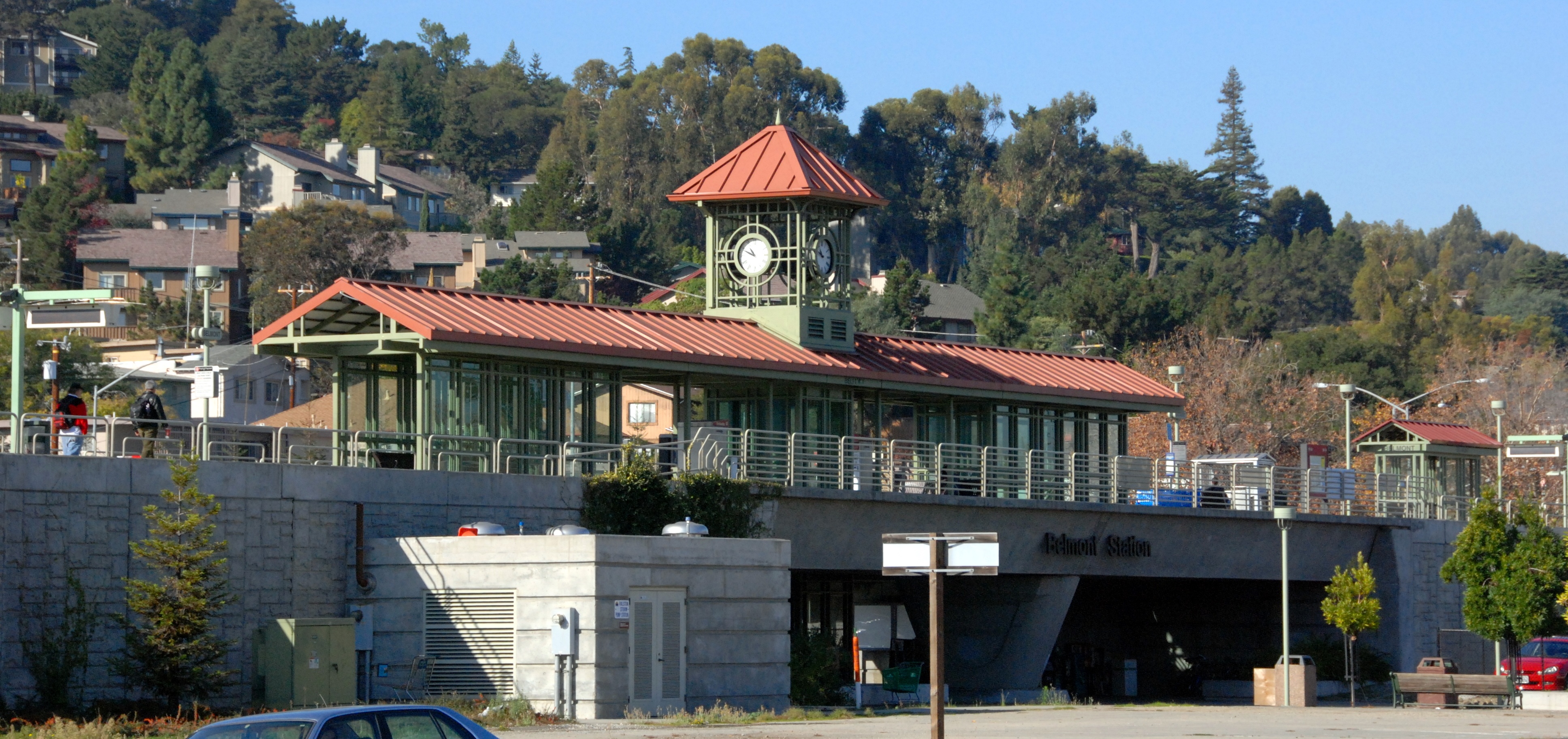
STR Regulations for Belmont, California
Note: This guide is based strictly on the city documents provided below and focuses on Belmont’s rules. For state-level context, we reference California law where indicated.
Overview: Are short‑term rentals allowed in Belmont, California?
- Belmont explicitly prohibits short‑term rentals (rentals for fewer than 30 days) in the city code.
- This prohibition applies to:
- The primary residence on a lot; and
- Any Accessory Dwelling Unit (ADU) on the same lot.
- There are no city permits or licenses for short‑term rentals in Belmont.
- Legal rental use is therefore limited to long‑term tenancies (30 days or more).
Key source: Belmont Zoning Ordinance, Section 24 (Accessory Dwelling Units), General Provision 24.3(a)(6): “Neither the accessory dwelling unit nor the single‑family home may be used for short‑term residential rentals.”
What do Airbnb hosts actually earn in Belmont?
Belmont hosts earn a median $43,637/year with $191 ADR and 84% occupancy.
Top performers pull in $58,864+ per year.
See the full Belmont market breakdownStarting a rental business in Belmont
If you intend to operate a residential rental in Belmont, the legally viable pathway is a long‑term rental (30+ days).
Step-by-step actions:
- Confirm zoning and permitted use for the subject property. In residential zones, long‑term rentals are a typical allowed use; short‑term rentals are prohibited.
- If your plan includes an ADU (second unit on the same lot), review ADU rules and standards before any construction or conversion.
- If operating a business (e.g., property management, leasing), obtain a City of Belmont Business License through the City Clerk.
- Ensure full compliance with building, fire, and safety codes.
- If you have or plan an ADU, record a city‑approved covenant acknowledging ADU restrictions (including STR prohibition).
- Collect and remit any applicable taxes through proper channels; note that transient occupancy taxes apply only to short‑term lodging (which is illegal in Belmont).
Required documents, permits, licenses, and guidelines
Belmont does not provide short‑term rental permits. For legal long‑term rentals and ADUs, expect the following:
- Business License (for operating a rental business)
- Issued by the City Clerk’s Office; application details are listed on the City’s website.
- Contact: City Clerk; see “Contact Information” section.
- ADU Application (if your project includes an ADU)
- Building Permit Application
- Site Plan and Floor Plans
- Written acknowledgement by the property owner of the ADU restrictions (sale, owner occupancy, and short‑term rental prohibition)
- For ADU additions: Exterior elevations and materials; photos
- Recorded Covenant (for ADUs)
- Required before building permit issuance for an ADU.
- The covenant alerts future owners to ADU restrictions, including STR prohibition.
Citations: City ADU page lists submittal requirements and notes STR prohibition and the required covenant. City Clerk licensing page lists business license application information.
Specific regulations at the city level
Belmont’s ADU ordinance (Section 24 of the Zoning Ordinance) sets clear limits relevant to any rental use on a lot with an ADU:
- General provisions (all ADUs):
- ADUs must be on lots zoned for residential use (R‑1, R‑2, R‑3, R‑4, R‑5, HRO, residential PDs).
- ADUs cannot be sold separately from the primary home.
- Owner‑occupancy requirement applies when ADU and primary home are occupied by different families.
- STR prohibition: Neither the ADU nor the primary home may be used for rentals under 30 days.
- Ministerial approvals for ADUs that meet the standards; fire sprinklers not required unless required for the primary home.
- ADU types and key standards:
- Interior ADUs:
- Constructed entirely within the existing space of a single‑family home or accessory structure.
- Independent exterior access required.
- No additional parking required unless replacing covered spaces; then replacement spaces must be provided.
- Utility connections may not be required; separate fees/capacity charges may apply per state law.
- Attached ADUs:
- Must conform to underlying zoning except where modified.
- Floor‑area increase limited to the lesser of 50% of existing living area or 800 square feet (note: website summary indicates 850/1,000 square feet as max detached unit size; the city code text provided shows 800 square feet for detached units).
- One additional parking space per unit up to four total spaces; may be tandem on an existing driveway.
- No additional parking required if within 0.5 mile of public transit or car‑share pickup, or in a historic district (per state exemptions).
- Design standards require compatibility with the primary dwelling.
- Detached ADUs:
- Must conform to underlying zoning with the following modifications:
- Setbacks: minimum 5 feet from the primary dwelling; 5 feet side; 5 feet rear; special allowances when built over a garage.
- Height: up to 15 feet (one‑story); up to 17–20 feet over a garage depending on roof type; and up to 20–24 feet over a garage when meeting standard setbacks.
- Floor area: maximum 800 square feet (city ordinance text); website summaries note 850/1,000 square feet for detached ADUs.
- Parking: one additional space per unit up to four total; exemptions within 0.5 mile of transit or historic districts; replacement covered spaces if garage/carport is removed.
- Utilities and design standards mirror attached units.
- Must conform to underlying zoning with the following modifications:
- Interior ADUs:
Short‑term rentals vs long‑term rentals:
- Belmont’s code defines short‑term rentals as rentals for fewer than 30 days and prohibits them for both primary homes and ADUs. No city approvals exist for STRs; attempts to operate them risk code enforcement.
California statewide context:
- State law (e.g., Government Code Section 65852.2) generally requires ministerial approval for ADUs that meet specified standards and limits local restrictions. Belmont’s code implements these requirements with local modifications (setbacks, height, parking, etc.). However, the city’s prohibition on STRs is more restrictive than many jurisdictions and supersedes any statewide trend to allow STRs. This means that even if state law reduces barriers for ADUs in general, Belmont still bars STR use of both ADUs and primary homes.
Note on local enforcement:
- Code Enforcement is handled by the City’s Code Enforcement Division. Violations of zoning or rental prohibitions can result in administrative and legal actions. Owners should document compliance with all standards and maintain accurate records for any long‑term rental operation.
County and state tax considerations
- Transient Occupancy Tax (TOT): Counties typically collect TOT on lodging rented for fewer than 30 days. Because Belmont prohibits STRs, TOT would not apply to a compliant operation. If you consider jurisdictions where STRs are legal (e.g., neighboring cities), TOT collection and remittance would be required. Verify current TOT rates and registration procedures with San Mateo County if contemplating non‑Belmont STR investments.
Contact information (Belmont authorities)
- Community Development Department (Planning & Zoning)
- Email: cdev@belmont.gov
- Phone: 650‑595‑7417
- Permit Center / Building Department
- City Hall, Belmont
- Online permit and forms: Building Permit Application, search tools, and staff directory available on the City website (links below)
- City Clerk’s Office (Business Licenses)
- Phone and directory: See City website for current listings (link below)
Source links are provided below. Use the City’s Phone Numbers & Staff Directory to confirm the most current contacts.
Source links
- Belmont, CA – Accessory Dwelling Units (ADUs): www.belmont.gov/departments/community-development/planning-and-zoning/accessory-dwelling-units-adu-s
- Belmont Zoning Ordinance – Section 24 (Accessory Dwelling Units): www.belmont.gov/home/showdocument?id=15642
- Belmont Ordinance No. 2017 (ADU amendments; STR prohibition in code text): belmont-ca.granicus.com/MetaViewer.php?view_id=1&clip_id=340&meta_id=18283
- Belmont – Building Permit Application (for ADUs): www.belmont.gov/home/showdocument?id=13476
- Belmont – Permit Center (applications, forms, staff directory): www.belmont.gov/departments/permit-center
- Belmont – Business Licenses (apply/obtain): www.belmont.gov/i-want-to/apply/business-licenses
- Belmont – Phone Numbers & Staff Directory: www.belmont.gov/i-want-to/connect/phone-numbers-staff-directory
Practical guidance for investors
- Belmont is a no‑STR market. Focus on long‑term rental strategies or re‑position assets to comply with city rules.
- If operating ADUs or converting space to create an ADU, budget for permit costs, design standards, parking obligations, and the recorded covenant.
- For tax and registration requirements outside Belmont (e.g., in STR‑friendly neighboring cities), consult county resources directly.
- Maintain meticulous records of leases, inspections, and covenant compliance to avoid enforcement risk.
This document synthesizes Belmont’s publicly available regulations and ADU standards. Always verify current requirements with the City before any development or leasing activity.
Next step
Found a property in Belmont?
Paste any address and get estimated revenue, cash-on-cash return, and comparable STR performance in under 5 minutes. 3 free analyses per day.
Free brief
Get the free Belmont STR Investment Brief
Revenue data, top neighborhoods, seasonal trends, and the key regulations for Belmont, California in one email.
Belmont
Market Saturation Score
Photos of Belmont



Overview of Belmont
Belmont is a small suburban city in San Mateo County, California, set on the San Francisco Peninsula between San Francisco Bay and the coastal hills. With an approximate population of around 27,000, it has a quiet, residential character that contrasts with the more bustling tech corridors of nearby Silicon Valley. The city is best known for its tree-lined streets, well-regarded schools, and a relaxed small-town feel that still offers quick access to the wider Bay Area. It lies roughly 25 miles south of downtown San Francisco and about 20 miles north of San Jose, making it a convenient midpoint for travelers exploring the Peninsula. Belmont is also the home of Notre Dame de Namur University, the oldest private university in California, and sits within easy reach of many of the region's most popular natural and cultural destinations.
Just a short drive west of Belmont, Filoli Historic House and Garden offers a glimpse into early 20th-century estate living. Set in nearby Woodside, the property includes a Georgian Revival mansion, formal gardens, and miles of walking trails through woodlands. It is roughly a 10- to 15-minute drive from central Belmont and is a popular day trip for visitors interested in horticulture, history, or simply a peaceful afternoon stroll.
Heading west toward the Pacific, the coastal town of Half Moon Bay makes for an easy day trip from Belmont. Known for its dramatic bluffs, working harbors, pumpkin festivals, and laid-back Main Street, it sits about 15 miles from the city and is typically reached in around 25 to 35 minutes depending on traffic. Travelers often pair a visit here with stops at nearby beaches, farm stands, and seafood restaurants along Highway 1.
Closer to home, the Crystal Springs Reservoir area offers scenic drives and hiking opportunities along the Sawyer Camp Trail and the surrounding Skyline ridge. The reservoir, which stretches for several miles through the hills just west of Belmont, is part of the San Francisco Public Utilities Commission watershed and provides a popular route for cyclists, joggers, and dog walkers. It is reachable in just a few minutes from most parts of the city.
To the north, San Francisco itself is a major draw for visitors staying in Belmont. The drive typically takes 30 to 45 minutes via U.S. Highway 101 or the El Camino Real corridor, depending on time of day. From iconic landmarks like the Golden Gate Bridge and Fisherman's Wharf to neighborhoods such as Chinatown, the Mission, and North Beach, the city offers an extraordinary range of cultural, culinary, and scenic experiences easily within reach of a Belmont base.
Belmont works well as a short-term-rental base precisely because it offers a quieter, more affordable alternative to staying directly in San Francisco or Silicon Valley while keeping both within a short drive. Visitors enjoy a calm, suburban setting with local restaurants, parks, and walking trails, and can comfortably reach the coast, the reservoir, and the major cities of the Bay Area in the same day. For travelers who want Peninsula access without the bustle, Belmont strikes a practical and appealing balance.
Want to know if a property in Belmont is a good investment?
Enter an address to get instant revenue potential and comps.