
Colorado City, Arizona
Want to see how Colorado City compares to other top cities in Arizona? Explore all city regulations in Arizona. →
Colorado City, AZ
Very Investor Friendly
STR Regulations for Colorado City, Arizona
Note: This guide addresses Colorado City, Arizona (Mohave County), not Colorado. The references contain extensive Colorado content; this guide filters only to Arizona (state) and Mohave County/City-of‑Colorado‑City context.
Overview: Are Short-Term Rentals Allowed in Colorado City, AZ?
- Yes, short-term rentals are allowed in Arizona, including in Colorado City (Mohave County). State law (SB 1350, as amended) preempts local governments from banning STRs; municipalities may impose reasonable regulations for health and safety, noise, parking, zoning, licensing, and complaint response. Cities may not prohibit STRs solely because of the length of stay. [Source: Arizona overview of STR laws]
- The City of Colorado City or Mohave County may impose additional local rules, business licensing, or safety requirements. Confirm with the City Clerk and County Planning/Zoning before listing. [Source: general local control principles]
What do Airbnb hosts actually earn in Colorado City?
Colorado City hosts earn a median $14,383/year with $122 ADR and 48% occupancy.
Top performers pull in $24,218+ per year.
See the full Colorado City market breakdownHow to Start a Short-Term Rental Business in Colorado City, AZ
Follow this sequence to operate legally and avoid costly mistakes:
- Verify zoning and HOA/CC&R restrictions
- Confirm the property’s zoning permits transient lodging use. In Arizona, cities/counties can restrict STRs by zone. Contact Mohave County Planning & Zoning to verify compliance for unincorporated areas. If within City of Colorado City limits, verify with the City Clerk. [Source: state preemption + local authority overview]
- Review HOA/CC&Rs, which can restrict or prohibit STRs even where city/county law allows them.
- Obtain Arizona Transaction Privilege Tax (TPT) license
- All STR operators must obtain a TPT license from the Arizona Department of Revenue (AZDOR) through AZTaxes.gov and collect/remit TPT plus applicable local taxes. Fee is nominal (commonly reported as $12 per location). Include your TPT number on listings and in local registrations. [Source: Arizona TPT requirement]
- Register locally as required
- Mohave County (unincorporated areas): Check if a county business license/registration is required.
- City of Colorado City (incorporated areas): Confirm whether the City requires a business license/registration for STRs. Many Arizona municipalities do; verify with the City Clerk. [Source: local control overview]
- Comply with safety standards (state minimums plus any local rules)
- Smoke detectors, carbon monoxide detectors, fire extinguisher, posted emergency procedures, and a 24/7 local contact who can respond within about 60 minutes (state-level requirement for emergency/complaint contact). [Source: Arizona safety/contact overview]
- Establish tax collection, reporting, and remittance
- Collect state TPT (commonly 5.6%) and any applicable county/city TPT. File and remit per AZDOR guidance; the City may also assess local TPT for hotel/lodging. Maintain records for audits. [Source: Arizona TPT/fees overview; local lodging taxes elsewhere in AZ]
- Secure appropriate insurance
- Liability coverage is not mandated by state law, but many cities require $500,000–$1,000,000. Even where not required, carry adequate liability and property coverage to protect your investment. [Source: Arizona safety and city-level examples]
- Designate and register a local/regional contact
- Arizona law requires an emergency/complaint contact who can respond promptly. This can be you, a local manager, or a professional property manager. Ensure phone coverage and the ability to access the property. [Source: Arizona emergency contact overview]
Required Documents, Permits, Licenses, and Guidelines
- State (Arizona)
- Arizona TPT license (AZTaxes.gov). [Source: Arizona TPT requirement]
- Emergency/complaint contact information for guests/neighbors/authorities. [Source: Arizona contact requirement]
- Safety equipment: smoke/CO detectors, fire extinguisher; post emergency rules/contacts inside the unit. [Source: Arizona safety overview]
- Guest records/receipts for tax filing and audit readiness. [Source: standard Arizona practice]
- Local (Mohave County/Colorado City)
- Business license/registration if required by the City of Colorado City or Mohave County. [Source: local control overview]
- Posting requirements (if any) for local rules, parking, and contact details.
- Any local inspections, occupancy limits, or parking requirements (verify with City/County).
- Hosting platforms
- Include your TPT license number on listings (Airbnb/VRBO). [Source: Arizona TPT requirement]
Specific Regulations for Short-Term Rentals (City, County, State)
- State of Arizona (SB 1350 and amendments)
- No statewide ban on STRs. Local governments may regulate for health/safety, noise, parking, zoning, complaint handling, and registration. [Source: Arizona STR framework overview]
- Must obtain and display TPT license number on listings. [Source: Arizona TPT requirement]
- Must provide an emergency/complaint contact able to respond quickly (typically within ~60 minutes). [Source: Arizona contact requirement]
- Taxes: TPT (commonly 5.6%) plus any county/city taxes. Local lodging taxes vary by jurisdiction; verify for Mohave County/City of Colorado City. [Source: Arizona taxes overview; local variations]
- Mohave County (unincorporated areas)
- County zoning may restrict STR use by zone or impose conditions. Contact Planning & Zoning to confirm whether STRs are allowed at the subject property and any conditions. [Source: local control overview]
- If the County requires business registration for STRs, complete it and maintain current status. [Source: local control overview]
- City of Colorado City (incorporated areas)
- City may require a business license/registration, impose occupancy/parking limits, or require posting of local rules and contacts. Because Arizona law prohibits outright bans but allows reasonable regulations, confirm the current local requirements with the City Clerk before listing. [Source: local control overview]
Note: In addition to the state-level rules above, Arizona municipalities often adopt local registration, license display, occupancy limits, parking rules, and insurance requirements. Examples in the provided sources include Phoenix, Scottsdale, Sedona, Flagstaff, and Tucson; use these as broad context only—Colorado City’s rules may differ.
Taxes for Short-Term Rentals in Arizona
- State TPT: Generally 5.6% (varies by classification), collected on the gross rental income and remitted to AZDOR. Register at AZTaxes.gov and include your TPT license number in listings and local registrations. [Source: Arizona TPT requirement]
- Local lodging/TPT: Some cities and counties impose additional lodging taxes or municipal/county TPT. Check with Mohave County or the City of Colorado City for current rates and registration. [Source: Arizona taxes overview; local variations]
- Compliance:
- Many platforms (Airbnb/VRBO) collect/remit some state and certain local taxes automatically, but not all. Operators remain responsible for ensuring all applicable taxes are collected and remitted. Maintain detailed records for filings and audits. [Source: Arizona taxes overview]
Contact Information
-
Arizona Department of Revenue (AZDOR) — TPT
- Website: aztaxes.gov (Online portal for TPT registration, filings, and payments)
- Note: Use the website’s contact forms and phone directory for specific assistance. [Source: AZTaxes.gov]
-
Mohave County — Planning & Zoning (for zoning verification in unincorporated areas)
- Website: mohavecounty.us (Departments → Planning & Zoning)
- Note: Use county directory for phone/email. [Source: Mohave County official website]
-
City of Colorado City — Clerk’s Office (for business licensing/registration and city-specific STR rules)
- Website: coloradocityaz.gov
- Phone: Contact via City Hall main line listed on the City’s website
- Email: Contact via City website contact form [Source: City of Colorado City official website]
Use the official contact channels above to confirm:
- Whether a city/county business license/registration is required
- Any local lodging/TPT rates or registration requirements
- Any local occupancy, parking, safety, or noise rules applicable to STRs
Key Source Pages (for verification and updates)
- Arizona Airbnb STR Laws Overview — hometeamluxuryrentals.com/blog/arizona-airbnb-short-term-rental-laws [Source: Arizona state and local overview]
- U.S. STR Regulatory Overview (state preemption context) — hostaway.com/blog/short-term-rental-regulations-in-the-usa [Source: general regulatory patterns and Arizona preemption context]
- City of Colorado City, AZ — Official Website — coloradocityaz.gov [Source: city-specific authority/contacts]
- Mohave County, AZ — Official Website — mohavecounty.us [Source: county-specific authority/contacts]
- Arizona Department of Revenue — AZTaxes.gov [Source: TPT registration and compliance]
Quick Compliance Checklist for Colorado City, AZ Investors
- Confirm zoning approval with Mohave County (if unincorporated) or City Clerk (if incorporated).
- Register for Arizona TPT and include the license number on all listings.
- Verify whether the City of Colorado City or Mohave County requires a local license/registration; obtain and display as required.
- Designate a local contact who can respond within ~60 minutes and is reachable 24/7.
- Install and maintain smoke/CO detectors and a fire extinguisher; post emergency procedures and contact info in the unit.
- Collect state TPT and any applicable local lodging/TPT; file and remit on schedule.
- Carry adequate liability/property insurance even if not mandated.
- Review and comply with HOA/CC&Rs (private restrictions can override otherwise lawful STR operation).
- Keep thorough records (income, taxes, guest communications) for compliance and audits.
Last updated: Based on provided sources as of May 2025. Always confirm with current local and state authorities before listing.
Next step
Found a property in Colorado City?
Paste any address and get estimated revenue, cash-on-cash return, and comparable STR performance in under 5 minutes. 3 free analyses per day.
Free brief
Get the free Colorado City STR Investment Brief
Revenue data, top neighborhoods, seasonal trends, and the key regulations for Colorado City, Arizona in one email.
Colorado City
Market Saturation Score
Photos of Colorado City



Overview of Colorado City
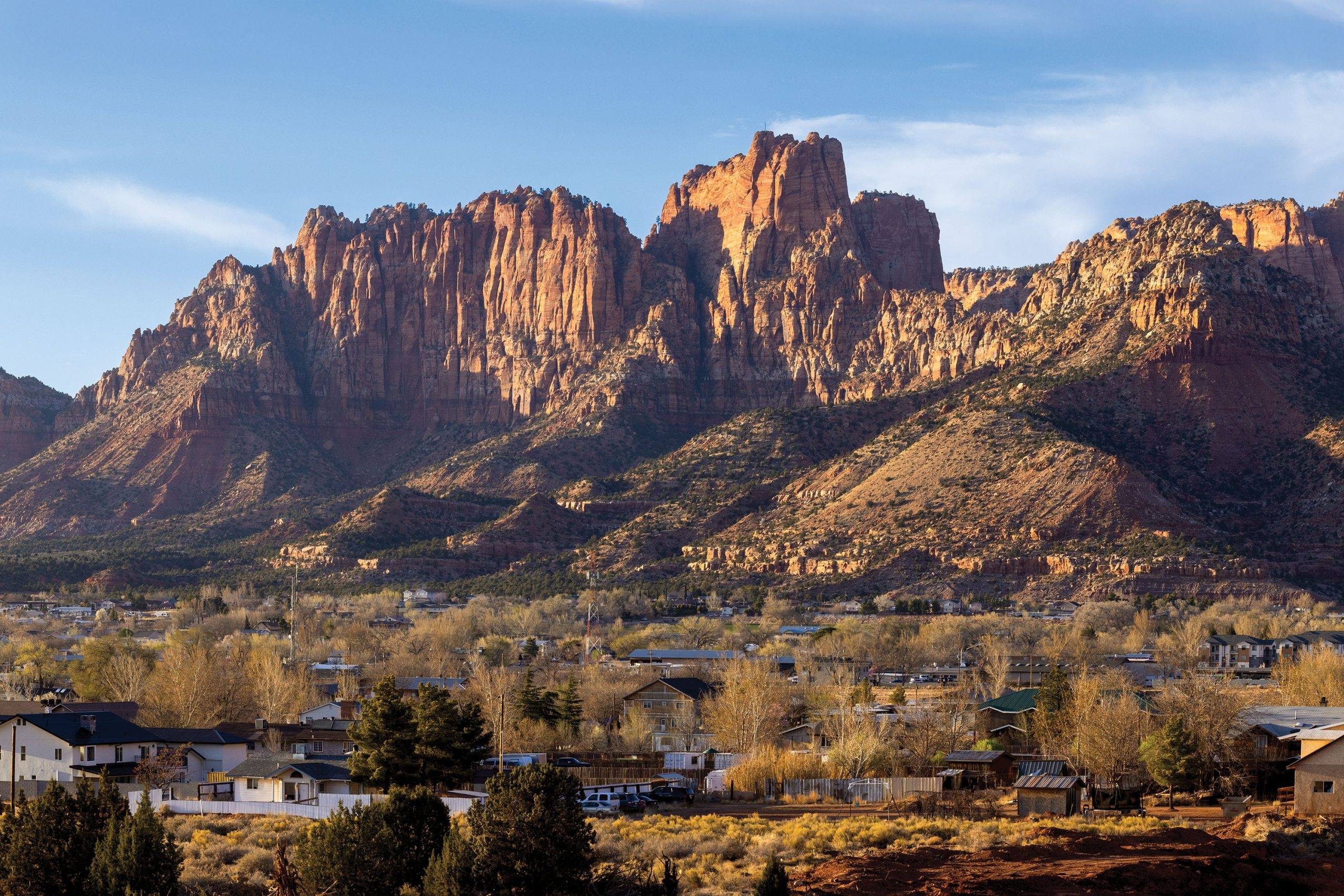
Colorado City sits in the far northwestern corner of Mohave County, Arizona, just south of the Utah state line and adjacent to the twin community of Hildale, Utah. The town is home to roughly 2,500 residents and has a quiet, rural character shaped by its high-desert setting and the red-rock landscape of the Arizona Strip. Travelers often pass through on their way between Las Vegas and southern Utah, and the town functions as a modest gateway to some of the most dramatic scenery in the American Southwest. The nearest major city is Las Vegas, Nevada, located about 120 miles to the southwest along a roughly two-hour drive.
One of the biggest draws within reach of Colorado City is Zion National Park, the celebrated Utah park of towering sandstone cliffs, narrow slot canyons, and the emerald Virgin River. From Colorado City, the main park entrances near Springdale are approximately 50 to 60 miles to the northwest, generally around an hour's drive depending on the route through Hurricane, Utah. Zion's year-round hiking, scenic drives, and wildlife viewing make it a major motivator for visitors choosing to overnight in the Arizona Strip rather than pay peak-season rates inside the park itself.
Closer to town, Coral Pink Sand Dunes State Park offers a striking contrast to the surrounding mesas, with hundreds of acres of soft, rust-colored sand blown into rolling dunes against a backdrop of sandstone cliffs. The park straddles the Utah-Arizona line and is roughly 25 miles northwest of Colorado City, making it a popular stop for off-highway vehicle riders, sandboarders, and families looking for an easy, scenic outing.
A bit farther east along U.S. Route 89A, Pipe Spring National Monument preserves a historic pioneer fort and Mormon ranching outpost tucked into a green oasis on the otherwise arid Kaibab Plateau. About 25 miles east of Colorado City, the monument offers a short, informative visit with walking paths, a visitor center, and shaded picnic areas that reward travelers exploring the Arizona Strip.
A short drive beyond the national monument, the small town of Kanab, Utah, sits roughly 40 miles northeast of Colorado City. Long associated with the Western film industry and known as "Little Hollywood," Kanab offers a walkable downtown with small museums, diners, and outfitters, and it serves as a convenient jumping-off point for day trips to the Grand Canyon's North Rim and the lesser-known portions of the Grand Staircase–Escalante.
For short-term-rental owners, Colorado City's appeal lies in its affordability and proximity to some of the most iconic national-park country in the West, combined with a quieter, small-town atmosphere that contrasts with the busier resort communities closer to Zion and Las Vegas. Guests who do not mind a relaxed base in exchange for spacious surroundings and easy drives to multiple national parks and state-park destinations tend to find the trade-off worthwhile, supporting steady seasonal demand for well-located vacation rentals.
Want to know if a property in Colorado City is a good investment?
Enter an address to get instant revenue potential and comps.