
Nome, Alaska
Want to see how Nome compares to other top cities in Alaska? Explore all city regulations in Alaska. →
Nome, AK
Very Investor Friendly
STR Regulations for Nome, Alaska
Overview: Are Short‑Term Rentals Allowed in Nome, AK?
Short‑term rentals—commonly marketed through platforms such as Airbnb, VRBO, and direct websites—are permitted in Nome, Alaska, when operated as lodging and in compliance with city business licensing and state tax obligations. The City of Nome requires a Bed Tax License for lodging operations, and the State of Alaska imposes a 4% Bed Tax on gross receipts from room rentals to transient guests. Short‑term rentals are not covered by Alaska’s Residential Landlord and Tenant Act; they are governed as lodging businesses and are distinct from long‑term residential tenancies. Because Alaska Statute treats transient lodging differently, operators must confirm zoning and land‑use compliance (e.g., that the property is not in a restricted zone and can legally function as lodging), obtain the appropriate city business license, and meet state sales and bed tax reporting requirements.
What do Airbnb hosts actually earn in Nome?
Nome hosts earn a median $45,788/year with $244 ADR and 73% occupancy.
Top performers pull in $53,151+ per year.
See the full Nome market breakdownHow to Start a Short‑Term Rental Business in Nome
Opening a compliant short‑term rental in Nome is a straightforward process if you treat the operation as lodging rather than residential tenancy.
-
Confirm zoning and land‑use eligibility
- Verify that the property is located in a zoning district allowing lodging or short‑term rental use. While Nome’s fee schedule and code excerpts do not explicitly list STRs, lodging businesses are a recognized category via the Bed Tax License. Confirm zoning with the City of Nome Building Inspector or Engineering Office prior to purchasing or converting a property.
-
Select the operating structure and gather identification
- Choose a business entity (sole proprietorship, LLC, etc.). Obtain a federal Employer Identification Number (EIN) if needed for tax filings and banking. Prepare owner and property manager information for licensing and contact disclosures.
-
Obtain the required licenses
- Apply for a Bed Tax License at the City Clerk’s Office; this is the specific lodging license for room rentals to transient guests.
- If you sell goods or provide taxable services, a Sales Tax License is required; however, lodging gross receipts are not subject to city sales tax—they are subject to Alaska Bed Tax.
- If renting vehicles, or if applicable, Chauffeur and Taxi Licenses may be relevant for ancillary transport services connected to lodging.
-
Register for state taxes and compliance
- Register with the Alaska Department of Revenue for the 4% Bed Tax. Note: The Alaska Bed Tax applies to gross receipts from room rentals; many platforms collect state tax. If you use a hosting platform, confirm how and when they remit Alaska Bed Tax on your behalf. If you accept direct bookings, you must collect and remit this tax.
-
Prepare the property and guest services
- Ensure the unit meets basic safety and habitability standards appropriate for lodging (e.g., functional smoke detectors, emergency egress, safe heating, adequate sanitation). Provide guest information with contact details for the responsible party and local services.
-
Establish financial systems and reporting
- Set up a separate business bank account. Implement accounting to track gross room receipts, platform fees, and tax liabilities. Remit state Bed Tax per filing requirements, and file annual renewals for the city license as applicable.
-
Draft guest agreements
- Use short‑term lodging agreements, not residential leases. Provide clear occupancy limits, check‑in/out policies, house rules, liability and cancellation terms, and a point of contact for guest issues. Because STRs are lodging under Alaska law, they do not fall under the Residential Landlord and Tenant Act.
-
Market and price the listing
- List on platforms or your own site, comply with any local advertising rules (e.g., postings or contact disclosures), and ensure taxes are disclosed or collected according to state law.
Required Documents, Permits, Licenses, and Guidelines
- Bed Tax License (City of Nome)
- Application via the City Clerk’s Office.
- One‑time fee listed as $15.00 (see City Clerk’s Office—City of Nome Schedule of Fees).
- Typically renewed annually, unless otherwise specified by city ordinance.
- Sales Tax License (City of Nome)
- Required if selling taxable goods or services (including taxable sales in connection with lodging). Sales Tax License fee is $0 for new and $0 for annual renewal (City of Nome Schedule of Fees).
- Additional licenses if applicable:
- Chauffeur License (new $50.00; renewals may be $0; see city fee schedule).
- Taxi License ($100.00 annual).
- Transient Merchant License (seasonal per‑day rates).
- State compliance:
- Alaska Bed Tax registration (4% on gross room receipts). Confirm filing frequency (monthly/quarterly) and platform remittance policies with the Department of Revenue.
Key operating principles:
- Short‑term rentals are lodging. Do not use residential lease forms; use lodging agreements.
- Confirm zoning and land‑use compliance for lodging operations with the Building Inspector.
- If you collect or are responsible for state Bed Tax, ensure timely remittance to the Alaska Department of Revenue.
Specific Regulations: Nome, AK (City) and Alaska (State)
City of Nome (local licensing and fee context)
- Bed Tax License is the specific lodging authorization for transient room rentals. The fee schedule indicates a $15.00 one‑time fee for the Bed Tax License and provides general licensing provisions under the City Clerk’s Office.
- City sales tax applies at 5% (as shown in Administrative Fees), but gross receipts from lodging are subject to the state Bed Tax rather than the city sales tax. If you sell taxable goods/services in connection with lodging (e.g., merchandise, food), separate sales tax considerations may apply.
- Zoning and land‑use: The fee schedule references Building Inspector, Variances, Conditional Use Permits, and Floodplain Development permitting. Operators should confirm that lodging use is allowed and obtain any necessary permits or variances.
State of Alaska (lodging and consumer protections)
- Alaska Bed Tax (AS 43.40.010–43.40.140): A 4% tax on gross receipts from room rentals to transient guests. Hosts must register and remit, unless a hosting platform remits on their behalf. Bed Tax applies regardless of the length of stay if the guest is transient.
- Exclusions: The Alaska Uniform Residential Landlord and Tenant Act (AS 34.03) does not apply to hotels, motels, hostels, or “Airbnbs,” which are treated as lodging. Long‑term residential tenancies are governed separately; short‑term rentals must not be structured as residential leases.
- Guest relations and business conduct: Ensure guest safety, clear cancellation and pricing policies, and truthful advertising. If the property is not ready or cannot be occupied as agreed, lodging providers must remedy or refund consistent with consumer protection principles. Address safety and maintenance as expected for lodging operations.
Note on Anchorage: Anchorage Assembly discussions (STR tax proposals; hosting‑site data requirements) are informative about statewide municipal trends, but they are not binding in Nome. Operators should look to Nome’s local code and Alaska statutes for the controlling rules.
Contact Information (City of Nome—Licensing and STR Oversight)
-
City Clerk’s Office (licensing: Bed Tax License, Sales Tax License)
- Phone: (907) 443‑6663
- Address: 102 Division Street, Nome, AK 99762
- Hours: Monday–Friday, 8:30am–5:00pm
- Notes: Sales tax and bed tax licenses processed here; confirm renewal cadence and current fees.
-
Building Inspector (zoning, permits, floodplain compliance, variances, conditional use)
- Phone: (907) 443‑6604
- Address: 102 Division Street, Nome, AK 99762
- Hours: Tuesday–Thursday, 8:30am–5:00pm
- Notes: Verify lodging use allowances, obtain any required permits or variances.
-
Emergency Fire Services (public safety context)
- Phone: (907) 443‑5262
- Address: 500 Bering Street, Nome, AK 99762
-
Engineering Office (mapping, plot plans)
- Phone: (907) 443‑6663
- Address: 102 Division Street, Nome, AK 99762
- Hours: Monday–Friday, 8:30am–5:00pm
-
Alaska Department of Revenue (state tax: Bed Tax registration and remittance)
- Website: tax.alaska.gov/
- Phone: Contact via Department of Revenue main line (see official site for current numbers)
- Notes: Register for the Alaska Bed Tax, confirm filing frequency, and verify platform remittance procedures.
Source Links
- City of Nome Schedule of Rental & Use Fees and Fines (effective Jan 1, 2025): www.nomealaska.org/sites/default/files/fileattachments/city_clerk/page/1951/24-10-25_city_of_nome_changes_to_fee_schedule.pdf
- Alaska Landlord & Tenant Act (statutory context for long‑term rentals; does not apply to STRs): law.alaska.gov/pdf/consumer/LandlordTenant_web.pdf
- Alaska Department of Revenue (Bed Tax registration and compliance): tax.alaska.gov/
- Anchorage STR regulation discussion (contextual reference only; not applicable in Nome): www.alaskasnewssource.com/2025/09/24/rental-regulations-raise-discussion-anchorage-assembly/
Practical reminders:
- Always treat the STR as lodging and obtain the Bed Tax License.
- Confirm zoning and land‑use with the Building Inspector before investing.
- Register for Alaska Bed Tax and ensure accurate reporting of gross room receipts.
- Use lodging agreements, not residential leases, and maintain clear guest communication for safety and service quality.
Next step
Found a property in Nome?
Paste any address and get estimated revenue, cash-on-cash return, and comparable STR performance in under 5 minutes. 3 free analyses per day.
Free brief
Get the free Nome STR Investment Brief
Revenue data, top neighborhoods, seasonal trends, and the key regulations for Nome, Alaska in one email.
Nome
Market Saturation Score
Photos of Nome


Overview of Nome
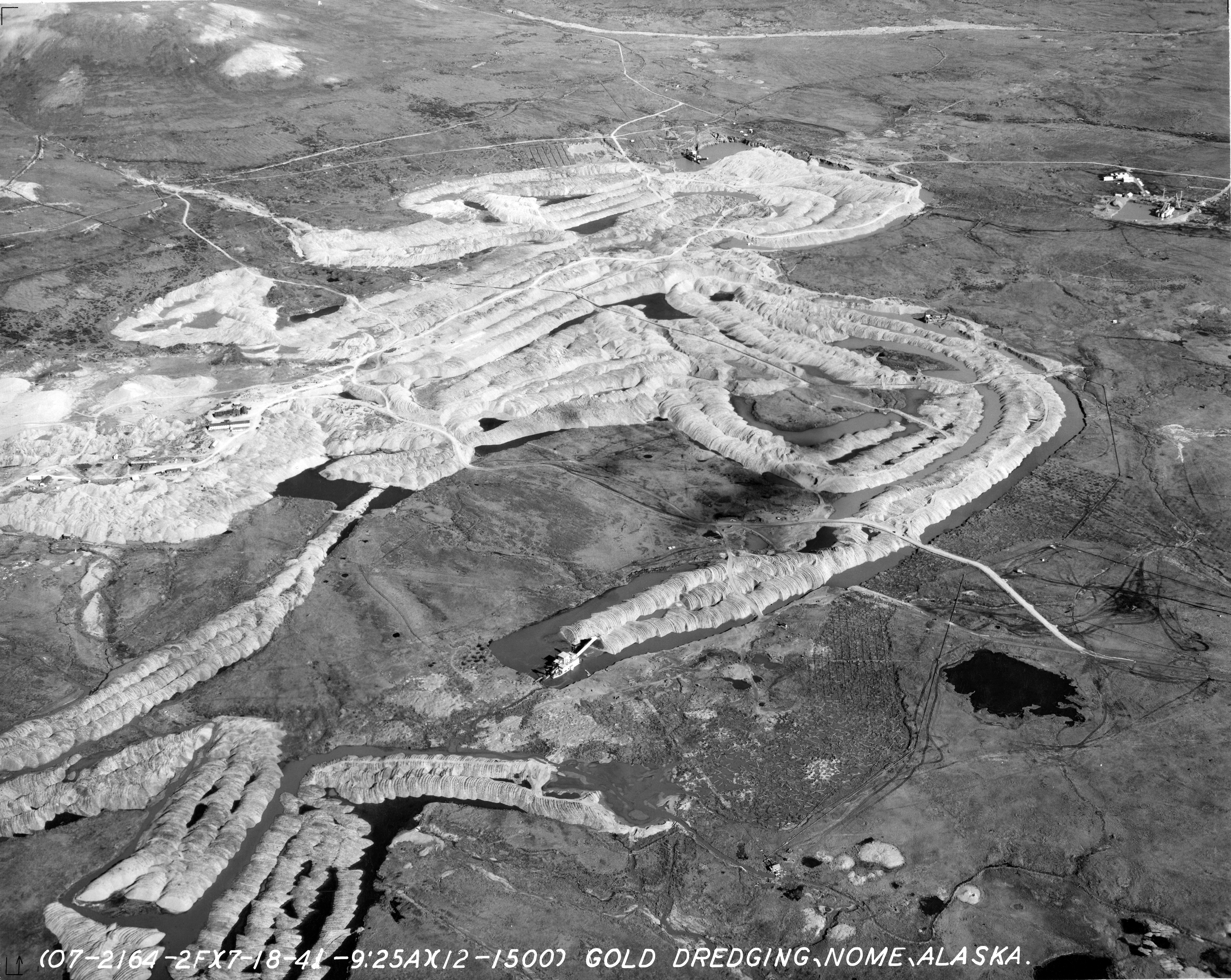
Nome is a small coastal city on the southern shore of Alaska's Seward Peninsula, sitting along the Bering Sea within the Nome Census Area. With a population of roughly 3,800, it has the feel of a remote, end-of-the-road town deeply tied to its Gold Rush past. Once one of the largest cities in Alaska during the gold boom at the turn of the twentieth century, Nome today is best known as the finish line of the Iditarod Trail Sled Dog Race and as a gateway to the Bering Strait region. The nearest major city is Anchorage, located about 540 air miles to the southeast; there is no road connection, so nearly all visitors reach Nome by air.
The Bering Land Bridge National Preserve lies to the northwest of Nome and protects a vast stretch of tundra, volcanic terrain, and the remnants of the ancient land bridge that once connected Asia and North America. The preserve encompasses millions of acres of wilderness with hot springs, lava flows, and important archaeological sites, and is accessible primarily by small aircraft chartered from Nome.
Within town, the Carrie M. McLain Memorial Museum holds a collection of Gold Rush artifacts, Iñupiat cultural pieces, and natural history displays, offering visitors an accessible introduction to the region's layered history. A short distance outside the city, Anvil Mountain rises over the surrounding tundra and is a popular hiking destination in summer, with panoramic views of the Bering Sea coast and the lowlands that stretch toward the peninsula's interior.
Nome's appeal as a short-term rental base lies in its combination of genuine remoteness and the steady rhythm of seasonal events that draw curious travelers. Late winter brings visitors hoping to watch sled dog teams cross the Iditarod finish, while summer adventurers use the town as a launchpad for the Bering Land Bridge, Anvil Mountain, and the distant Seward Peninsula villages. It is a place that offers a very different Alaska experience from the usual tourist trail, and a market where thoughtful hosts can serve a small but motivated stream of guests year-round.
Want to know if a property in Nome is a good investment?
Enter an address to get instant revenue potential and comps.